Blog
Manual Food Tray Sealing Machine for Growing Kitchens

The packing station is where a busy kitchen either keeps moving or starts losing time. When trays, films, and lids do not work together, staff deal with leaks, uneven presentation, and slow hand-packed orders. A manual food tray sealing machine gives growing food businesses a practical way to create clean, consistent tray seals without building a fully automated line. SmartPackingUSA helps operators match the machine, tray, and sealing material to the meals they are producing and the pace they need to maintain.
When a Manual Tray Sealer Is the Right Fit
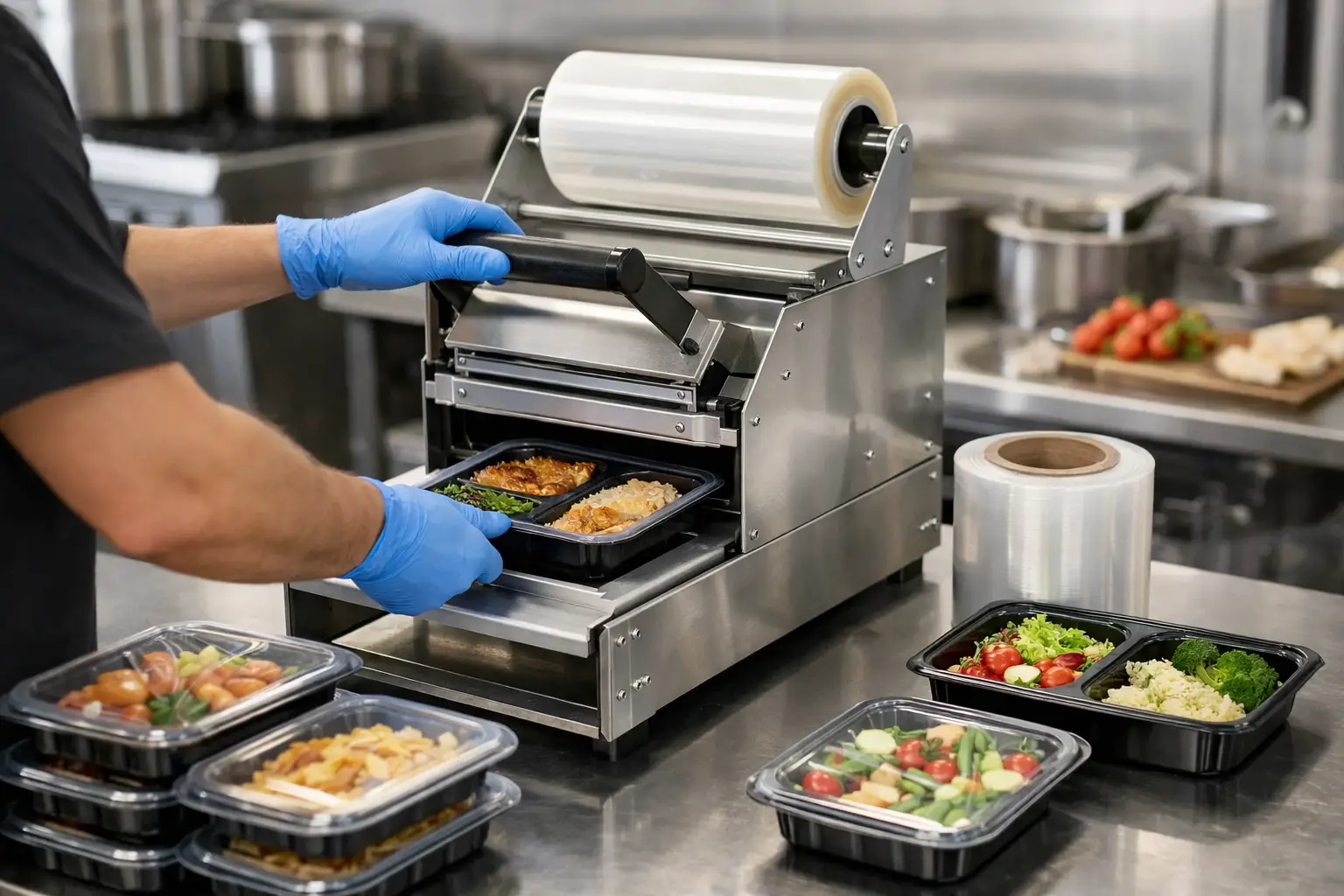
A manual tray sealer is designed for hands-on commercial packing. An operator fills the tray, places it into the mold, positions the sealing film, and completes the seal through the machine’s controlled cycle. This format gives kitchens a repeatable packaging process while keeping the equipment footprint and operating complexity manageable.
It is often a strong fit for meal-prep companies, restaurants expanding takeout, caterers preparing large event orders, commissary kitchens, specialty food producers, and pet food businesses packaging fresh products or treats. For these operations, the goal is not simply to close a container. The goal is to send out meals that look organized, travel better, and arrive with a more professional presentation.
Manual equipment is especially useful when production volumes are growing but may change by day, menu cycle, or season. It gives staff control over each tray while removing the inconsistency of loose lids, hand-applied film, or improvised packaging methods. Selected SmartPackingUSA tray sealing machine models can support output of up to approximately 600 trays per hour with one operator, depending on tray size, workflow, and production conditions.
What a Secure Tray Seal Can Improve
A properly matched seal supports much more than appearance. It can help reduce the chance of product spills during delivery and simplify stacking for cold storage, pickup shelves, and catering transport. Clear film also lets customers see the meal, while printed or branded sealing film can reinforce the identity of a meal-prep program, restaurant, or retail food line.
Consistency matters on the production floor as well. When every container uses the same compatible tray and film, employees have fewer variables to manage. That can make training easier, reduce packaging waste from failed seals, and create a more predictable packing routine during peak service.
The result depends on the complete system. A high-quality machine cannot compensate for a tray profile that does not fit the mold or a film that is not designed for the container material. This is why SmartPackingUSA approaches tray sealing as a connected packaging solution rather than a machine-only purchase.
How to Choose a Manual Food Tray Sealing Machine
The best machine begins with the tray you intend to use. Container dimensions, rim shape, compartment layout, material, and intended food application all affect mold selection and sealing-film compatibility. A single-compartment meal tray may require a different setup than a two- or three-compartment tray designed to separate proteins, sides, and sauces.
Start With Your Container and Material
Food businesses commonly choose plastic, CPET, aluminum, cardboard, sugarcane, or other application-specific containers. Each material has different practical strengths, including appearance, rigidity, heating needs, and sustainability goals. The tray and its rim must be compatible with the sealing process and film selected.
Before selecting equipment, gather samples of your current container or identify the size and style you want to standardize. If your operation uses a nonstandard tray size or has branded packaging goals, custom molds, custom containers, and custom machine development may be the better route. Building around the actual container avoids a common and expensive mistake: buying a sealer first, then struggling to source trays that fit it correctly.
Match Output to the Real Workflow
Capacity is not just a number on a specification sheet. Consider how many trays your team needs to pack during its busiest hour, how many people are available at the station, and whether filling, labeling, boxing, and refrigeration can keep up with the sealer.
A manual machine can be highly productive when the workflow is organized. One employee can focus on filling and staging trays while another seals and checks finished packs. For smaller teams, a single operator can fill and seal in sequence. The right setup depends on labor availability, menu complexity, tray size, and the distance between the prep area, packing table, and cold storage.
Do not buy based only on your quietest day or your most ambitious forecast. Choose a system that supports current production comfortably and gives the business room to grow without creating unnecessary complexity.
Look for Practical Controls and Construction
Commercial food packaging equipment should be straightforward to operate, clean, and maintain. Ask about adjustable settings appropriate for your selected tray and film, the machine’s construction, the mold-change process when applicable, and the daily cleaning routine. Stainless-steel construction is often a practical choice in commercial environments because it supports regular cleaning and holds up well in active kitchen settings.
Training also matters. A machine may be simple to run, but employees still need to understand correct tray placement, film positioning, seal checks, and the conditions that can cause an incomplete result. Clear training helps prevent wasted packaging and keeps output consistent across shifts.
Why Machine, Tray, and Film Must Be Purchased Together
Fragmented sourcing creates avoidable problems. A business may find a tray from one supplier, film from another, and a sealer from a third, only to discover that the rim, mold, and film do not perform as expected together. The time lost troubleshooting can outweigh any small initial savings.
SmartPackingUSA supplies complete packaging systems built around the customer’s specific needs. That can include the tray sealing machine, compatible containers, sealing films, foil lids, custom molds, and branded packaging materials. For operators launching a new prepared-food line, this approach creates a clearer path from product testing to regular production.
Samples are valuable before a full rollout. Testing the actual meal matters because oily foods, sauces, product temperature, tray fill level, and rim cleanliness can all affect the practical sealing process. Run samples with the foods your customers will receive, not just an empty container. This gives your team a chance to refine portions, packing steps, and presentation before committing to bulk packaging.
Build a Better Packing Station
The machine works best when the surrounding station supports it. Keep filled trays close to the sealer, store film where it is easy to load without reaching across food, and create a clear place for sealed trays to be inspected and moved to refrigeration or fulfillment. Small layout improvements can reduce motion, speed up handoffs, and help staff stay focused during rush periods.
Consistency at the filling stage is equally important. Overfilled trays can interfere with the rim area, while food residue on the sealing surface may affect the finished package. Establish portioning standards and remind staff to keep tray rims clean before sealing. These are simple controls, but they protect presentation quality and reduce rework.
For operations that ship or deliver meals, evaluate the complete journey after sealing. Stack several finished trays, place them in the bags or boxes used for orders, and test how they hold up through normal handling. Packaging should support the reality of delivery, not just look good on the packing table.
Plan for Growth Without Overbuying
A manual tray sealing machine is often the right next step for businesses moving beyond basic lidded containers or inconsistent hand-sealed packaging. It can support a more polished customer experience while giving operators a process they can repeat day after day.
That said, the right investment depends on the operation. A restaurant sealing a limited number of family meals may prioritize flexibility and a compact footprint. A regional meal-prep company may prioritize faster workflow, multiple tray formats, and dependable packaging supply. A pet food producer may need packaging selected around its product texture, portions, and retail presentation.
SmartPackingUSA provides guidance from product samples and equipment selection through training, warranty coverage, and after-sales support. If you are evaluating a new packaging line, begin with your tray dimensions, food application, daily volume, and production goals. The right system should make the next busy service feel more controlled, not more complicated.
