Blog
How a Tray Sealing Machine Improves Meal Packing

A busy meal-prep line can lose time at the packaging table long before the kitchen reaches its cooking capacity. Lids shift, sauces leak, labels wrinkle, and staff spend too many seconds trying to make every container look presentable. A tray sealing machine replaces that inconsistent final step with a repeatable process designed for prepared food businesses that need speed, clean presentation, and secure transport.
For restaurants, ghost kitchens, caterers, commissaries, and regional food brands, the right sealer is not simply another piece of equipment. It is the center of a compatible packaging system: tray, film, heat, pressure, and operating routine working together. When those components are matched correctly, packing becomes faster, products travel better, and every finished meal reaches the customer looking like it should.
What a Tray Sealing Machine Does
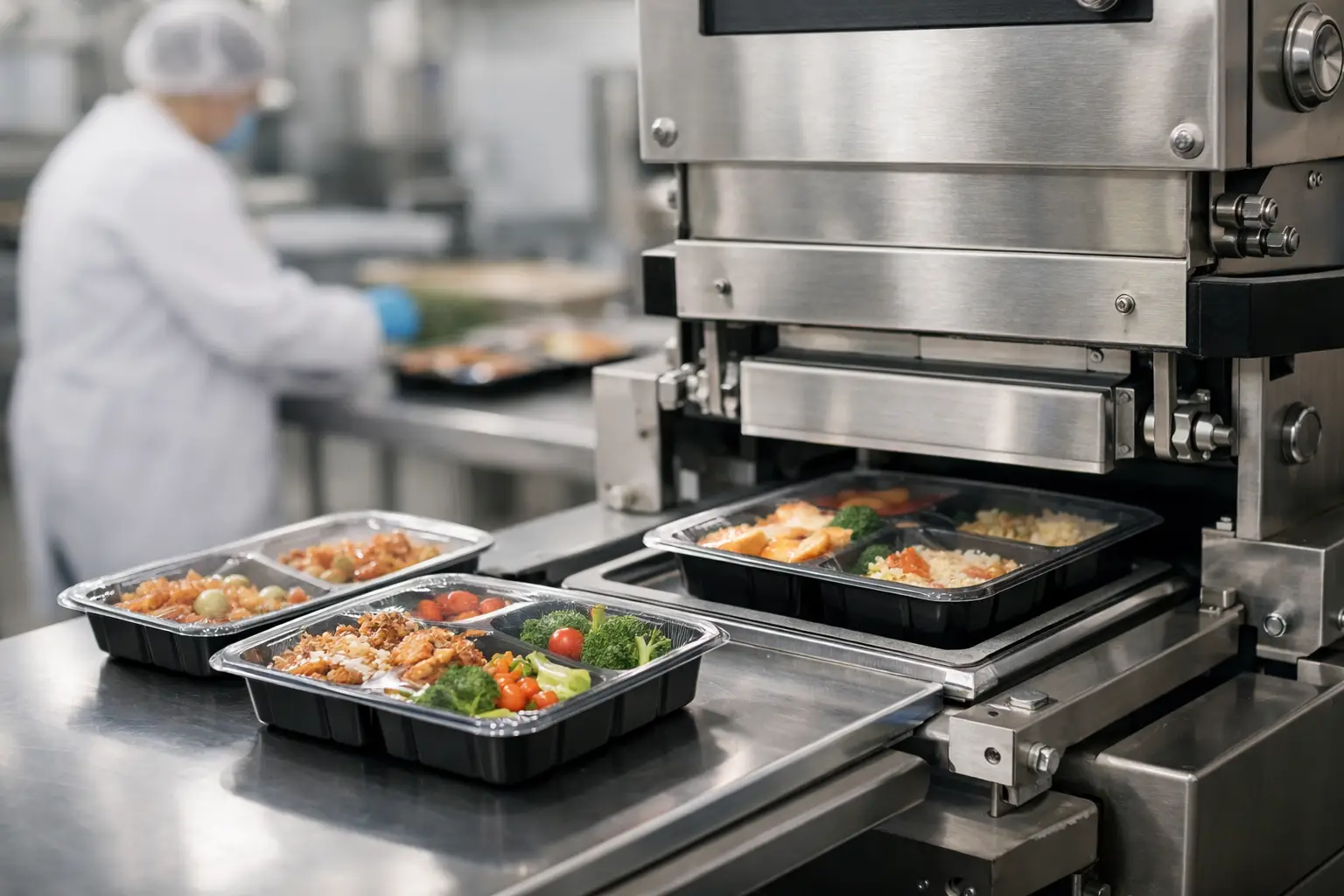
A tray sealing machine heat-seals a compatible film onto the rim of a food tray. Instead of placing a separate snap-on lid over each container, an operator positions the filled tray in the machine, closes or activates the sealing mechanism, and applies controlled heat and pressure. The film bonds to the tray edge, creating a tight closure around the meal.
This method is especially useful for meals with sauces, grains, proteins, vegetables, salads, desserts, and refrigerated grab-and-go items. A well-made seal helps reduce drips and spills during delivery, stacking, refrigeration, and customer handling. It also gives packaged food a more uniform, retail-ready appearance than loosely fitted lids.
Manual tray sealers remain a practical choice for many growing operations. They give operators direct control without requiring the footprint, expense, or technical complexity of a fully automated line. With the right workflow, a commercial manual unit can support output in the range of 600 to 800 trays per hour, depending on tray size, filling process, staffing, and product mix.
Why Sealed Trays Improve Daily Operations
The biggest benefit is consistency. Packaging is often the final touchpoint before a meal enters a delivery bag, cooler, display case, or customer pickup order. If seals vary from tray to tray, the operation carries the cost through remakes, refunds, cleanup, and a weaker customer impression.
Heat-sealed trays create a cleaner edge and a more dependable closure. This matters when meals are stacked in refrigerated storage, loaded into catering vehicles, or handed to third-party delivery drivers. It also reduces the need to rely on extra wraps, tape, or secondary containment for every order.
Speed is another direct gain. Individual lids can be slow to align, particularly when employees are moving quickly during a rush. A tray sealer standardizes the motion. Fill the tray to the intended level, position it in the mold, seal it, and move it to labeling or packing. That repeatability makes staff training easier and helps kitchen managers build a more predictable packing station.
Presentation should not be treated as a minor detail. A taut, clean film seal makes meal portions look organized and intentional. For brands selling subscriptions, corporate lunches, grocery-ready meals, or premium catering, packaging is part of the product experience. Custom-printed sealing film can add a logo, handling message, or brand color directly at the point of closure.
Choosing the Right Tray Sealing Machine
The best machine depends on the trays you plan to use, not just the number of meals you hope to pack. Compatibility comes first. The tray profile, rim dimensions, material, and sealing film must be designed to work together. A sealer that performs well with one tray format may not deliver the same result with another.
Start by reviewing your actual menu and production pattern. A meal-prep company packing the same three-compartment tray all day has different needs than a caterer that switches among entrée, side, and dessert formats. If multiple tray sizes are necessary, ask about compatible molds and how quickly operators can change them. Smart Packing USA provides free custom molds to help customers align equipment with the trays their operation requires.
Temperature and sealing-time controls also deserve close attention. Different tray materials and films respond differently to heat. Paperboard, bagasse, and plastic packaging can all be part of a heat-sealed system, but they require compatible materials and properly adjusted settings. More heat is not automatically better. Excessive settings may damage film or affect the tray edge, while insufficient heat can lead to weak seals.
Stainless-steel construction is a practical requirement for commercial food environments. The equipment should be easy to wipe down, durable enough for repeated daily use, and designed with surfaces that support sanitation routines. Look for a stable base, straightforward controls, readily serviceable components, and warranty coverage that gives your team confidence after installation.
Footprint matters too. A machine should fit the production flow, not force staff to work around it. Measure the packaging table, allow room for filled trays and finished orders, and plan where film rolls, labels, gloves, and secondary packing materials will sit. A well-organized sealing station prevents bottlenecks even when demand spikes.
Build a Compatible Packaging System
Buying a machine separately from trays and films may appear flexible, but it often creates avoidable problems. One supplier may recommend a tray, another supplies a film, and neither can verify whether the finished combination will seal reliably. The result can be trial-and-error purchasing, wasted materials, and inconsistent output.
A complete system removes that uncertainty. The machine, mold, food tray, and top-sealing film are selected to perform together. This is particularly valuable for operations moving into sustainable packaging choices. Sugarcane bagasse trays and paper or cardboard heat-seal trays can support eco-conscious packaging goals while still providing a professional sealed finish when paired with the right film and machine settings.
Material choice should reflect the food itself. Hot foods, chilled meals, oily sauces, acidic ingredients, and products with high moisture can behave differently in packaging. Consider how long meals will remain in refrigeration, whether they will be reheated, how they are stacked, and how far they travel. A sample run with your real menu is more useful than a seal test on an empty tray.
Custom packaging is also worth considering once your volumes are established. Branded trays or printed sealing film can make recurring meal programs and retail displays easier to recognize. However, customization should follow operational validation. First confirm that the tray shape, film, seal strength, and daily workflow perform as intended. Then invest in a design that turns every packaged meal into a consistent brand touchpoint.
Get Better Seals Through Process Control
Even high-quality equipment needs a disciplined process. Train staff to keep tray rims clean and dry before sealing. Food residue, sauce, oil, or moisture on the rim can interfere with the bond and create channels where leaks begin. Set a clear fill line so food does not crowd the sealing surface.
Operators should also allow the machine to complete its programmed cycle. Rushing the handle or removing a tray before the seal has set can reduce consistency. At the beginning of each shift, inspect a few finished packages for a continuous seal around the full perimeter. For sauces and liquid-heavy meals, turn sample trays carefully or place them on their side for a controlled leak check.
Keep film tension and alignment in check. Wrinkled film, off-center placement, or a worn cutting edge can affect both appearance and performance. Regular cleaning and simple preventative maintenance are less expensive than discovering packaging failures during a large catering order.
It is equally useful to track packaging performance as part of production management. Note seal issues by tray type, menu item, shift, and machine setting. Patterns often reveal whether the issue comes from filling practices, material compatibility, temperature adjustment, or operator technique. That information helps managers correct the root cause instead of adding unnecessary steps at the packing table.
A Practical Investment for Growing Food Brands
A tray sealer makes the most sense when packaging speed, delivery quality, and consistent presentation are becoming harder to manage with conventional containers and lids. It is not a replacement for good food handling or careful production planning. It is a tool that makes those standards easier to maintain at volume.
Before purchasing, test your preferred tray and film with the meals you actually sell. Confirm output expectations, mold requirements, sanitation needs, warranty details, and available support. A properly matched tray sealing system gives your team a faster final step today and a packaging foundation that can keep pace as your food business grows.
