

Blog
Container Leakage Causes in Food Packaging

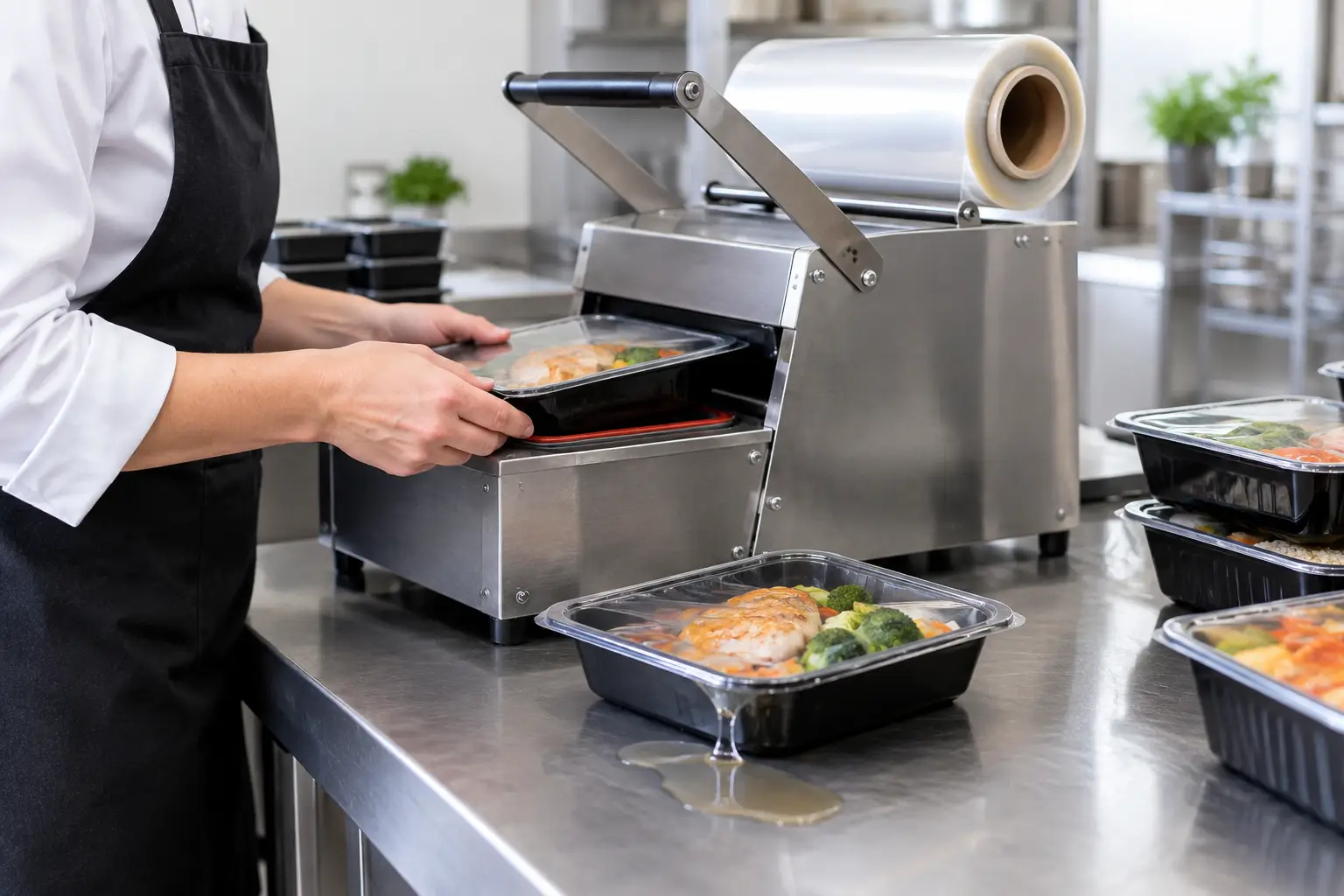
A leaking meal tray can turn a well-prepared order into a refund, a customer complaint, or a difficult cleanup in the delivery vehicle. For high-volume kitchens, container leakage causes are rarely limited to one bad container. They usually point to a compatibility, setup, handling, or workflow issue that needs to be corrected across the packaging line. SmartPackingUSA helps food businesses build complete tray sealing systems that match the machine, tray, film, and production requirements from the start.
The Most Common Container Leakage Causes
A leak may appear at the tray rim, along one corner, through the film itself, or from a container wall. Where the leak appears matters because each pattern suggests a different cause. Looking closely at failed packages before adjusting equipment helps your team correct the real issue instead of changing settings at random.
Mismatched containers and sealing film
A tray and film must be compatible with one another. The film needs to seal to the specific material and rim design of the container, whether the operation uses plastic, CPET, cardboard, sugarcane, or aluminum trays. A film that performs well on one tray material may not produce the same result on another.
This is particularly common when a business changes container suppliers, adds an eco-conscious bagasse option, or uses the same film across several tray styles. Even trays that look similar can have different rim widths, coatings, rigidity, and sealing surfaces. The result can be a seal that looks acceptable at first glance but opens under the weight of a sauce, temperature changes, or routine delivery handling.
The practical fix is to validate the tray, film, and lid as one system. SmartPackingUSA can help businesses match packaging materials to the intended application rather than asking operators to make incompatible products work together.
Incorrect heat, pressure, or dwell time
Tray sealing depends on a controlled combination of temperature, pressure, and sealing time. When one setting is too low, the film may not fully bond to the tray rim. When settings are too high, the film can wrinkle, distort, thin out, or create a seal that is inconsistent around the perimeter.
There is no single setting that works for every application. A shallow cold meal tray, a hot prepared entrée, and a heavier aluminum container can require different operating conditions. Product temperature, tray material, film type, and rim shape all affect the result.
Operators should make measured adjustments and inspect the full rim after each change. Avoid changing heat, pressure, and dwell time all at once. If multiple variables change together, it becomes difficult to identify which adjustment improved or weakened the seal.
Food residue on the sealing surface
A clean tray rim is essential. Oil, sauce, crumbs, moisture, or food particles caught between the tray and film can create a small channel for liquid to escape. This is one of the most frequent container leakage causes in kitchens packaging saucy meals, marinated proteins, soups, and chilled prepared foods.
Overfilling makes this problem more likely. As staff move quickly, food can smear onto the flange or migrate toward the rim when the tray is carried to the sealer. A package may seal in most areas but fail at the point where residue interrupted contact.
Build a simple rim-check step into the packing workflow. Fill below the tray’s practical capacity, keep product away from the flange, and wipe rims when needed before sealing. That small discipline protects product presentation and reduces avoidable rework.
Damaged, warped, or inconsistent tray rims
The tray rim must lie flat in the sealing area. If a rim is bent, cracked, warped from heat exposure, or damaged during storage, the machine cannot apply uniform contact around the container. A corner leak is often a sign that the tray did not sit flat or that its flange has been compromised.
Storage conditions matter. Containers can become misshapen when they are stacked improperly, exposed to excessive heat, or compressed under heavy inventory. Handling trays roughly during a fast shift can also cause subtle rim damage that is easy to miss.
Inspect packaging when it arrives and before it enters production. Keep trays protected from crushing and store them on clean, level surfaces. If failures are concentrated in one case or batch, separate that inventory and review the issue before putting more containers into use.
Poor tray placement in the machine
A compatible tray can still leak if it is not seated correctly in the mold or tray holder. Off-center placement, a tray sitting above the support surface, or a folded edge can prevent even pressure around the seal. This issue can be more noticeable when operators are working quickly to keep up with meal-prep or catering volume.
The machine’s mold should match the container dimensions precisely. A loose fit allows the tray to shift, while an incorrect mold shape can leave areas unsupported during sealing. Custom-size machines and molds are valuable when standard equipment does not match a business’s chosen packaging format.
Train operators to place every tray fully into position before starting the cycle. If the same side or corner repeatedly leaks, inspect the mold, tray alignment, and machine setup before assuming the film is at fault.
How Product Conditions Affect Leakage
Packaging is not isolated from the food inside it. Hot products can release steam, and liquids can move during transport. A seal that appears secure immediately after packaging may be tested later by cooling, stacking, vibration, or pressure from a tightly packed delivery bag.
High-liquid menu items need special attention. Soups, curries, pasta sauces, dressings, and pet food products can place more stress on the package than dry meals. It may be necessary to choose a deeper tray, leave more headspace, adjust fill levels, or use a packaging format designed for the product’s weight and movement.
Product temperature also affects workflow. Packaging food while it is actively steaming can introduce moisture near the seal area and make consistent handling more difficult. The right process depends on the menu, packaging material, storage plan, and how quickly the product must move into delivery, refrigeration, or display.
Finding the Root Cause on Your Line
When leaks occur, do not rely on a one-time visual check. Pull several sealed trays from the line and compare the failure pattern. Are leaks happening on every tray, only one cavity, one tray size, or one specific menu item? Is the failure always near a corner, or does the film lift across the entire rim?
A consistent issue across all trays may indicate film compatibility or machine settings. Failures limited to one position can point to placement, a mold issue, or an equipment adjustment. Leaks associated with one menu item may be tied to overfilling, residue, or product temperature.
Document the tray type, film roll, operator, settings, product, and time of production when investigating. This does not need to be complicated. A short quality-control record gives managers a useful starting point when a problem repeats and helps protect consistency across shifts.
Preventing Leakage With a Complete Packaging System
The strongest prevention strategy is to treat the sealer, mold, tray, and film as a connected system. Buying these components separately may seem convenient, but it can create unnecessary testing, inconsistent supply, and uncertainty when a seal fails. A packaging solution should be selected around the actual food product, tray dimensions, expected throughput, and delivery conditions.
SmartPackingUSA provides tray sealing machines, compatible containers, sealing films, foil lids, and custom packaging support for commercial food operations. Selected machine models can achieve up to approximately 600 trays per hour with a single operator, depending on tray size, workflow, and production conditions. That capacity only delivers its full value when the packaging components are properly matched and staff have a repeatable operating process.
For growing kitchens, standardize where possible. Use approved tray and film combinations, keep backup packaging from the same validated system, and train every operator on filling, rim inspection, tray placement, and seal checks. This reduces dependence on individual habits and makes quality easier to maintain during busy production periods.
If leaks are interrupting delivery quality or slowing your line, bring a sample tray, film, and product details to SmartPackingUSA for a practical compatibility discussion. The right packaging setup should give your team more confidence with every sealed tray, especially when the order leaves your kitchen.
