
Blog
Commercial Meal Prep Packaging Equipment That Fits

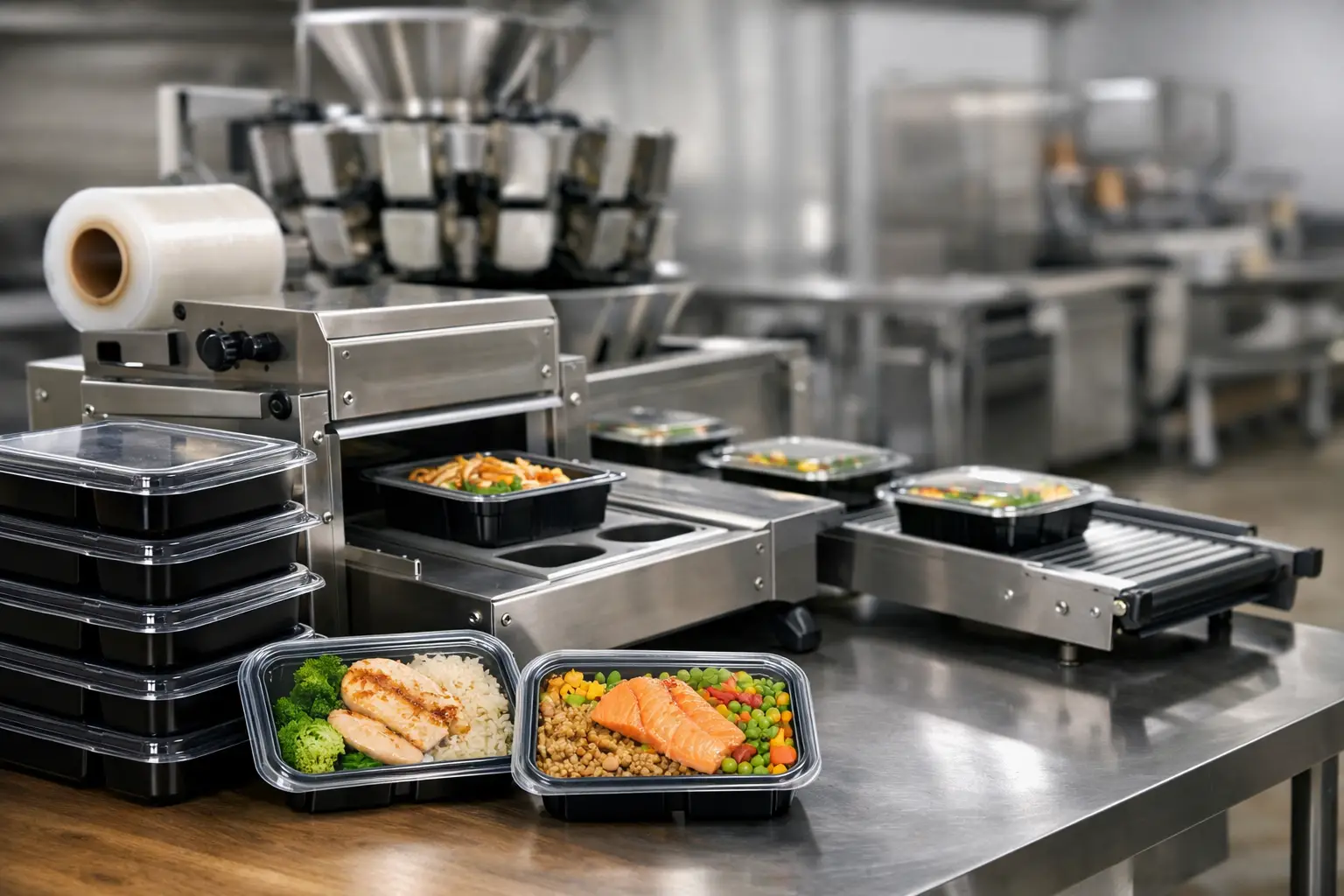
A delivery driver should not be the first person to discover that a meal tray leaked. For growing kitchens, commercial meal prep packaging equipment is not just a final step after cooking. It is the production system that protects portion quality, keeps orders moving, and gives customers a clean, professional first impression when they open the package.
The right setup has to match the way your kitchen actually works. A caterer packing 150 lunches before 9 a.m. has different needs than a regional meal-prep company producing thousands of refrigerated entrées each week. Yet both need the same foundation: dependable sealing, compatible materials, easy sanitation, and a supply plan that does not leave the line waiting for trays or film.
What Commercial Meal Prep Packaging Equipment Should Solve
Packaging problems often show up as labor problems, delivery complaints, food waste, or inconsistent presentation. Staff may be manually applying lids that do not fit consistently. Sauces can escape during transport. Stacked meals can look uneven or become damaged in a delivery bag. These issues cost more than replacement containers. They slow production and weaken repeat business.
A properly selected tray-sealing system addresses these pressures at the point where food leaves your operation. A commercial tray sealer uses controlled heat and pressure to bond a compatible top-sealing film to the tray flange. The result is a secure, tamper-evident finish that is generally more consistent than hand-applied lids, especially for meals with sauces, dressings, or multiple components.
For many commercial kitchens, a manual tray-sealing machine is the practical starting point. It gives operators control without requiring the footprint, expense, or maintenance demands of a fully automated packaging line. With an efficient workflow and trained operator, manual stainless-steel tray sealers can support output in the range of 600 to 800 trays per hour. Actual results depend on tray size, meal handling, film changes, staffing, and the time required to label and stage finished orders.
Build a Packaging System, Not a Collection of Parts
A sealer alone does not create a reliable packaging line. The machine, mold, tray, film, and finished-meal requirements must work together. Buying each component from a different source can create avoidable problems: film that wrinkles, trays that do not seat properly in the mold, unclear temperature settings, or delays when a compatible replacement is needed.
Start with the meal itself. Hot prepared foods, chilled grab-and-go meals, frozen portions, saucy dishes, and dry items place different demands on a package. Consider portion size, tray compartment layout, required shelf life, reheating instructions, transportation conditions, and whether consumers will stack the meals in a refrigerator or freezer.
Then match the material to the job. Sugarcane bagasse trays offer a plant-fiber option with a substantial feel that suits many prepared-food programs. Paperboard and cardboard heat-seal trays can support a more premium or eco-conscious presentation when they are designed for the product and sealing process. Plastic containers may be the better fit for applications that require visibility, particular barrier properties, or established customer expectations. There is no universal best material. The best choice is the one that balances performance, appearance, cost, and your operating requirements.
Compatibility matters just as much as material choice. Each tray format needs a matching mold and compatible sealing film. A well-designed system holds the tray firmly in position, applies heat evenly around the sealing surface, and releases the finished tray cleanly. That consistency reduces rework and gives employees a repeatable process they can learn quickly.
Choose the Right Commercial Meal Prep Packaging Equipment
When evaluating equipment, focus on the details that affect daily production rather than simply comparing machine prices. A lower upfront cost can become expensive if the machine is difficult to clean, cannot accommodate your tray sizes, or depends on packaging supplies that are hard to source.
Look closely at these purchasing criteria:
- Throughput at your real production pace. Estimate trays per hour based on prep, filling, sealing, labeling, and boxing, not sealing speed alone.
- Adjustable sealing controls. Temperature and sealing-time adjustments help operators dial in a dependable seal for the selected tray and film combination.
- Stainless-steel construction. Food production equipment needs a durable, hygienic surface that stands up to frequent cleaning and busy kitchen conditions.
- Mold availability and changeover needs. If you pack multiple portions or tray styles, confirm how molds are supplied, changed, and supported.
- Supply continuity. Your operation should be able to reorder compatible trays, lids, wraps, and film without restarting the sourcing process every time demand increases.
Also consider the physical layout. A tray sealer needs more than counter space. Operators need room to stage empty trays, filled meals, film rolls, finished products, labels, and shipping cartons. Place the machine near the filling station when possible, but leave enough space for safe movement and cleaning. The most capable equipment cannot make up for a bottlenecked table or a finished-goods area that is too small.
Sealing Settings Need Verification, Not Guesswork
Sealing performance depends on the relationship between tray material, film type, product temperature, tray rim cleanliness, and machine settings. A setting that works well for one packaging format may not work for another. Grease, food particles, or moisture on the sealing flange can compromise the seal, even when the machine is operating correctly.
Before a full production run, test representative trays under normal operating conditions. Fill them with the actual meal weight, seal them, allow them to cool if applicable, and inspect the perimeter. Then test the package through the handling it will face: stacking, refrigeration, transport, and reasonable inversion. This simple validation step helps your team establish reliable operating settings and catches issues before they reach customers.
Train employees to recognize a proper seal. The film should bond evenly across the tray rim without major wrinkles, gaps, burn-through, or loose edges. Staff should also know when to stop and investigate. Repeated seal failures are not something to solve by simply increasing heat. The cause may be the wrong film, a dirty mold, a damaged tray flange, or an incompatible material combination.
Improve Speed Without Compromising Food Safety
The fastest packaging line is usually the one with the fewest interruptions. Create a clear flow from portioning to sealing, labeling, packing, and cold storage. Keep film rolls, trays, and sanitation supplies within reach. Assign ownership for checking that the correct mold and film are loaded before a run begins.
Hygiene should be built into that flow. Stainless-steel equipment supports efficient wipe-down and cleaning, but procedures still matter. Clean contact areas according to your operating schedule, remove food debris from the mold area, and follow safe food-handling practices for the meals being packed. Packaging can help protect finished food, but it does not replace temperature control, clean handling, or a documented food-safety program.
Presentation also deserves attention. A secure top seal creates a flatter, more uniform package than many lid-based options, making it easier to stack meals and display them in coolers. Branded sealing film can carry your logo, handling information, or product identity directly on the package. For subscription meal brands and caterers, that consistency turns every delivered meal into a more polished representation of the business.
Plan for Growth Before the Rush Arrives
Many operations buy their first sealer because demand has already exposed the limits of manual lid application. That is understandable, but equipment should be selected with the next stage of growth in mind. Ask whether the supplier can support additional tray sizes, replacement parts, compatible consumables, custom molds, and film design as your menu or order volume changes.
Smart Packing USA approaches this as a complete packaging setup: a manual tray-sealing machine paired with compatible trays, films, lids, and protective packaging options. For operators introducing a new meal format, custom molds and branded film can help align the equipment with the product rather than forcing the product into an off-the-shelf package.
Request samples before making a larger commitment when possible. Test the tray in your delivery bags, walk-in cooler, customer pickup process, and microwave or reheating workflow where appropriate. A package may look right on a sales sheet but perform differently when filled with a hot, saucy entrée and carried across town.
The most useful next step is to map one real production day: how many meals you pack, what they contain, where delays occur, and what customers notice after delivery. Those answers will point you toward packaging equipment that earns its place on the line every shift.
