Blog
Leak Proof Takeout Food Containers for Kitchens

A spilled sauce can turn a well-prepared meal into a refund, a poor review, and a frustrated delivery customer. Leak proof takeout food containers are not simply a purchasing detail – they are part of how your operation protects product quality after a meal leaves the kitchen. SmartPackingUSA helps food businesses build packaging systems around the real conditions their meals face: hot fills, stacked orders, delivery movement, refrigeration, reheating, and high-volume production.
For restaurants, meal-prep brands, caterers, commissaries, and food manufacturers, the best container is rarely the one that only looks sturdy on a shelf. It is the one that fits the portion, supports the product temperature, closes consistently, and works with the equipment and materials on your packing line. A dependable seal protects presentation, reduces cleanup, and gives your team a faster, more repeatable packing process.
What Makes Takeout Containers Leak Resistant?
No single material or lid style is automatically right for every menu. A container can perform well with dry grain bowls yet fail with hot curry, oily proteins, brothy soups, or sauces that move under pressure. True leak resistance comes from the way several components work together: the tray design, rim geometry, lid or film, sealing method, fill level, product temperature, and handling process.
A secure closure starts with a clean, undamaged rim. If food residue, moisture, or sauce reaches the sealing area, even a quality container and lid can lose consistency. Overfilling creates a similar problem. Product pushed into the headspace may contact the closure during stacking or transit, increasing the chance of seepage.
The route matters, too. A meal traveling a few blocks in an upright bag has different demands than an order handled by multiple drivers, loaded into a vehicle, and delivered 30 minutes later. For operations with active delivery programs, packaging should be evaluated under realistic conditions rather than judged only by a hand test at the packing table.
Match the Container to the Food Application
The first question is not, “What is the strongest container?” It is, “What does this specific product require?” A saucy pasta, chilled meal-prep entrée, fresh salad, hot side dish, and pet food portion can each call for a different combination of container material and closure.
Plastic containers are a practical choice for many prepared-food applications because they offer visibility, familiar handling, and a broad range of shapes and compartment configurations. They can be especially useful when presentation is important and customers want to see the meal before opening it.
CPET and aluminum containers can be appropriate for applications that require dependable structure across certain temperature conditions. Cardboard and sugarcane options may support businesses seeking fiber-based packaging choices, but their suitability depends on the food’s moisture, oil content, hold time, and closure design. A fiber container that works well for a dry baked item may not be the correct choice for a sauce-heavy entrée.
This is why SmartPackingUSA supplies more than individual containers. The goal is to match trays, lids, sealing films, and machinery to the actual product being packed. A coordinated system reduces guesswork and helps operators avoid buying components that look compatible but do not perform consistently together.
Consider portion size and headspace
Choose a container volume that allows enough room between the food and the closure. Headspace supports cleaner sealing, minimizes product contact with the lid or film, and gives the package a more professional appearance. It also matters when hot food releases steam or when cold products are stacked before delivery.
Compartments can help protect presentation by separating sauces, proteins, grains, and sides. However, compartment trays need to match the product mix. A compartment intended for a dry side may not be suitable for a thin sauce that can move across the tray during transport.
Consider the customer experience
A container should be easy for your team to fill and easy for customers to open, carry, store, and dispose of. Clarity, rigidity, stackability, and lid fit all affect that experience. The right choice balances operational security with a package that feels intentional when it reaches the customer.
Why Tray Sealing Improves Consistency
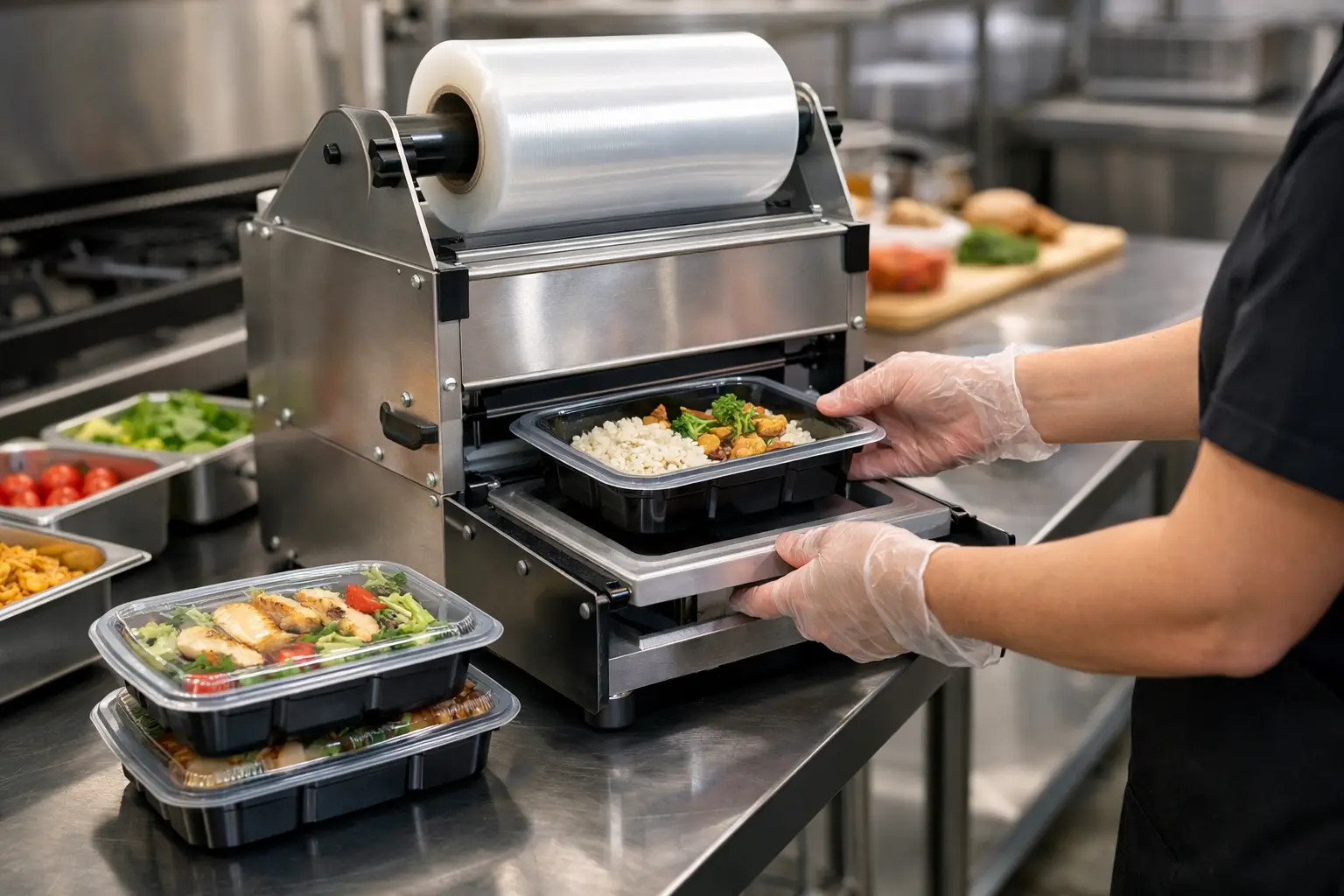
Snap-on lids can be effective for many applications, especially when paired correctly with their designated containers. But for operations packing prepared meals at scale, tray sealing can provide a more controlled, repeatable closure process. Sealing film is applied directly to the tray rim, creating a clean finished package that can support transport, stacking, and merchandising.
The advantage is consistency. Instead of relying on hand pressure around every edge of a lid, an operator follows a defined sealing process using the matched tray and film. This can improve packing speed and presentation while helping teams maintain the same package quality from the first order of the shift to the last.
SmartPackingUSA tray sealing machines are designed for commercial food operations that need practical throughput and dependable operation. Selected models can achieve production capacities of up to approximately 600 trays per hour with one operator, depending on tray size, operator workflow, and production conditions. That output can make a meaningful difference for growing meal-prep operations, caterers, and food manufacturers handling repeated packaging runs.
A tray sealer is not a cure-all for poor packaging practices. Film selection, tray compatibility, temperature settings, dwell time, rim cleanliness, and operator technique still matter. The strongest results come from testing the complete packaging setup with the actual food product and delivery conditions.
How to Evaluate Leak Proof Takeout Food Containers
Before placing a bulk order, run a focused test that reflects your highest-risk menu items. Pack the product at its normal serving temperature, use the intended fill weight, seal or close it with your normal workflow, and stack it as your team would for a busy service period. Then move it through the kind of transport your customers experience.
Look beyond obvious spills. Check for sauce migration around the closure, warped tray rims, condensation that affects the seal area, lid movement under stacking pressure, and changes after refrigeration. If customers reheat meals in the package, confirm that the selected container is appropriate for your intended heating instructions and use case.
It is also smart to test a range of products rather than approving packaging based on one menu item. The meal that causes the most packaging trouble is often not the largest portion. It may be a thin dressing, an oily sauce, a hot liquid, or a meal with uneven weight distribution.
When comparing options, assess these four practical factors together:
- Container rigidity for filling, stacking, and transport.
- Closure compatibility with the exact lid or sealing film.
- Rim condition and cleanliness during real production.
- Performance with your hottest, wettest, or most mobile menu items.
A small trial can prevent a much larger operational problem. It also gives kitchen managers a chance to refine portioning, filling procedures, and packing sequence before rolling out a new package across multiple locations or delivery channels.
Build a Packaging Line, Not a Collection of Parts
Fragmented sourcing creates avoidable uncertainty. A tray from one supplier, film from another, and an independently purchased machine may appear to work together, but minor differences in dimensions and materials can affect seal quality and daily workflow. When production volume increases, those inconsistencies become expensive in waste, labor time, customer complaints, and repacking.
SmartPackingUSA provides complete packaging systems built around the application. That can include tray sealing machines, plastic, sugarcane, cardboard, CPET, or aluminum containers, sealing films, foil lids, and custom packaging components. For businesses with nonstandard tray dimensions or specialized production requirements, custom-size machines and custom molds can help create a system that matches the package instead of forcing the product into a generic format.
Branded sealing films can also add a polished touch without adding labels to every tray. For meal-prep brands and regional food producers, that consistency can improve shelf presence and reinforce recognition when customers open a delivered order.
Keep Packaging Performance Consistent Over Time
Leak prevention does not end after the initial package approval. Train staff to keep tray rims clean, fill products to the established level, and inspect seals or lids during production. Store containers and films in a clean, dry area where rims and sealing surfaces are protected from damage.
For tray-sealed products, document the settings and materials used for each approved package. When the menu changes, the container size changes, or a new sauce is introduced, repeat the test. This disciplined approach helps protect the consistency that customers notice and your operation depends on.
SmartPackingUSA supports businesses from product samples and bulk orders through machine training, warranty coverage, and after-sales support. The practical next step is to evaluate your current problem items – the soup, sauce, entrée, or pet food package most likely to leak – and build the packaging system around solving that specific challenge.
