Blog
Custom Printed Sealing Film That Works Harder

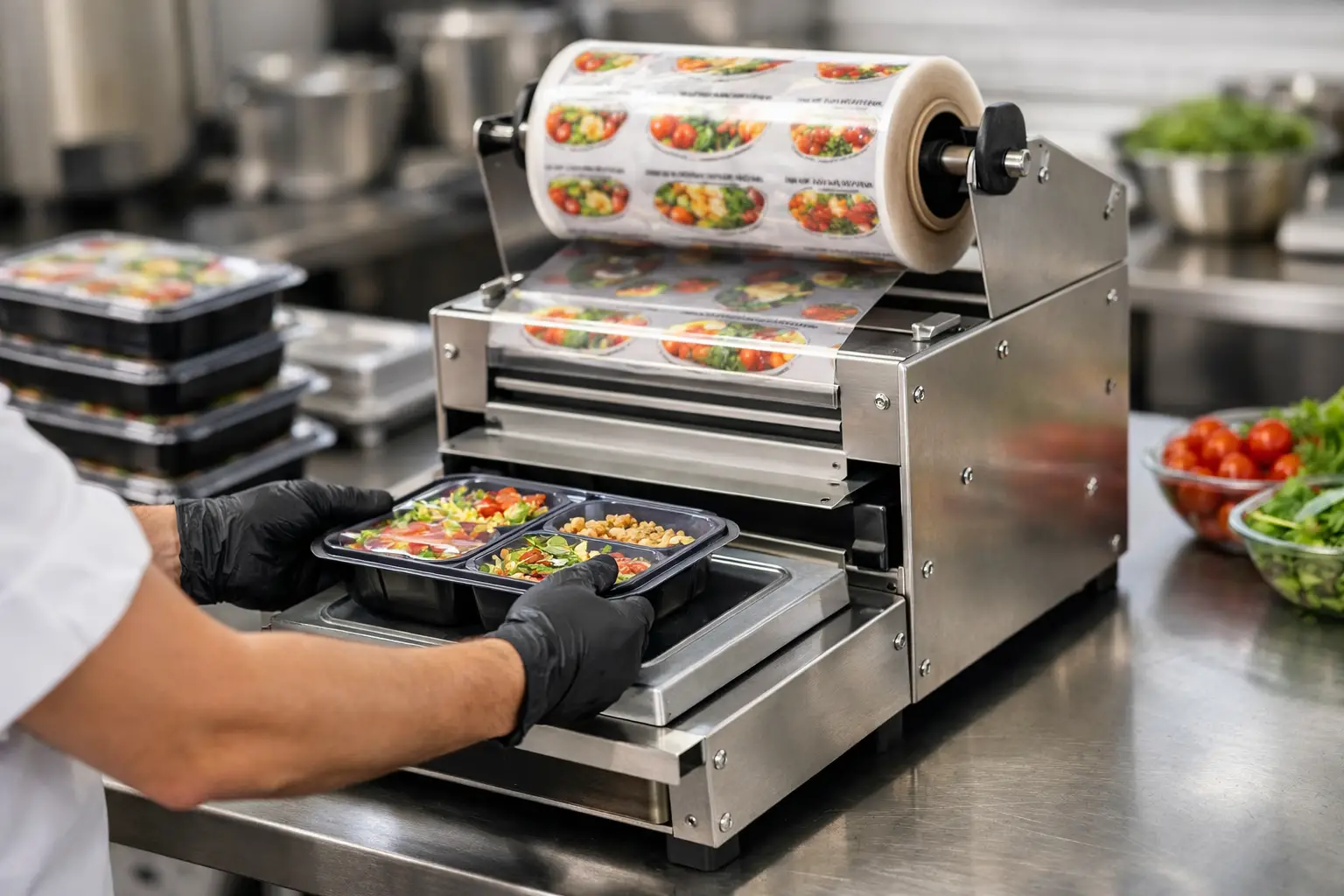
A meal may be prepared with care, packed on time, and delivered hot, but a plain or poorly matched lid can still make the order look unfinished. Custom printed sealing film puts your brand at the point of purchase while helping create the clean, secure package customers expect. SmartPackingUSA helps food businesses match branded film with the right trays, tray sealing machine, and production workflow so packaging performs as well as it presents.
For meal-prep operations, caterers, commissary kitchens, grocery programs, and food manufacturers, printed film is more than a marketing detail. It becomes part of a repeatable packaging system. The right film must run consistently, seal properly to the selected tray, withstand handling, and keep branding sharp across high-volume production.
Why custom printed sealing film matters
A printed lid is one of the few branded surfaces a customer sees before opening the package. It can carry a logo, product line, reheating guidance, storage messaging, flavor identifiers, or a simple design that makes meals look more established and recognizable. For businesses selling through retail coolers, delivery platforms, or subscription programs, that visibility can reinforce the value of the food inside.
The operational value is just as significant. Sealing film gives every tray a consistent finished appearance, helping teams present prepared meals, sauces, proteins, sides, pet food, and specialty items in a uniform format. When the tray, film, and sealing machine are selected together, staff do not have to rely on loose-fitting lids or inconsistent hand-applied closure methods.
Custom printing does require planning. Artwork approvals, production quantities, material selection, and lead times should be considered before a business commits to a design. The best result is not simply a great-looking roll of film. It is a film specification that fits the actual container and runs reliably during the busiest production shift.
Start with the package, not the artwork
The most common mistake in a custom film project is beginning with a logo file before confirming the package construction. Film is not universal. Its sealing layer needs to be compatible with the rim material and geometry of the tray being used.
A plastic tray, CPET tray, aluminum container, paperboard option, or sugarcane container can require a different sealing approach. The tray rim must also be flat and consistent enough to create a reliable seal. A design cannot compensate for a mismatched container and film combination.
SmartPackingUSA approaches custom printed sealing film as part of a complete packaging solution. Before finalizing materials, confirm the tray dimensions, rim profile, food application, expected storage conditions, production volume, and tray sealing machine model. This process helps avoid ordering branded material that looks correct on paper but is not suited to the line.
Define the food application clearly
The food itself affects packaging choices. A cold meal stored in a grab-and-go case has different demands than a hot prepared entrée, a sauce-heavy catering item, or a frozen retail product. Consider whether the package may face refrigeration, freezing, reheating, stacking, transportation, or extended display time.
For example, a high-moisture dish may need a packaging configuration that prioritizes leak resistance during delivery. A premium retail meal may place more emphasis on clear product visibility and presentation. Pet food producers may need distinct branding across recipes or product sizes. The correct answer depends on the product, its distribution path, and the customer experience you want to deliver.
Build artwork for real production conditions
Custom film artwork should be easy to recognize at a glance. A crowded lid can be difficult to read on a small tray, especially when condensation, food color, or a retail label competes for attention. Strong logos, clear contrast, and purposeful use of color usually work better than trying to place every message on the film.
Keep in mind that printed sealing film repeats across a roll. Artwork needs to be positioned and scaled for each sealed tray, not viewed as a single large label. Your packaging team should confirm print direction, repeat length, logo placement, color expectations, and any required space for date codes or secondary labels before production begins.
Use the film for the information customers need most at first glance. That may be a recognizable brand mark, a product category, a flavor color system, or a simple premium pattern. Ingredient panels, nutrition details, and extensive preparation instructions are often better handled through a separate package label when required for the application.
Make brand consistency practical
Branding should help the production team, not slow it down. If your menu includes several meal plans, dietary programs, or retail flavors, a consistent film design paired with clear labels can simplify inventory compared with maintaining a separate printed roll for every SKU.
On the other hand, separate film designs can be worthwhile when product differentiation drives sales. A grocery-ready prepared meal line, for instance, may benefit from distinct printed versions for premium, family-size, or seasonal offerings. The right approach depends on order volume, artwork complexity, inventory space, and how often your menu changes.
Match film to the tray sealing machine
A sealing machine is where packaging specifications become daily reality. Film width, roll diameter, winding direction, cutting pattern, sealing temperature, dwell time, and pressure all influence how a film performs. A compatible roll should feed correctly and produce a clean cut without disrupting output.
SmartPackingUSA supplies tray sealing machines and packaging materials as a matched system rather than treating them as unrelated purchases. That matters when a business wants to move quickly from sample evaluation to full production. A machine can be developed around custom container dimensions and operational requirements, while the tray and film are selected to support that setup.
For growing operations, throughput also matters. Selected SmartPackingUSA tray sealing machine models can achieve up to approximately 600 trays per hour with one operator, depending on tray size, operator workflow, and production conditions. Consistent film handling helps protect that workflow by reducing avoidable interruptions associated with poor material fit.
Test before committing to bulk production
Samples are valuable because packaging performance is application-specific. Test the selected tray and film with the actual food product whenever possible. Run enough packages to inspect seal appearance, corner performance, film tension, cutting quality, and handling after packing.
Also test the package under realistic conditions. Stack it, refrigerate it, move it through your normal delivery or retail process, and evaluate it after the hold time your customers experience. If the package will be reheated or frozen, make those conditions part of the review. A controlled sample process is far less costly than correcting a high-volume material order after it arrives.
Plan for purchasing, storage, and changeovers
Custom film works best when it is treated as a production supply, not a last-minute marketing purchase. Forecast usage based on trays packed per week, expected growth, menu changes, and the number of active film designs. Ordering too little can create supply pressure, while too many versions can complicate storage and increase the chance of using the wrong roll.
Keep rolls clean, dry, and protected from damage. Train staff to load film correctly and to recognize signs of poor alignment or inconsistent sealing. Basic operating discipline supports package quality, particularly during high-output meal-prep days when teams are moving fast.
A practical system also includes planned changeovers. If different tray sizes or meal lines require different materials, organize the production schedule to minimize unnecessary swaps. Color-coded storage, clearly marked roll labels, and documented machine settings can help teams maintain consistency without slowing the line.
Choose a packaging partner that sees the full system
Custom printed sealing film delivers the strongest return when it supports both brand presentation and dependable daily packing. It should look intentional in a customer’s hands, but it also needs to suit the container, food product, machine, and workflow behind the counter.
SmartPackingUSA works with food businesses nationwide to develop complete packaging systems, including custom trays, molds, branded films, tray sealing equipment, training, warranty coverage, and after-sales support. Bring the container dimensions, production goals, and brand direction to the conversation, then request samples that let your team verify the package before scaling. A well-matched printed film can make every sealed tray look like it belongs to a business built for repeat orders.
