Blog
Heat Seal Cardboard Trays for Prepared Meals

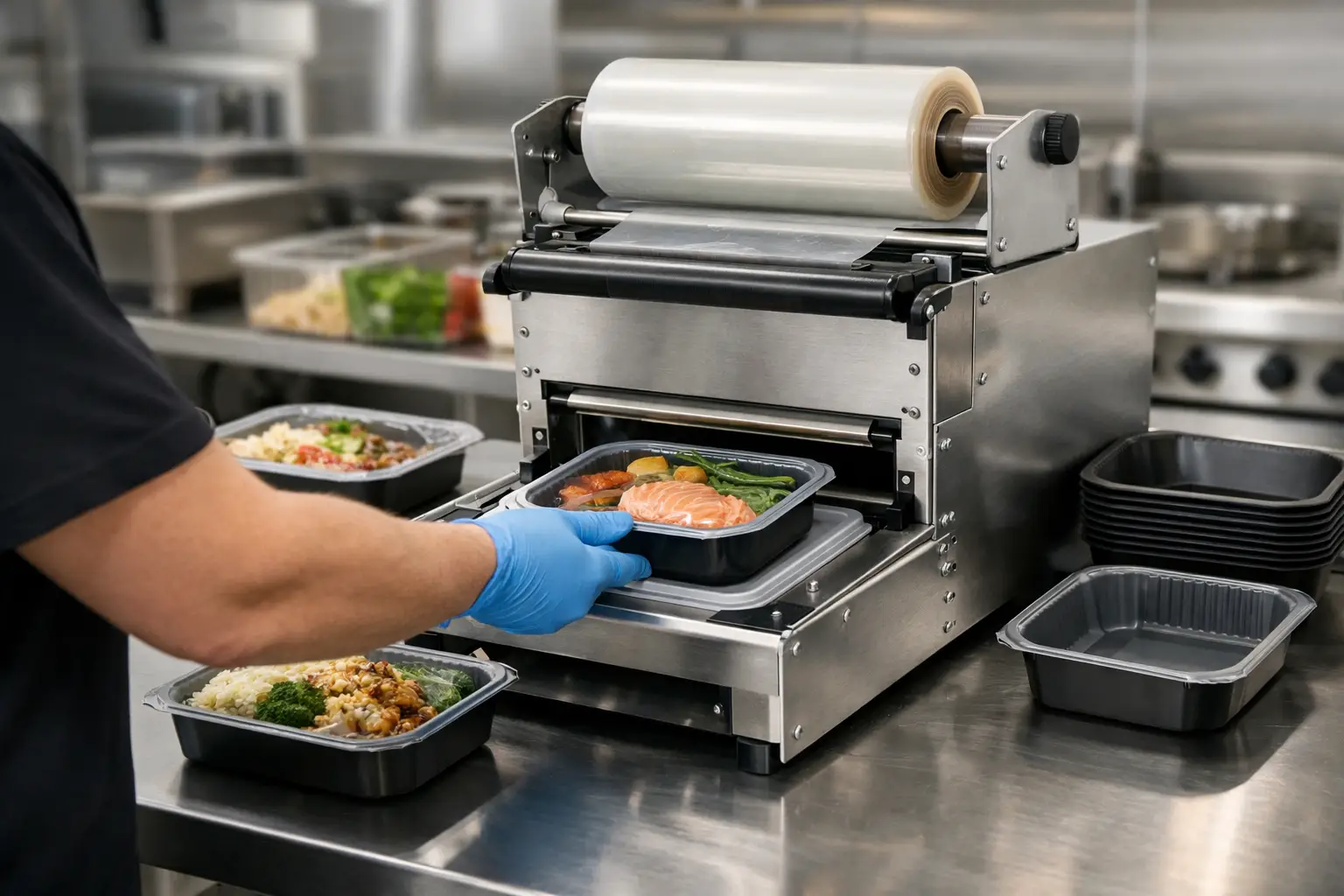
A cardboard meal tray may look simple on the packing table, but its performance depends on details that must work together: tray construction, sealing surface, film, temperature, pressure, and operator workflow. For meal-prep lines, caterers, grocery kitchens, and food manufacturers, heat seal cardboard trays can provide a professional paper-forward presentation without sacrificing the consistent closure needed for transport and display. SmartPackingUSA helps businesses match those parts as a complete packaging system rather than leaving teams to troubleshoot compatibility after equipment arrives.
What Makes Heat Seal Cardboard Trays Different?
Heat seal cardboard trays are rigid paperboard-based containers designed with a sealable rim or compatible lining that accepts a heat-sealed film or foil lid. Unlike a loose-fitting lid, a heat seal creates a continuous closure around the tray flange when the correct material and machine settings are used.
That difference matters when prepared meals move through delivery routes, refrigerated storage, retail shelves, or customer pickup. A properly selected tray-and-film combination can help reduce the chance of messy openings, support a more uniform package appearance, and make packed meals easier for staff to handle. It also gives operators a clear, repeatable closing step instead of relying on snap lids that may fit differently from one container to the next.
Cardboard does not mean every tray is interchangeable. Some options are intended for particular menu types, temperatures, or sealing materials. The tray’s rim profile, coating or liner, dimensions, compartment layout, and intended use all affect whether it will seal reliably. That is why a sample test before a large packaging order is a practical production decision, not an extra step.
When Cardboard Trays Make Business Sense
For brands building a more premium prepared-meal presentation, cardboard trays can offer a clean, structured format that photographs well and feels intentional in a customer’s hands. They are often a strong fit for chilled meal plans, deli programs, catering portions, bakery items, and selected pet food or treat applications where a rigid, polished pack supports the product story.
They can also be useful for businesses looking to add paper or bagasse-based packaging options to an existing lineup. The right choice depends on the actual food being packed. A dry entrée, a sauce-heavy dish, and a high-fat prepared food place different demands on the container and closure. Operators should evaluate portion weight, product temperature at packing, storage conditions, expected transit time, and reheating instructions before choosing a tray material.
There is a trade-off. Paperboard trays may be chosen for their appearance and material profile, but they still require disciplined handling. An incompatible film, an uneven tray flange, or a change in packing conditions can affect seal results. Food businesses that run multiple menus should avoid assuming that one tray and one film will be ideal for every item.
The Seal Is a System, Not a Single Product
A reliable tray seal comes from matching the machine, tray, film, and operating process. Buying these components from separate sources can create avoidable questions on the production floor: Does the film match the tray coating? Is the mold made for this exact rim? Are the settings appropriate for the material? Will the next tray shipment perform the same way?
SmartPackingUSA approaches this as one connected system. The team can help identify compatible cardboard containers, sealing films or foil lids, and tray sealing equipment based on the container dimensions and production requirements. For operations with a distinct tray size, compartment configuration, or branded packaging plan, custom containers, custom molds, branded sealing films, and custom machine development may be part of the project.
This integrated approach is especially valuable when a kitchen is scaling from hand-packed orders to a dedicated packaging line. Instead of asking staff to compensate for inconsistent packaging, the goal is to build a repeatable process around components designed to work together.
Machine Output Should Match Your Real Workflow
A machine’s rated potential is only one part of the buying decision. The practical output of a meal-prep line also depends on how quickly staff can fill trays, stage them, load the machine, inspect seals, label finished packs, and move them into the next step. Tray size, product consistency, and changeovers all influence the pace.
Selected SmartPackingUSA tray sealing machine models can achieve up to approximately 600 trays per hour with one operator, depending on tray size, operator workflow, and production conditions. For a growing operation, that capacity can create meaningful room to standardize packing without immediately adding more labor to the line. For a lower-volume kitchen, a smaller setup may be the smarter fit if it offers the controls, reliability, and container compatibility the business needs.
When evaluating equipment, ask how easily it fits your actual day. Consider available counter or floor space, electrical requirements, cleaning routines, the number of tray formats you plan to run, and whether your team needs a custom mold. Stainless-steel construction and adjustable controls are practical features because packaging equipment must hold up to repeated use while remaining manageable for operators.
A Better Process Starts Before the Machine Turns On
Most sealing issues are easier to prevent than correct. Before production, staff should inspect trays for clean, undamaged rims and ensure the specified film is loaded correctly. Portions should be controlled so food does not interfere with the sealing area. If a menu item includes sauces, oils, or toppings near the flange, the packing method may need adjustment to keep the sealing surface clear.
Training matters just as much as setup. Operators should know what a properly sealed package looks like, how to spot wrinkles or incomplete seals, and when to pause the line rather than send questionable packs forward. A simple inspection routine at startup and throughout the shift can help protect consistency as production conditions change.
For businesses adding cardboard packaging for the first time, run product samples under normal conditions. Test the same fill level, temperature, handling, storage, and transportation pattern the package will experience after it leaves the kitchen. A seal that looks acceptable at the workstation may perform differently after stacking, chilling, or a delivery run.
Custom Packaging Can Carry the Brand Further
Prepared-food customers notice packaging before they take the first bite. A tray with a clean seal, crisp film, and well-applied label makes meals look organized and ready to serve. For retail-oriented programs, that presentation can make it easier to maintain consistency across multiple locations, menu lines, and production shifts.
Customization can go beyond printing a logo. Tray dimensions can be aligned with portion strategy. Mold design can support a specific container format. Branded sealing films can reinforce recognition at the exact moment a customer opens the meal. These choices should support operations first, then presentation. An attractive package that slows down packing or creates supply complexity will not deliver the intended result.
SmartPackingUSA supports businesses with product samples, bulk orders, private-label packaging, training, warranty coverage, and after-sales support. That ongoing guidance is useful when a packaging line changes over time, whether the business adds a new menu, grows weekly order volume, or moves into grocery and regional distribution.
Choosing the Right Tray for Your Menu
Start with the food, not the container catalog. Define what is being packed, the portion size, whether compartments are needed, the packing temperature, how the item will be stored, and how customers are expected to handle it. Then select a cardboard tray format and sealing material that suit those conditions.
From there, confirm the machine and mold are made for the tray’s dimensions and rim. This is the point where a complete-system supplier can save time. Rather than guessing which film or tool will work, your team can review the application and test samples before committing to a larger rollout.
The strongest packaging line is not the one with the most components. It is the one your staff can run confidently, shift after shift, while delivering meals that arrive looking as carefully prepared as they were cooked. If your operation is considering heat seal cardboard trays, SmartPackingUSA can help you build the right machine, tray, lid, and film combination for the way you pack today and the volume you plan to reach next.
