Blog
Catering Food Tray Sealing Equipment That Fits

A catering kitchen can prepare exceptional food and still lose customer confidence when trays leak in transit, lids lift at the corners, or every order looks slightly different. Catering food tray sealing equipment gives high-volume food operations a more controlled way to package prepared meals, sauces, sides, and complete event orders. SmartPackingUSA helps businesses match the machine, tray, and sealing material so the packing station supports the quality coming out of the kitchen.
For caterers, packaging is not a final detail. It affects delivery reliability, labor time, portion presentation, and the ability to scale beyond a few dozen meals at a time. The right tray sealer turns a manual, inconsistent process into a repeatable packaging workflow that staff can operate with confidence.
What Catering Food Tray Sealing Equipment Does
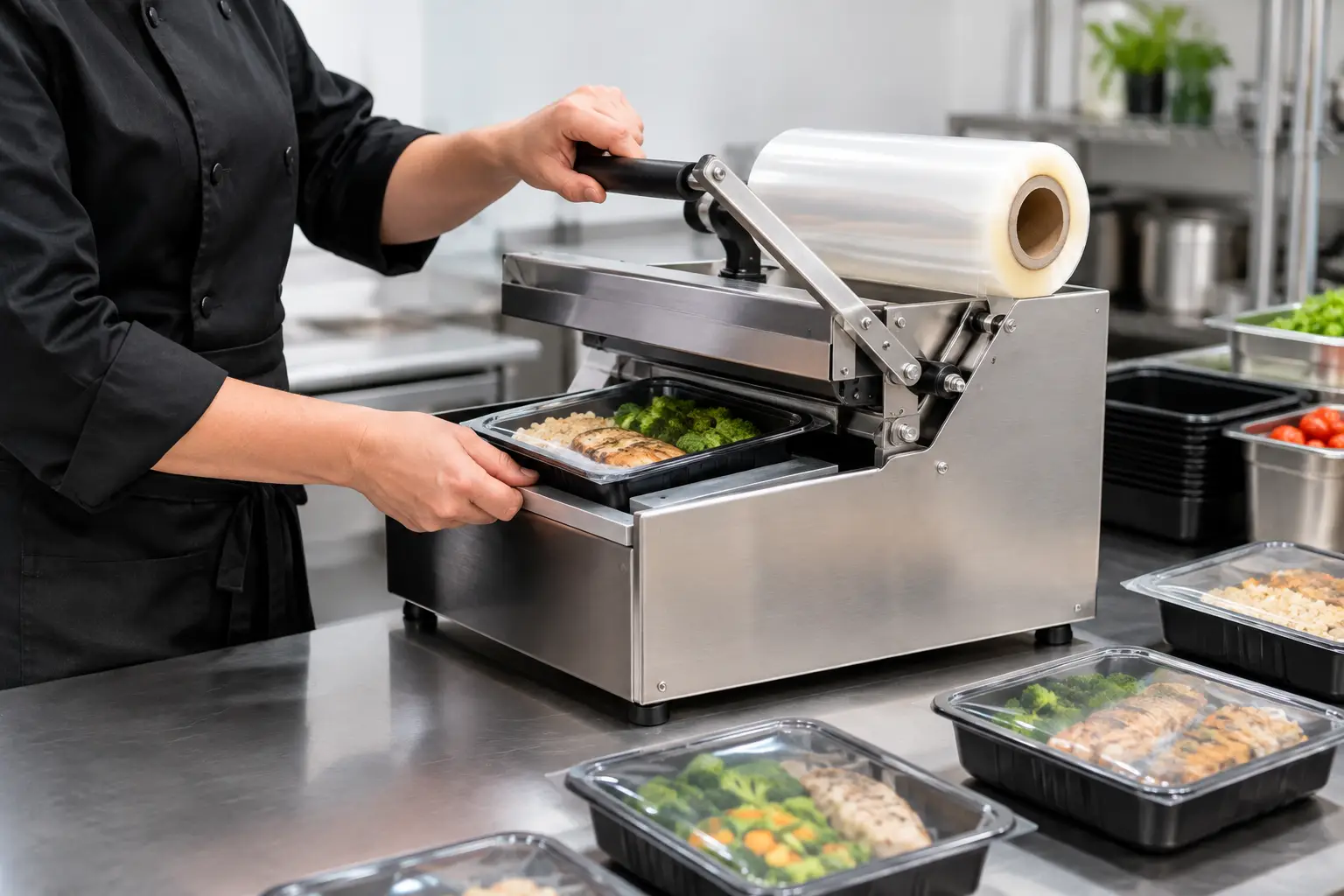
Tray sealing equipment applies heat and pressure to seal a compatible film or foil lid to the rim of a food container. The result is a clean, professional closure designed for the specific tray and sealing material in use. Rather than relying on snap-on lids that can shift during stacking or transport, sealed trays create a more secure package for prepared food.
This matters when a catering team is packing mixed menus under a deadline. Chicken entrées, grain bowls, pasta, sauces, desserts, and family-style sides may all move through the same production area. A consistent sealing process helps the team maintain a cleaner pack-out line while producing trays that look organized when they reach a client, venue, or delivery driver.
The best fit depends on the food, the container dimensions, the desired output, and the way the staff works. A small catering company preparing weekly corporate lunches has different needs from a commissary kitchen filling hundreds of event meals. SmartPackingUSA evaluates those operating details before recommending a complete packaging setup.
Why Caterers Move Beyond Snap-On Lids
Snap-on lids still have a place for certain products and lower-volume operations. They are familiar, easy to use, and may be practical for cold items that are consumed quickly. But for catered meals that need to travel, stack, and maintain a polished appearance, tray sealing often provides greater consistency.
A properly matched sealed tray helps reduce the chance of spills around the rim during normal handling. It also gives each meal a uniform finish, which matters when a client is opening 50, 100, or 300 servings at once. For meal-prep programs and recurring corporate accounts, that consistency can reinforce the perception of a well-run food business.
There is also a labor consideration. Hand-fitting lids one at a time can become a bottleneck when orders peak. Tray sealing allows an operator to follow a repeatable cycle: fill the tray, place it in position, run the seal, and move the finished package to labeling or staging. Selected Smart Packing USA tray sealing machine models can achieve production capacities of up to approximately 600 trays per hour with one operator, depending on tray size, operator workflow, and production conditions.
That capacity should be viewed as a planning reference, not a promise that every kitchen will produce the same result. Complex menus, frequent tray changes, filling accuracy, cooling requirements, and staff experience all affect real-world throughput.
Choosing Catering Food Tray Sealing Equipment
The machine is only one part of the decision. Catering food tray sealing equipment performs best when it is selected as part of a compatible system. A machine, container, sealing film, and lid format must work together at the packing station.
Start with the food and service model
Consider what is going into the tray and what happens after it is sealed. Hot meals, chilled meal-prep items, saucy dishes, dry entrées, and refrigerated grab-and-go programs may call for different container and sealing-material choices. The delivery window matters too. A tray traveling across town in a stacked catering carrier has different demands than a meal handed directly to a customer.
Container depth and portion size should reflect the food, not just the available packaging. Overfilled trays can interfere with a clean seal, while oversized packaging can make portions look sparse and increase material use. A practical trial with the actual menu items is often more useful than making a decision from container dimensions alone.
Match materials before ordering equipment
Caterers may need plastic, sugarcane, cardboard, CPET, or aluminum food containers depending on their menu, brand presentation, and operational requirements. Each option brings trade-offs in appearance, rigidity, heat tolerance, disposal goals, and available tray formats.
The sealing film or foil lid is equally important. It needs to match both the tray material and the machine configuration. A film that is not designed for the selected tray can lead to inconsistent seals, wasted product, and unnecessary troubleshooting during service. SmartPackingUSA supplies complete packaging systems because matching these components from the beginning prevents a common problem: buying equipment first and discovering later that the packaging materials are not compatible.
Plan around output, not only order volume
A catering business may package 1,000 meals in a week but still need a faster machine if most of those meals are packed in a short window before a major event. Look at peak-hour production, not only weekly totals. Consider how many operators are available, whether food is packed in one tray size or several, and how quickly the team must transition from cooking to loading vehicles.
For businesses with a standard menu and repeatable tray size, a dedicated configuration can simplify training and daily production. Operations with changing menus, multiple portion sizes, or seasonal catering packages may benefit from a setup designed around those variations. The objective is not to buy the largest machine available. It is to remove the packaging bottleneck without creating a system that is difficult to operate or maintain.
Build a Packing Line That Staff Can Run
A tray sealer should fit naturally into the production floor. Place filling, sealing, labeling, and finished-product staging in an order that limits unnecessary movement. When staff must carry filled trays across the kitchen to reach the machine, spills and slowdowns become more likely.
Stainless-steel construction is a practical feature for commercial environments because equipment surfaces need to hold up to regular cleaning and daily use. Adjustable controls also matter when a business works with different compatible materials or tray formats. The goal is not complexity. It is a machine that gives the operator a clear, repeatable process.
Training should cover more than pressing the start button. Staff need to know how to position trays correctly, recognize an incomplete seal, keep the sealing area clean, and avoid rushing filled containers into the machine. A few minutes of attention at setup can prevent a full batch of poorly sealed trays later in the shift.
Check seals during real production
Do not judge a packaging system solely on an empty-tray demonstration. Test with actual foods, normal fill levels, and the handling conditions the order will face. Stack the trays, place them in delivery carriers, and inspect the seals after they have been moved. This gives the kitchen team a realistic view of fit and performance.
Four operational checks are especially useful during a trial:
- Seal appearance around the full tray rim
- Tray stability when stacked with finished meals
- Ease of opening for the intended customer or serving staff
- Speed and comfort for the employee operating the machine
If the package looks good but slows the line, the setup needs adjustment. If it runs quickly but does not support the food’s transport needs, it is not the right long-term solution. Good packaging decisions account for both production speed and the customer experience at the end of the trip.
When Custom Equipment and Packaging Make Sense
Standard tray sizes work well for many caterers, but they do not fit every menu or brand. A business with a signature meal format, unusual container dimensions, or a specific presentation goal may need custom containers, custom molds, branded sealing films, or a custom-size machine.
Custom work is most valuable when it solves a repeatable operational issue. For example, a catering company that regularly packs the same divided meal can benefit from a container designed around its portions and transport process. A branded film can also help create a recognizable presentation for recurring meal programs, retail-ready prepared foods, or corporate catering accounts.
SmartPackingUSA supports custom machine development and packaging projects based on container dimensions, materials, production needs, and application requirements. Samples can help teams evaluate the full system before committing to bulk orders. That hands-on approach is especially useful for growing operators that cannot afford a packaging mismatch during a busy launch or expansion.
Support Matters After Installation
Catering schedules do not leave much room for equipment uncertainty. Before selecting a supplier, ask about operator training, warranty coverage, replacement packaging availability, and after-sales support. Equipment performance is connected to supply continuity. A machine is only useful if the compatible trays and films can be replenished reliably as the business grows.
SmartPackingUSA works with food businesses across the United States to provide machines, containers, sealing films, foil lids, and complete packaging systems from one source. That simplifies purchasing and gives operators a clear path when they need help with setup, material selection, or future packaging changes.
The most productive next step is to gather a few actual trays, menu details, expected production volumes, and a sample of the way finished orders are transported. With those details, SmartPackingUSA can help turn the packing station into a dependable part of the catering operation rather than the last-minute hurdle before every delivery.
