Blog
How to Choose the Right Food Tray Sealing Film

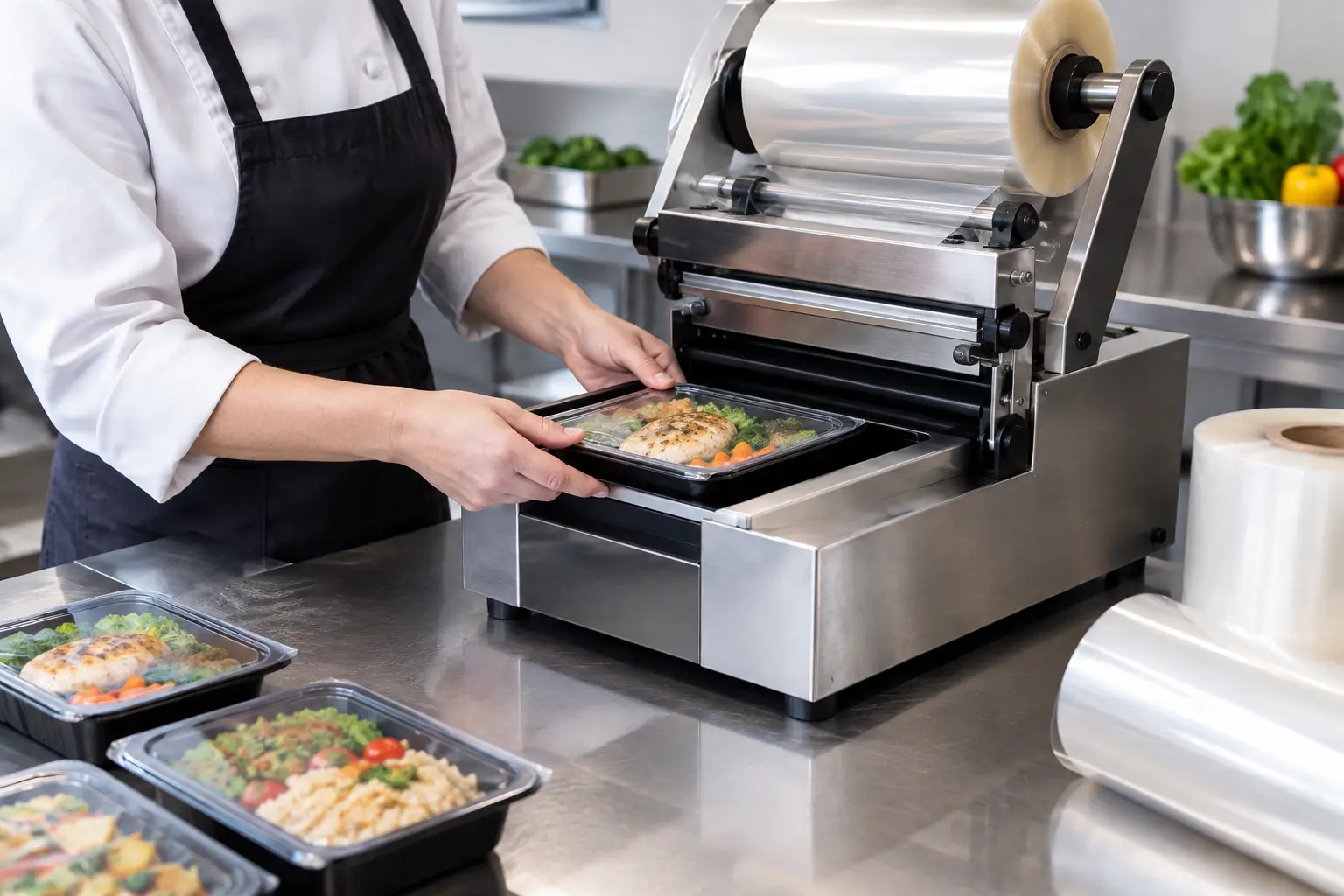
A sealing film can be the difference between a prepared meal that arrives looking professional and one that leaks, lifts at the corners, or creates frustration on the packing line. For meal-prep kitchens, caterers, restaurants, and food manufacturers, food tray sealing film is not a generic supply item. It must match the tray material, the sealing machine, the menu, and the realities of daily production. SmartPackingUSA helps businesses build complete tray-sealing systems so these components work together from the first sealed tray to the last.
What Food Tray Sealing Film Does
Food tray sealing film is a flexible material applied over the top flange of a food container using heat and pressure. The result is a closed package with a clean, consistent appearance. Depending on the application, the film may be clear for product visibility, printed for brand recognition, peelable for consumer convenience, or designed for a more permanent seal.
For a commercial kitchen, the practical value is straightforward: properly selected film helps reduce leakage during delivery and handling, improves portion presentation, and creates a more consistent package across every order. It also supports a faster, more organized packing process than manually fitting lids to high volumes of trays.
The film itself is only one part of the result. Seal quality depends on compatible trays, the correct die or mold, suitable machine settings, a clean tray flange, and operator workflow. When one piece is mismatched, businesses can experience weak seals, film wrinkles, incomplete cuts, or unnecessary material waste.
Match the Film to the Tray Material
The most important purchasing rule is simple: select food tray sealing film for the specific container material being used. Plastic, CPET, aluminum, paperboard, and sugarcane trays do not all seal with the same film construction or at the same settings.
A plastic meal-prep tray may require a film engineered to bond to that particular plastic structure. CPET trays are commonly selected for prepared foods that may be reheated, while aluminum trays have their own sealing requirements. Paperboard and bagasse containers can also be part of a tray-sealing system, but their rim construction and coating must be considered before selecting film.
This is why choosing containers and film from separate sources without confirming compatibility can create avoidable production issues. A tray may look similar to another model, yet have a different flange width, coating, rigidity, or sealing surface. Small differences matter when the goal is a dependable seal across hundreds of units.
Smart Packing USA can match containers, sealing film, and tray sealing equipment as a complete packaging system. That approach reduces guesswork and gives operators a clearer path to consistent results.
Tray Size and Flange Shape Matter
Film must cover the tray opening with enough material for the machine to form and trim a clean seal. The tray’s outer dimensions and flange shape determine the proper tooling and film width. If the film is too narrow, it may not fully cover the sealing area. If it is excessively wide, it can add waste and make handling less efficient.
The tray flange must also be clean and dry at the moment of sealing. Sauces, oils, food particles, moisture, or warped tray rims can interfere with contact between the film and the tray. For kitchens packaging saucy entrées, marinated proteins, or chilled prepared meals, staff training and a disciplined filling process are as important as the film selection itself.
Choose the Right Seal Experience for Your Customers
Not every package needs the same opening experience. A peelable film seal can work well for ready-to-eat meals, grab-and-go retail items, and meal kits because customers can open the tray without tools. Other applications may need a stronger seal designed for more demanding distribution or handling conditions.
Clear film is often the practical choice when food appearance helps sell the product. Customers can see fresh ingredients, portion size, and overall quality without opening the package. Branded sealing film adds another layer of value for food businesses building a recognizable retail or delivery presence. A logo, color treatment, or product message can make a standard tray look more intentional and market-ready.
The right choice depends on the product and sales channel. A caterer moving trays directly from the kitchen to a local event may prioritize speed and a neat appearance. A meal-prep company shipping recurring orders across a region may place greater emphasis on secure seals and consistent packaging performance through transportation. A specialty pet food producer may need packaging that presents portioned products cleanly while fitting its specific container format.
Consider How the Film Runs on Your Machine
A roll of film is productive only when it runs reliably through the sealing machine. Film width, roll orientation, material gauge, cutting performance, and sealing response all affect operator efficiency. If a film does not feed smoothly or seal consistently at workable settings, the packing line slows down quickly.
For this reason, businesses should evaluate film together with the machine rather than treating them as unrelated purchases. A tray sealing machine should be configured for the customer’s tray dimensions, packaging material, output requirements, and workflow. SmartPackingUSA offers tray sealing machines and custom-size machine development for businesses that need equipment built around their container dimensions and operational needs.
Selected tray sealing machine models can achieve production capacities of up to approximately 600 trays per hour with one operator, depending on tray size, operator workflow, and production conditions. That output is meaningful only when trays and food tray sealing film are correctly matched and the work area is organized for steady loading, sealing, unloading, and packing.
Adjustability Supports Better Daily Results
Different foods and packaging materials can require adjustments to sealing time, temperature, and pressure. A machine with practical controls gives operators the ability to fine-tune performance when changing tray materials or menu formats. The goal is not to chase the highest setting. Excessive heat or pressure can damage packaging materials, while settings that are too low may produce incomplete seals.
A controlled setup process helps establish repeatable operating settings for each package format. Once those settings are documented, employees can follow a consistent procedure instead of relying on trial and error during a busy shift.
Build Film Selection Into Your Production Plan
Film selection should support the way your operation actually runs. Consider the number of trays packed per day, how often menus change, whether multiple tray sizes are used, available storage space, and the lead time needed to keep packaging materials in stock. A business with one standard meal tray has different needs than a commissary kitchen filling several container formats throughout the week.
It is also wise to think ahead about growth. A tray and film combination that works for 100 meals a day may become inefficient when production doubles. Standardizing containers where possible can simplify film purchasing, tooling changes, staff training, and inventory management. At the same time, some businesses benefit from multiple tray formats because their menu, portion sizes, or retail strategy demand more flexibility.
Before placing a larger order, test samples under real operating conditions. Seal the actual foods you sell, including products with oils, sauces, moisture, and varied fill temperatures. Check the seals after chilling, stacking, transport, and normal customer handling. Look for clean trim lines, complete edge bonding, easy opening when required, and a package that maintains its appearance.
Signs Your Current Film Setup Needs Attention
Packaging problems often appear first as small daily annoyances: operators re-sealing trays, film pulling unevenly, corners lifting, or excess trim collecting around the machine. Left unaddressed, those issues create lost labor, material waste, and inconsistent presentation.
Start by checking the basics. Confirm that the film is intended for the tray material, that the tray flange is clean, and that machine settings match the application. Inspect tooling for buildup or wear, and make sure the film roll is loaded correctly. If the operation recently changed tray suppliers, food formulas, portion sizes, or production volume, reassess the entire packaging setup rather than assuming the film alone is at fault.
Get a Complete Tray-Sealing Solution
The most efficient food packaging systems are designed as connected parts, not assembled through guesswork. The machine, tray, lid or film, tooling, and production process should reinforce one another. That creates cleaner seals, stronger presentation, and a packing line that is easier to manage as volume grows.
Smart Packing USA provides tray sealing machines, compatible containers, sealing films, foil lids, custom molds, and branded packaging options for commercial food and pet food operations. With product samples, customization support, training, warranty coverage, and after-sales assistance, SmartPackingUSA can help you move from a packaging problem to a workable production system.
A dependable seal starts before the machine cycles. Choose film with the tray, product, and workflow in mind, then test the complete package under the conditions your customers will experience.
