

Blog
Complete Prepared Meal Packaging Guide for Teams

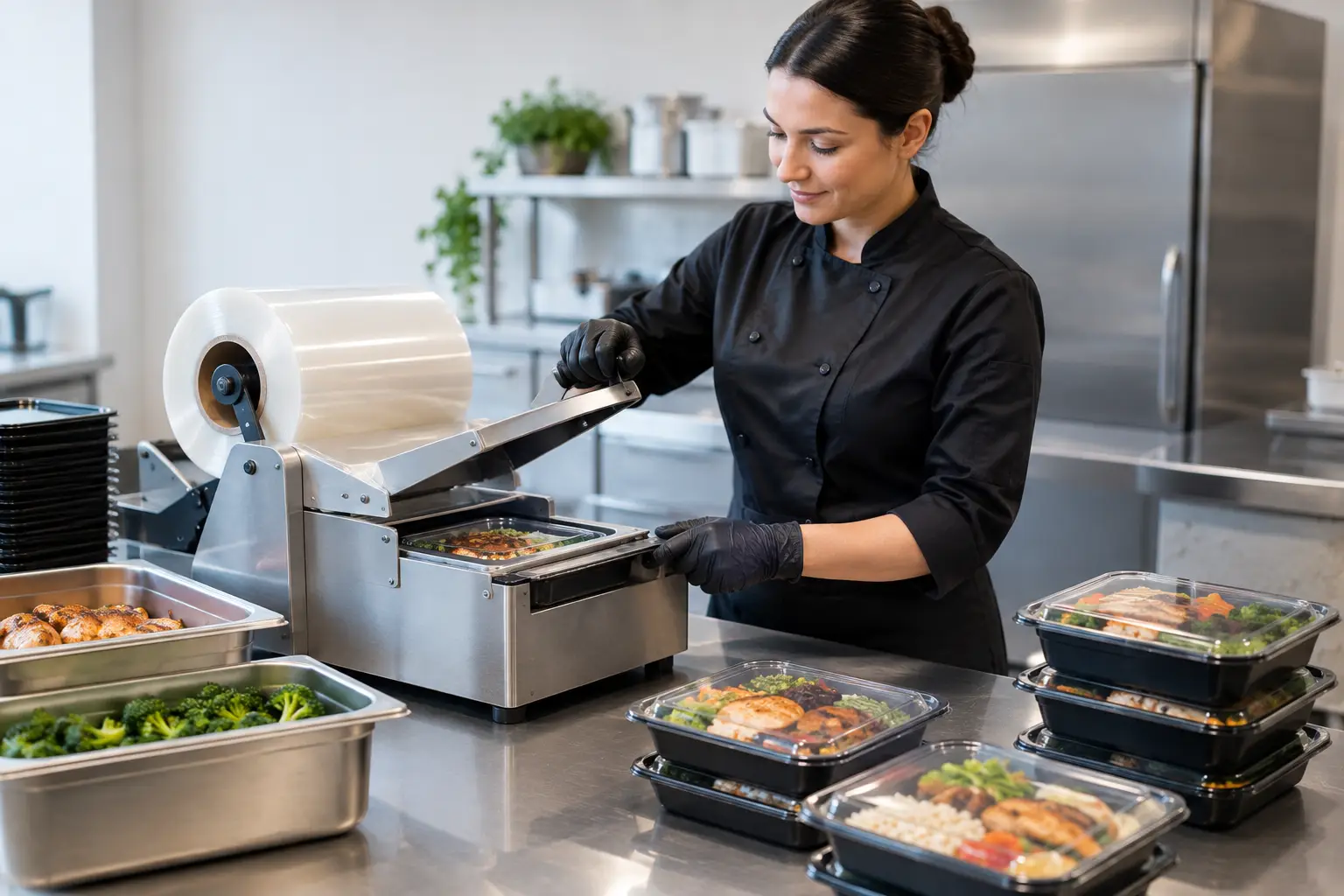
A prepared meal can leave the kitchen perfectly portioned and still disappoint the customer if the packaging leaks, warps, fogs up, or opens during delivery. For growing food operations, packaging is not a final detail. It is part of production speed, hygienic handling, shelf presentation, and repeatable customer experience. This complete prepared meal packaging guide helps operators build a system that works from the packing line to the customer’s table. SmartPackingUSA helps businesses match tray sealing equipment, containers, lids, and films so those components perform as one practical system.
Start With the Meal, Not the Machine
The right packaging choice begins with the food itself. A chilled protein-and-vegetable meal, a hot pasta entree, a sauced catering portion, and a refrigerated pet food tray each create different demands on the container and seal.
Consider the meal’s temperature at the time of packing, its moisture level, oil content, portion weight, and expected time in transit or refrigerated storage. A light salad may need clear presentation and secure compartment separation. A hot, sauce-heavy meal needs a durable tray and a seal that can handle transport without creating a messy customer experience. If the meal will be reheated, the tray material must fit the intended reheating method and operating instructions.
This is also where operators should decide whether a standard tray size can support the menu or whether custom packaging makes more sense. Standardization reduces changeovers, simplifies purchasing, and helps staff pack consistently. Custom containers can be worth considering when portion design, branding, retail shelf presence, or an unusual product shape requires a more tailored solution.
The Complete Prepared Meal Packaging Guide to Container Materials
Container material affects appearance, rigidity, heat tolerance, stacking performance, and how the product is perceived by customers. There is no universal best option. The right choice depends on the meal and the workflow around it.
Plastic trays are commonly selected for clear visibility, practical durability, and a familiar presentation for prepared meals. They can be a strong fit for chilled meal prep, deli programs, salads, and many delivery applications. CPET trays are often considered when the packaging application calls for a material suited to higher-temperature use. Aluminum containers offer a sturdy, familiar option for catering, baked meals, and certain hot-food formats.
For operators pursuing fiber-based presentation, cardboard and sugarcane containers can support a different brand look and may fit programs seeking eco-conscious packaging options. The trade-off is that not every fiber container works with every food type, temperature, or sealing material. Greasy or high-moisture foods require careful testing to confirm the selected tray maintains its structure and seal performance through handling and transport.
Tray geometry matters as much as tray material. Deep trays suit larger portions and layered meals, while shallow trays can improve presentation for retail-ready or portion-controlled products. Multi-compartment trays keep components separated, but they add sealing surface area and require the film, tooling, and machine setup to match precisely.
Check the Full Fit Before Ordering in Volume
A container should never be evaluated in isolation. Test the actual tray with the intended lid or sealing film, the product’s fill level, and the expected handling conditions. A tray that looks right on a sample table may perform differently once it is stacked, loaded into delivery bags, refrigerated, or handled by busy staff during a rush.
SmartPackingUSA can provide product samples and guidance for evaluating the complete packaging combination before a larger order. This approach helps reduce the costly mismatch of buying trays, films, and equipment from separate sources without confirming compatibility first.
Choose Between Lids and Sealing Film Based on the Workflow
Snap-on or press-on lids can be useful for applications that need quick manual packing, frequent opening, or a familiar takeout format. Their performance depends on the lid-to-container fit, staff consistency, and the way meals are stacked and transported.
Tray sealing film creates a sealed top surface by bonding the film to the tray flange through heat and pressure. For high-volume prepared meal operations, tray sealing can improve consistency, create a cleaner finished appearance, and support a more organized production flow. It also provides room for branded sealing film when presentation is part of the sales strategy.
Film selection should be made with the tray material and application in mind. The wrong film can lead to incomplete seals, excess film waste, difficult peeling, or inconsistent results from one production run to the next. Operators should also determine whether they need an easy-peel opening experience, a stronger seal for transportation, or a specific presentation such as a clear film or branded printed surface.
A seal is only as dependable as the condition of the tray flange. Overfilled trays, food residue on the rim, warped containers, and inconsistent tray placement can all interfere with results. Good packing procedures matter just as much as the equipment settings.
Select a Tray Sealer for Real Production Conditions
A tray sealing machine should fit the production floor, not simply look capable in a product specification. Begin with the number of trays your team needs to package during a typical hour, then account for peak periods, labor availability, tray sizes, and menu changes.
For some businesses, a compact operation with one primary tray size may need a straightforward sealing setup that is easy to train on and maintain. A growing commissary, meal-prep company, or food manufacturer may need a higher-output configuration to keep packing from becoming the bottleneck. Selected SmartPackingUSA tray sealing machine models can reach approximately 600 trays per hour with a single operator, depending on tray size, operator workflow, and production conditions.
Stainless-steel construction is a practical consideration for commercial environments where equipment must stand up to regular cleaning and active daily use. Adjustable controls are also valuable because seal performance can vary by tray material, film type, and product conditions. A machine should give the operator a repeatable process, not require constant guesswork.
Tooling and Changeovers Deserve Early Attention
If your menu uses multiple tray dimensions, ask how the machine will accommodate each format. Tooling, molds, and changeover procedures affect both flexibility and downtime. A business with one tray size may prioritize speed and simplicity. A caterer or manufacturer with multiple product lines may accept some changeover time in exchange for broader packaging capability.
Custom machine development can be a strong option when standard equipment does not match a container’s dimensions or a facility’s production requirements. SmartPackingUSA works with customers on custom-size machines, custom molds, and complete systems designed around the actual packaging application rather than forcing the product into an unsuitable format.
Build a Packing Line That Staff Can Repeat
Even a well-matched machine and tray can underperform when the work area is poorly organized. The goal is a clean, logical path: portion the meal, inspect the tray rim, place the tray for sealing, check the finished package, then move it to labeling, cold storage, dispatch, or retail staging.
Keep film rolls, trays, and backup supplies within reach without crowding the sealing area. Train staff to watch for common issues such as residue on tray flanges, improper film alignment, missed settings after a tray change, and overfilled portions. A short quality check at the line is faster than handling customer complaints, remakes, or damaged deliveries later.
Supply continuity also matters. If a specific container and film combination is central to your operation, purchasing should be planned around expected production volume and seasonal demand. Working with one packaging partner for equipment and compatible consumables can make replenishment and troubleshooting more straightforward.
Plan for Presentation, Brand, and Growth
Prepared meal packaging should protect the food, but it also communicates value before the customer takes the first bite. A flat, clean seal, a well-proportioned tray, and consistent labeling can make a meal-prep subscription or catered order feel more professional. Branded sealing films and custom containers can reinforce that impression for delivery, retail, and recurring customer programs.
Do not overbuild the system too early. A new meal-prep brand may benefit more from a reliable standard tray and efficient sealing process than from a highly customized format. On the other hand, an established operator with strong volume and a distinct retail identity may find customization supports better differentiation and operational consistency.
SmartPackingUSA supports food businesses through equipment selection, compatible packaging materials, training, warranty coverage, and after-sales support. The most useful next step is to test your real meal in your intended tray, with the film and machine setup you plan to use. A packaging system earns its value when your team can repeat the result quickly, cleanly, and confidently on its busiest day.
