

Blog
Plastic Versus Bagasse Food Containers Compared

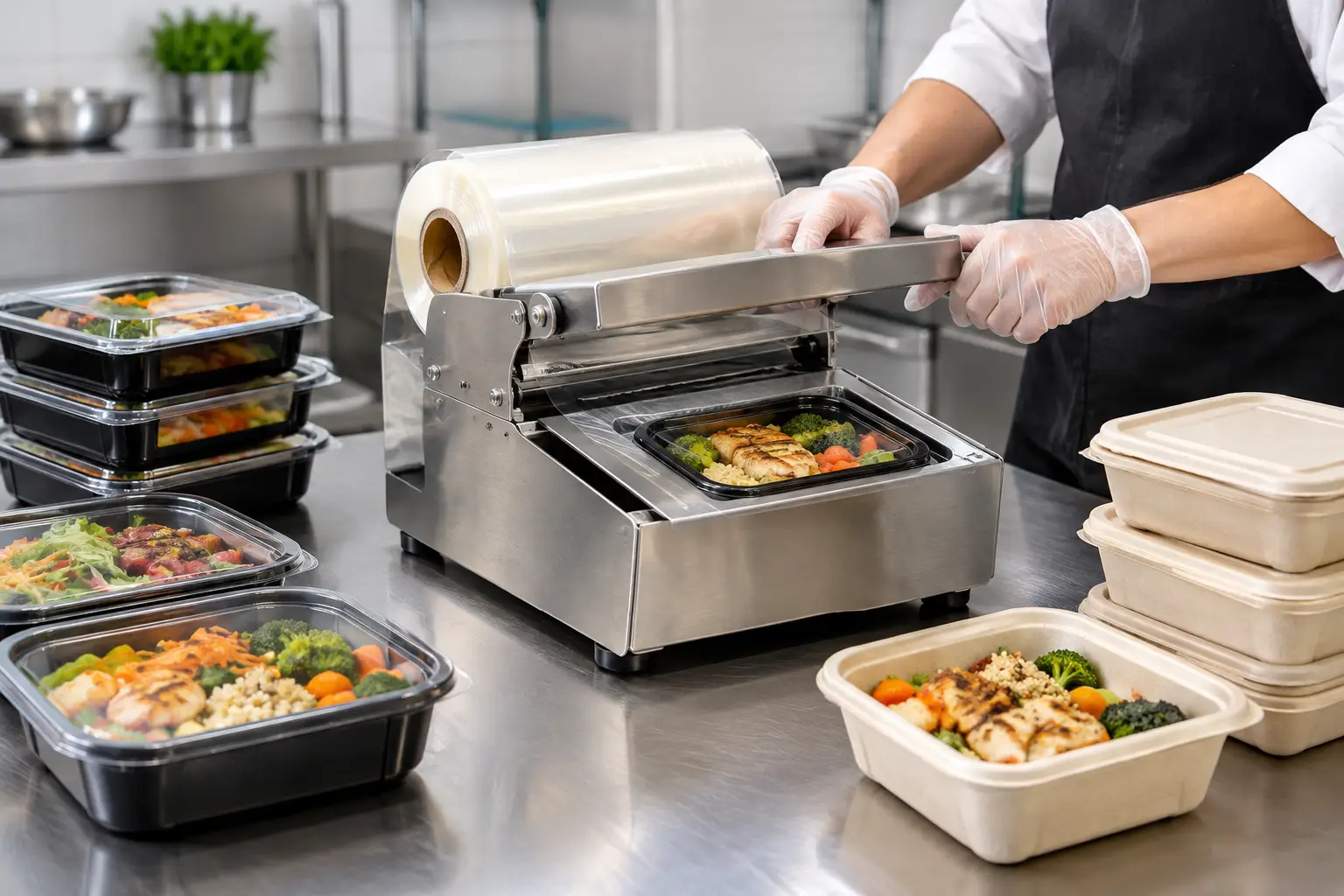
A container that looks good on a counter can still create slowdowns at the sealing station, leaks in delivery bags, or disappointing reheating results. When evaluating plastic versus bagasse food containers, food operators need to look beyond the material label and consider the full packaging workflow. SmartPackingUSA helps businesses match trays, sealing materials, and equipment to the food they produce and the way they distribute it.
For meal prep companies, caterers, commissary kitchens, and food manufacturers, the right choice comes down to product temperature, sauce level, shelf-life expectations, delivery conditions, branding goals, and machine compatibility. Neither material wins every application. The best container is the one that protects the meal, presents it professionally, and runs consistently through your packing operation.
Plastic Versus Bagasse Food Containers: The Core Difference
Plastic food containers are manufactured from a range of materials, each with its own performance characteristics. Polypropylene trays are commonly selected for prepared meals because they are lightweight, durable, and suited to many hot-food applications. PET, CPET, and other plastic formats can serve different needs based on temperature requirements, product visibility, rigidity, and intended use.
Bagasse containers are made from molded sugarcane fiber, a byproduct of sugarcane processing. They offer a natural, fiber-based appearance that many food businesses prefer for eco-conscious menu concepts, fast-casual service, and meals where a paper-like presentation supports the brand.
The practical difference is not simply plastic versus fiber. It is consistency versus visual positioning, moisture exposure versus material structure, and sealing performance versus the exact tray, film, and machine combination being used. A container should be evaluated as part of a complete system, not as a stand-alone purchase.
When Plastic Containers Make Operational Sense
Plastic trays are often the direct choice for operations that require dependable rigidity, a clean display, and repeatable packaging performance at volume. They can be especially useful for meal-prep businesses packing chilled meals, grocery-ready items, sauces, proteins, and multi-compartment menus.
A well-matched plastic tray can provide a stable sealing surface and maintain a uniform shape during handling, stacking, and transport. That consistency matters when operators are sealing hundreds of trays in a shift. It supports faster loading, more predictable film placement, and a polished finished package.
Clear plastic options can also help sell the food before the customer opens the package. For grocery shelves, refrigerated grab-and-go cases, and online meal-delivery photography, visibility can be a meaningful advantage. Customers can see portion size, ingredients, color, and freshness cues without breaking the seal.
Plastic is not automatically the answer for every menu, however. Businesses should consider how the tray will be stored, whether the customer will reheat it, the type of lid or film required, and whether the product needs a premium or natural-looking presentation. Material selection should always follow the application.
Best-fit applications for plastic trays
Plastic containers are commonly considered for high-volume prepared meals, refrigerated meal programs, protein and side-dish combinations, sauces or moist foods, retail-ready products, and deliveries where stacking strength is a priority. The exact tray material still needs to match the intended temperature and packaging process.
Where Bagasse Containers Add Value
Bagasse food containers can give a prepared meal a more natural, contemporary appearance. For brands built around fresh ingredients, plant-forward menus, catering, or environmentally conscious positioning, that visual signal can support the customer experience from the first look.
They are often used for hot prepared foods, takeout meals, and event service where the container is part of the brand presentation. A molded fiber tray can feel more substantial than lightweight disposable packaging and can help a meal look thoughtfully prepared rather than mass-produced.
The trade-off is that bagasse performance can vary by tray design, thickness, coating, compartment layout, and food application. A dry grain bowl and a saucy entrée place very different demands on a fiber-based container. Extended hold times, oily foods, highly liquid meals, and aggressive handling during delivery deserve real-world testing before a business commits to a large order.
For operations using tray sealing equipment, rim consistency is especially important. The tray must sit correctly in the tooling and present a reliable surface for the selected sealing film. A package that seals well in a quick sample test may still require adjustments to sealing time, temperature, pressure, or workflow under actual production conditions.
Bagasse is a packaging decision, not just a marketing decision
Choosing bagasse solely because it looks eco-conscious can create avoidable problems if it does not fit the food or process. The strongest programs start with product testing. Pack the actual entrée, hold it for the expected time, stack it as it will be transported, and evaluate the seal after delivery conditions.
That process helps identify whether bagasse supports your menu and whether another format, such as plastic, cardboard, CPET, or aluminum, is a better fit for a particular product line.
Compare the Factors That Affect Your Bottom Line
The container cost is only one part of the decision. A tray that causes rejected seals, product spills, slow packing, or customer complaints can cost more than a higher-priced option that performs consistently.
Start with the food itself. Hot meals, cold meals, oily foods, liquid-heavy recipes, and multi-compartment menus each create different packaging requirements. Consider how long the food will remain in the container before it reaches the customer. A catering order transported across town has different demands than a meal packed for a nearby pickup shelf.
Next, look at the sealing process. Tray sealing systems rely on the tray dimensions, rim profile, and compatible film or foil lid. A secure package requires the machine, tooling, container, and sealing material to work together. Switching trays without confirming compatibility can lead to inconsistent seals and unnecessary production interruptions.
Presentation matters as well. Plastic may better showcase colorful ingredients and organized compartments. Bagasse may reinforce a natural, chef-driven, or sustainability-focused brand image. The right choice should align with what customers expect from your food and what your team needs on the production floor.
Finally, consider supply continuity and standardization. It is easier to train staff and maintain quality when container sizes, films, and sealing settings are organized across the menu. Many growing operations benefit from reducing the number of packaging formats they manage while keeping enough flexibility for different meal types.
Build the Container Around the Sealing System
A tray sealer can improve consistency, hygiene, and packing speed, but the machine performs best when paired with compatible packaging components. SmartPackingUSA provides complete packaging systems that bring together tray sealing machines, containers, sealing films, foil lids, and custom options based on the customer’s application.
For businesses comparing plastic and bagasse, the process should begin with the tray dimensions and the food being packaged. From there, the packaging setup can be evaluated for fit, seal appearance, throughput needs, and operator workflow. Selected Smart Packing USA tray sealing machine models can reach approximately 600 trays per hour with one operator, depending on tray size, workflow, and production conditions.
Custom requirements deserve the same practical approach. If your menu uses a distinctive portion size, compartment design, or branded package format, custom containers, molds, and branded sealing films may help create a more recognizable finished product. The goal is not customization for its own sake. It is a package that works reliably and looks intentional at scale.
A Practical Way to Make the Decision
Before placing a bulk order, test a short list of candidate trays with your actual meals. Include the foods that create the most packaging stress: saucy entrées, oily proteins, hot sides, and items that may sit in delivery bags. Check how the container fills, how it fits the sealing process, whether the seal remains secure, and how the package looks after stacking and transport.
Bring your production team into the evaluation. Kitchen managers and packing staff will notice issues that are easy to miss in a conference-room review, such as trays that flex during loading, difficult-to-handle films, or formats that consume too much storage space.
If your operation needs a dependable path forward, SmartPackingUSA can help you evaluate container materials alongside the machine, film, and tooling requirements. A few well-planned samples and a system-level conversation can prevent a packaging choice from becoming a daily production problem.
