Blog
Commercial Tray Sealer Setup for Fast Packing

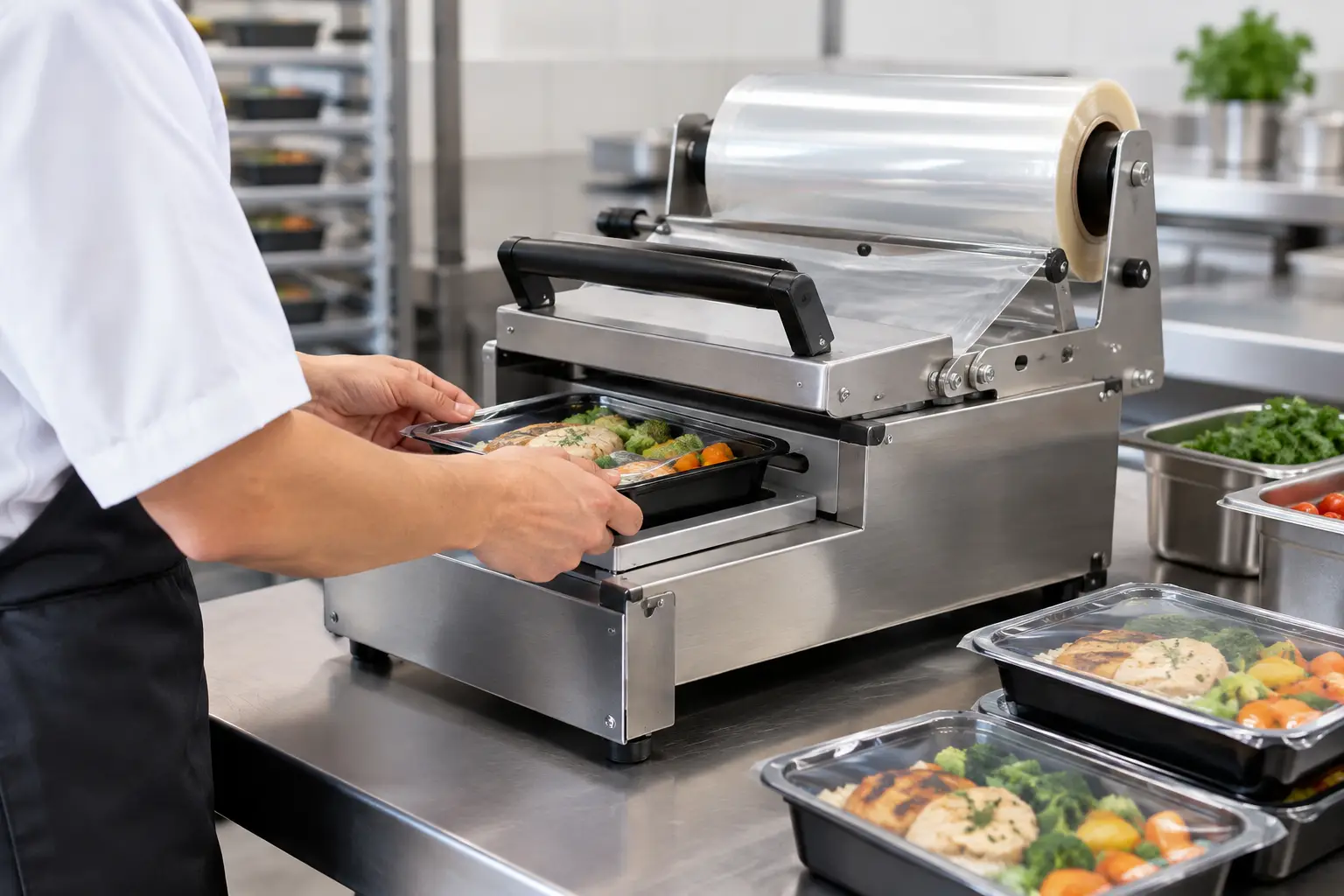
A commercial tray sealer setup is not simply a machine placed at the end of a prep line. It is a working system of equipment, trays, sealing material, product handling, and operator workflow. When one piece is mismatched, the result can be weak seals, wasted film, slow packing, or containers that do not hold up during delivery. SmartPackingUSA helps food businesses build systems around the actual containers, products, and production conditions they use every day.
For meal-prep kitchens, caterers, restaurants, commissaries, grocery operations, and food manufacturers, the right setup creates a more controlled packing process. Meals look consistent, staff can work faster, and every finished tray is better prepared for refrigeration, transport, display, or customer pickup.
Start With the Product and Tray
The product should drive the setup, not the other way around. A chilled prepared meal, a saucy entree, a fresh deli item, and a pet food portion can all require different container depths, materials, filling practices, and sealing approaches. Before selecting a machine, define what is going into the tray, how it will be stored, and how it will reach the end customer.
Start with the tray dimensions, including length, width, depth, rim shape, and compartment configuration. Tray sealers use a tooling area designed around a specific tray profile. If the tray rim does not sit correctly in the mold, even a capable machine cannot produce a dependable result. This is why changing containers after purchasing equipment often creates avoidable delays and added cost.
Material selection matters just as much. Plastic trays, CPET containers, aluminum containers, cardboard formats, and sugarcane or bagasse options each have different performance considerations. The sealing film or foil lid must be compatible with the tray rim material and the application. A package intended for a refrigerated meal program may have different needs than a hot prepared-food line or a shelf-ready specialty product.
Smart Packing USA can match machines with compatible containers, films, and lids rather than leaving businesses to source each component separately. That coordination helps reduce the trial-and-error that often happens when a machine, tray, and film come from unrelated suppliers.
Plan the Commercial Tray Sealer Setup Around Throughput
The right production speed is the speed your operation can support consistently. A high-output machine does not solve a bottleneck if trays are not filled in time, finished packages pile up without a place to go, or one operator must constantly leave the station to retrieve supplies.
Estimate the number of trays packed during a typical hour, then consider your busiest period. Include the time required to portion food, wipe tray rims when needed, load trays, seal them, inspect the finished package, label it, and move it into cold storage or shipping. This gives a more useful picture than looking only at machine cycle speed.
Selected Smart Packing USA tray sealer models can achieve up to approximately 600 trays per hour with a single operator, depending on tray size, operator workflow, and production conditions. That capacity can be valuable for growing meal-prep companies and commercial kitchens, but it should be paired with an organized upstream and downstream process.
A practical production line usually gives the operator enough room for a staging area of filled trays, a dedicated roll of sealing film, and a clear landing space for sealed packages. Keep labels, date coding tools, and secondary packaging close enough to prevent unnecessary walking, while avoiding clutter around the sealing area.
Choose the Right Capacity for Your Team
A smaller operation may prioritize a compact setup that produces a consistent seal without taking over the kitchen. A higher-volume operation may need a system that supports longer production runs and a more defined packaging line. Neither approach is automatically better. The best fit depends on order volume, staffing, available space, menu variety, and expected growth.
If your menu uses several tray sizes, decide whether those formats will run on the same machine with interchangeable tooling or whether standardizing containers would make more operational sense. Standardization can simplify purchasing, training, storage, and daily setup. On the other hand, custom container formats may strengthen presentation and portion control for a brand with a specialized product line.
Set Up the Workstation for Clean, Repeatable Seals
Tray sealing depends on clean contact between the tray rim and the sealing material. The workstation should support that basic requirement from the moment food is portioned. Overfilling trays, leaving sauce on the rim, or stacking filled containers where debris can reach the seal area can lead to inconsistent results.
Position the sealer on a stable work surface with sufficient room for safe operation and access for routine cleaning. The machine should fit into the actual traffic pattern of the kitchen, not just the available counter space. Consider where staff will stand, where they will place filled trays, and how they will remove finished packages without crossing paths with food prep.
Build a simple operating routine: fill consistently, check rims, load the tray correctly, run the seal cycle, inspect the package, and move it to the next step. A repeatable sequence makes it easier to train new team members and spot issues before a full production run is affected.
Sanitation should be part of the setup plan as well. Operators need time and access to clean contact areas according to the machine’s operating instructions and the facility’s procedures. Choose equipment that is practical to maintain in a commercial environment, then make cleaning responsibilities clear between shifts.
Match Film, Heat, and Pressure to the Package
A tray sealer works with a combination of heat, pressure, dwell time, tray design, and film compatibility. These settings cannot be treated as universal. A film that performs well on one container material may not be appropriate for another, and a change in tray supplier can affect the sealing result.
Run product samples before committing to a full packaging program, especially when using a new tray material, a custom container, or a branded film. Test packages under the conditions that matter to your business: refrigerated holding, stacking, delivery handling, display, or customer transport. Look at seal appearance, peel behavior where applicable, container rigidity, and whether the package maintains its presentation after normal handling.
The goal is not to use the highest possible setting. Excessive heat or pressure can damage some packaging materials or create an unattractive finish. Too little energy or poor material compatibility can leave a seal incomplete. The correct setup is the one that delivers a consistent, appropriate seal with the selected tray and film.
For businesses creating a branded meal program, printed sealing films and custom containers can turn the package into part of the customer experience. That value is real, but it should follow operational compatibility. First confirm that the package runs reliably. Then refine its appearance, branding, and presentation.
Prepare for Changeovers and Daily Support
Most growing food businesses eventually add menu items, tray sizes, or packaging formats. Plan for those changes from the start. Keep documented specifications for each approved tray and film combination, including the tooling used and the settings established during testing. This gives operators a reliable reference and reduces setup variation from one production day to the next.
Keep enough compatible trays and sealing materials on hand to avoid stopping a production run because one component is missing. Packaging supply continuity is especially relevant for businesses that produce on fixed weekly schedules or fulfill recurring meal subscriptions. Buying a machine without a dependable plan for trays, films, lids, and replacement packaging can create a costly gap in the line.
Training and after-sales support also affect long-term performance. Operators should understand basic loading, film handling, inspection, cleaning, and troubleshooting procedures. Management should know who to contact when a new container is being considered or when production requirements change.
When Custom Equipment Makes Sense
Off-the-shelf equipment is often an effective answer for standard tray formats. But a custom tray sealer or custom mold may be the better investment when your container has unique dimensions, your package design is central to your brand, or your production process requires a specific configuration.
Custom development should begin with actual container samples and a clear description of the product, packaging material, target output, and operating environment. This lets the machine, mold, container, and sealing material be designed as a coordinated solution rather than assembled through guesswork.
SmartPackingUSA supports complete packaging systems, including custom-size machines, custom molds, containers, sealing films, product samples, training, warranty coverage, and ongoing support. The most productive setup is usually the one built around the way your team already works, with enough capacity and flexibility to support the next stage of growth.
Before purchasing, bring your real tray samples, menu details, and expected hourly volume into the conversation. A commercial tray sealer setup that fits the product from day one gives your team a better chance to pack faster, present every order professionally, and keep production moving when demand rises.
