

Blog
CPET Versus Aluminum Meal Containers

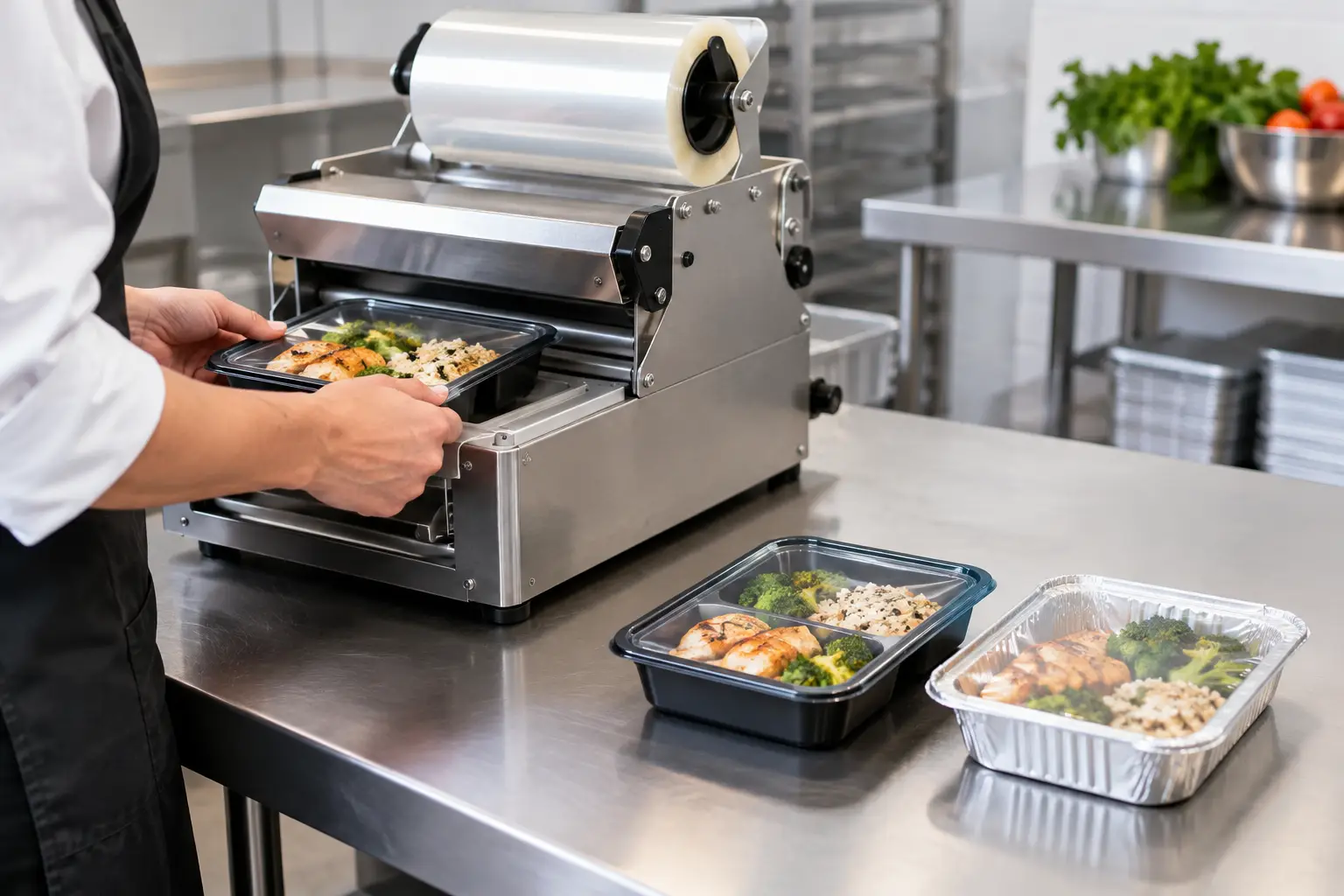
A container decision can affect far more than the look of a finished meal. It shapes how your team portions food, how reliably trays seal, whether meals travel cleanly, and how customers reheat them. For operators comparing CPET versus aluminum meal containers, SmartPackingUSA starts with the real production question: what must this package do between the packing line and the customer’s table?
Both materials are established choices for prepared meals, catering pans, retail foods, and frozen or refrigerated programs. Neither is automatically the better choice. The right fit depends on your menu, temperature requirements, filling process, distribution model, branding goals, and the tray sealing system behind it.
CPET Versus Aluminum Meal Containers: The Core Difference
CPET, or crystallized polyethylene terephthalate, is a rigid plastic commonly used for prepared-food trays. It is valued for its clean, consistent appearance and for its ability to support many chilled, frozen, and reheated meal applications when the specific tray is rated for those conditions. CPET trays are often available in defined compartments, colors, and shapes that help standardize portions and create a polished retail presentation.
Aluminum meal containers are lightweight metal trays that are familiar to consumers and kitchen teams. They are especially common where oven heating, catering, baking, and hearty foods are central to the operation. Their metallic appearance can communicate a traditional, ready-to-bake format, while their structure works well for many hot-food applications.
The difference is not simply plastic versus metal. It is a choice between two packaging systems with different strengths at the filling station, in transit, on the shelf, and during reheating.
Choose Based on the Meal’s Heating Path
Start with the customer’s reheating instructions. If meals are designed to move from freezer or refrigerator to microwave, CPET is often a practical option, provided the selected tray and sealing material are approved for the intended use. Its rigid format can also provide a more consumer-friendly appearance for compartment meals, protein-and-side combinations, and retail meal programs.
Aluminum is a natural consideration for meals intended for conventional oven reheating. It performs well in applications such as lasagna, baked pasta, casseroles, roasted proteins, and catering portions. However, conventional aluminum containers are generally not appropriate for microwave use unless the specific packaging and microwave instructions support that application. That distinction matters when customers expect one package to work in every appliance.
For a menu with several meal formats, a single container material may not be the most efficient answer. A meal-prep business might use CPET for microwave-oriented weekly meals and aluminum for oven-finished family pans. Standardizing the sealing process where possible can still reduce complexity, even when the tray materials differ.
Do not rely on material alone
A tray’s temperature performance depends on its specific design, thickness, dimensions, and the lidding material paired with it. Confirm the manufacturer’s use guidelines before launching a program. The food itself also matters: high-fat products, sauces, cooking times, and filling temperatures can change packaging requirements.
Sealing Performance Is a System Decision
A secure seal protects presentation and helps reduce leaks during storage and delivery. But the tray is only one part of that result. The sealing film or foil lid, flange condition, sealing temperature, dwell time, pressure, and operator workflow all influence seal quality.
CPET trays are commonly paired with compatible sealing films, creating a clean finished package that can support branded printed film programs. For businesses selling retail-ready meals, this can turn each tray into a consistent extension of the brand. Clear or specialty films may also support product visibility when the meal format calls for it.
Aluminum trays can be paired with suitable foil lids or other compatible lidding options. This format can be particularly useful for operations that need a more traditional oven-ready look or prefer an opaque lid for light-sensitive products. The tray flange must remain clean and properly formed for reliable sealing, just as it does with CPET.
SmartPackingUSA helps customers evaluate the complete package: machine, container, lid or film, and expected production workflow. This approach prevents a common problem in growing kitchens – buying trays from one source and equipment from another, then discovering that the materials do not seal consistently together.
Consider the Reality of Filling and Delivery
The best-looking tray is not always the best tray for a busy production floor. Think through how employees will handle it after filling, how many units will be stacked, and how far the meals must travel.
CPET can offer a more structured, uniform format for individually portioned meals. Compartment designs help keep components separated, which is valuable for meals with sauces, grains, vegetables, and proteins that should arrive distinct and appealing. A uniform tray footprint can also simplify carton packing and cooler organization.
Aluminum containers are often a strong fit for foods that benefit from a deeper pan format or a familiar catering presentation. They can be a sensible choice for larger portions and family-style meals. Still, operators should evaluate rigidity at the selected size, especially when trays are carried one-handed, stacked, or loaded with dense foods.
For delivery programs, test the actual meal under actual conditions. Fill it at normal temperature, apply the intended seal, stack it, refrigerate or freeze it as planned, and transport it on a typical route. A small production test reveals more than a countertop comparison ever will.
Presentation and Brand Positioning Matter
Packaging sets expectations before the customer takes a bite. CPET is often selected when a business wants a sleek, standardized meal kit or retail-ready tray. The tray can support organized portioning and a polished, modern look, especially when combined with a professionally sealed branded film.
Aluminum can be equally effective when the product promises comfort food, oven-baked convenience, or generous catering portions. For some menus, the material supports the product story better than a black or clear plastic tray would. A baked pasta tray, for example, may feel more at home in aluminum, while a calorie-counted weekly meal may be better served by a compartmented CPET format.
The point is not to choose the material that looks most premium in isolation. Choose the one that makes the food easier to understand, easier to reheat, and easier to trust.
Production Volume Changes the Calculation
At low volume, operators can often work around inconsistent containers or manual lid application. As output grows, those small issues become expensive. Misaligned lids, wrinkled films, poor seals, and tray-size variation slow the line and create rework.
A tray sealing machine matched to the container dimensions and material creates a more repeatable process. Selected SmartPackingUSA tray sealing machine models can reach approximately 600 trays per hour with one operator, depending on tray size, operator workflow, and production conditions. That kind of throughput is meaningful only when the trays, lidding material, and settings are matched correctly.
For growing operations, custom packaging can also be worth considering. A custom tray size or mold may help meet portion requirements, fit a preferred carton, support a differentiated presentation, or reduce unnecessary headspace. The right custom project begins with the food and workflow, not with a generic container catalog.
A Practical Selection Process
Before committing to CPET or aluminum, define the conditions your packaging must handle. Consider these four questions:
- Will customers reheat the meal in a microwave, a conventional oven, or both?
- Is the product sold chilled, frozen, hot, or through multiple temperature states?
- Does the menu require compartments, deep pans, or family-size portions?
- What sealing format and hourly output will the packing line need?
Then request samples and run a controlled test with your real product. Evaluate seal appearance, lid removal, tray handling, stacking, transportation, and reheating instructions. Include the people who fill and pack the meals in the evaluation. They will quickly identify issues that are easy to miss in a purchasing meeting.
SmartPackingUSA can help food businesses build a compatible packaging system around their container choice, from CPET or aluminum trays to sealing films, lids, machine configuration, training, and ongoing support. The goal is not to force every menu into one material. It is to create a packaging process your team can repeat confidently on every shift.
Choose the container that fits the meal’s full journey, then validate it on your own line. That is how packaging becomes a dependable part of growth instead of the next source of operational friction.
