
Blog
Sugarcane Bagasse Food Trays for Prepared Meals

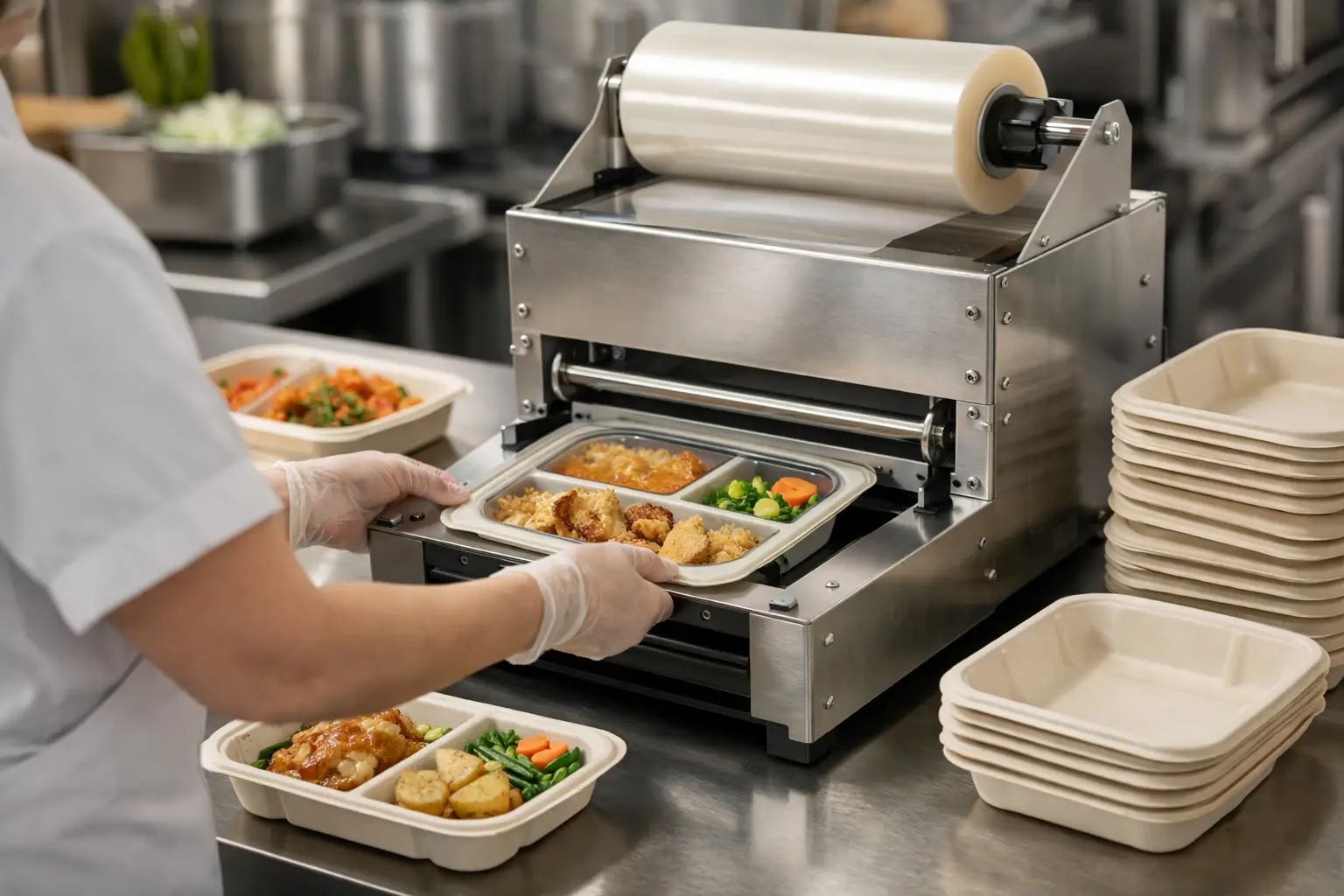
A prepared meal can leave a kitchen looking excellent and still arrive looking careless if the tray flexes, the lid fit is inconsistent, or the seal is not matched to the container. Sugarcane bagasse food trays give meal-prep operators, caterers, restaurants, and food producers a fiber-based packaging option, but the tray is only one part of a dependable packing process. Smart Packing USA helps businesses match containers with the sealing equipment and materials needed for a cleaner, more consistent finished package.
Why bagasse trays fit prepared-food operations
Bagasse is a molded fiber material made from the remaining pulp of sugarcane after juice extraction. For food businesses, its appeal is practical as well as visual: it offers a natural-looking alternative to conventional plastic containers and can support a more eco-conscious packaging presentation.
That presentation matters when customers pick up ready-to-eat meals from a refrigerated display, receive a delivery order, or open a catered lunch. A well-chosen bagasse tray gives portions structure, helps separate menu components, and makes the meal look intentional rather than hastily packed.
Still, bagasse is not a universal answer for every product. A dry grain bowl, chilled salad, baked entrée, and saucy hot meal place very different demands on packaging. The right decision depends on food temperature, hold time, moisture level, transport distance, portion weight, and the closure or sealing method your operation uses.
Selecting sugarcane bagasse food trays by application
Start with the meal itself, not with a generic tray size. The compartment layout should reflect how customers eat the product and how the kitchen builds it. A single-compartment tray may work well for pasta, bowls, or protein-and-vegetable combinations. Multi-compartment designs are often more useful when sauces, sides, and proteins need visual separation.
Depth deserves as much attention as length and width. A shallow tray can make an entrée look generous, but it may leave too little headspace for sauces, toppings, or a secure sealing process. A deeper tray protects taller portions and can reduce the chance of contact between the food and the lid or film. It may also require adjustments to portioning, case packing, and storage space.
For refrigerated meal prep, consistent dimensions are especially valuable. When every tray nests properly, stacks predictably, and fits the same packing station setup, crews spend less time correcting misaligned containers. This becomes more important as weekly production volume grows.
Consider the food’s moisture and weight
Fiber trays should be evaluated with the actual food product inside them. A tray that performs well with a rice-and-chicken meal may not be the right fit for a heavily sauced entrée, oily dish, or high-moisture refrigerated item held for several days. Run product-specific samples before placing a bulk order.
Test the tray after filling, during stacking, and after the expected delivery or pickup window. Check for softening, flexing, compression at the corners, and any change in appearance. This simple evaluation gives purchasing teams a clearer answer than selecting packaging from a catalog image alone.
The seal must match the tray
For operations using tray sealing equipment, compatibility is the central purchasing question. A quality tray and a quality film can still produce poor results if the tray flange, sealing surface, film specification, temperature settings, dwell time, and machine tooling do not work together.
Bagasse trays can be used in packaging systems that rely on properly matched sealing materials, but the exact solution must be confirmed for the container design and application. The tray rim needs a consistent, clean surface for the intended seal. The sealing material must be appropriate for the tray and the product’s temperature and handling requirements. A lid that snaps on may be suitable for some programs, while a sealed film can deliver a more controlled, professional presentation for others.
Before committing to production, verify the complete package: tray, lid or film, machine, and operating settings. A sample trial should include filled trays rather than empty containers. Food weight changes how the tray handles, and steam, oil, sauce, or residue near the flange can affect packing performance.
Build the packing station around repeatability
A reliable packaging line reduces avoidable variation. Place filled trays where operators can access them easily, keep sealing materials within reach, and establish a consistent process for wiping tray rims when needed. The goal is not to make the station complicated. It is to make correct packing easier to repeat through a busy shift.
For higher-volume prepared-food businesses, semi-automatic or automatic tray sealing can improve consistency and help one operator package a larger number of meals without relying on hand-applied lids alone. Selected tray sealing machine models can achieve up to approximately 600 trays per hour with one operator, depending on tray size, workflow, and production conditions. Actual output should always be planned around the product, staff movement, and quality checks required at your facility.
Durability is a workflow issue, not just a tray feature
A tray’s performance affects more than the customer experience. It affects how confidently employees can fill portions, how safely finished meals can be stacked, and how often a team has to repack damaged orders. If the container is undersized or lacks the rigidity needed for the meal, the problem travels through the whole operation.
Assess durability at the points where packaging is most likely to fail: filling, sealing or lidding, refrigerator storage, transport, and customer handling. Consider the weight of stacked meals in delivery bags and whether trays will be packed in larger catering cartons. A tray that looks adequate on a prep table can behave differently after multiple units are stacked together.
Presentation should be part of this review. Crooked seals, crushed corners, overcrowded compartments, and food smears around the rim reduce perceived quality even when the meal itself is excellent. Choosing a tray with the right footprint and headspace helps crews produce a cleaner final package with less handling.
Plan supply and customization before demand rises
Growing meal programs often outgrow fragmented packaging sourcing. Buying trays from one supplier, films from another, and equipment from a third can create delays when a small specification changes. The business may discover too late that a replacement tray has a different flange or does not work with existing tooling.
A complete packaging plan creates more control. It identifies the tray size and material, confirms the sealing method, establishes the expected throughput, and considers future needs such as branded sealing film, custom containers, or custom molds. This approach is useful for meal-prep subscriptions, regional catering programs, grocery-ready foods, and specialty pet-food packaging where a consistent retail appearance matters.
Customization is not always necessary. Standard containers are often the fastest, most cost-effective choice for a new menu or pilot program. Custom packaging makes more sense when a business has stable volume, a defined product format, or a brand presentation that cannot be achieved with an off-the-shelf tray. The key is to choose based on operating requirements, not simply on appearance.
A practical evaluation process
Before purchasing sugarcane bagasse trays at scale, run a controlled test with your actual menu and packing workflow. Fill trays to normal portion weights, apply the intended lid or seal, store them for the expected hold period, and move them through a realistic pickup or delivery scenario. Review the results with the people who portion, pack, transport, and receive customer feedback.
Look closely at portion fit, rim cleanliness, stackability, closure performance, and the appearance of the meal after handling. If one issue appears repeatedly, correct the container size, sealing material, machine setting, or station workflow before expanding volume. Packaging should support production, not create a daily exception process for the team.
The best tray is the one that fits the food, works with the selected closure, and keeps your operation moving at a predictable pace. Request product samples, test the full packaging combination, and make the final choice based on real production conditions rather than assumptions.
