
Blog
How to Reduce Packaging Leaks in Food Service

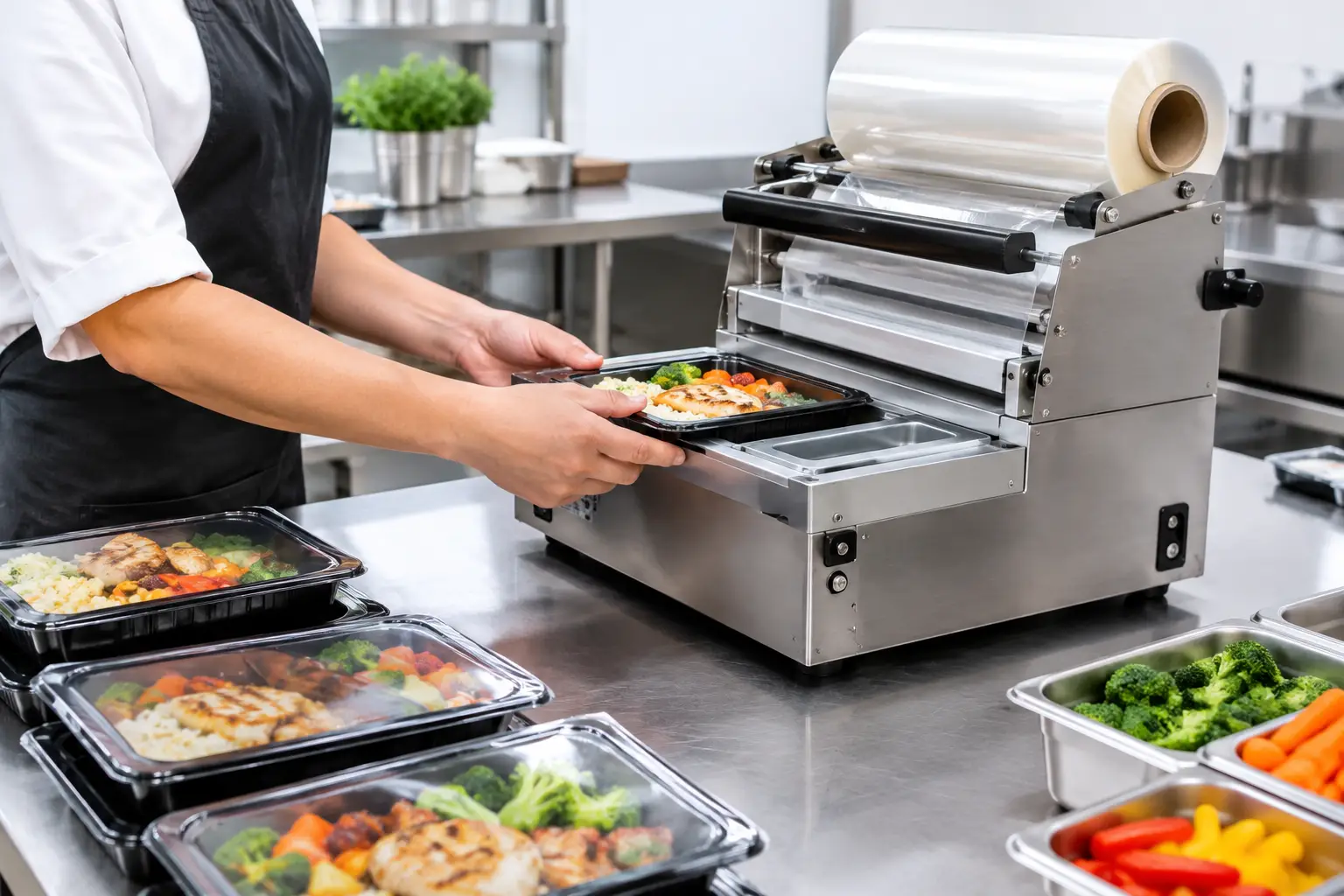
A leaking meal tray can undo the work of a busy kitchen in minutes. It creates cleanup for delivery drivers, weakens customer confidence, and can turn a carefully prepared order into a refund request. Learning how to reduce packaging leaks starts with treating the tray, film, machine, product, and operator workflow as one connected system. SmartPackingUSA helps food businesses build that system around their actual containers, menu items, and production demands.
Start With the Right Tray and Seal Material
Most packaging leaks are not caused by one dramatic equipment failure. They begin with a mismatch: a tray rim that does not suit the film, a sealing material selected for the wrong application, or a container that flexes too much during handling.
The tray flange is especially important. This is the flat rim where the sealing film bonds to the container. It must be clean, level, dry, and wide enough to provide a consistent sealing surface. If the rim is warped, damaged, or covered with sauce, oil, or food particles, even a well-run tray sealer may leave channels where liquid can escape.
Choose containers and sealing films that are designed to work together. Plastic, CPET, aluminum, cardboard, and sugarcane trays can each serve different menu and presentation needs, but their sealing requirements vary. A film that performs well on one tray material may not produce the same reliable bond on another. The practical goal is not simply to buy a stronger film. It is to match the film structure and seal layer to the specific container material and rim design.
For operations that use foil lids, the same principle applies. The lid must be compatible with the container and the intended sealing process. A complete packaging system reduces guesswork because the machine, tray, lid, and sealing material are selected to work as a set.
Control Product Fill and Rim Contamination
A perfect seal cannot compensate for a tray that is overfilled or contaminated at the sealing edge. Many prepared-food leaks begin at the packing table, before the tray reaches the machine.
Set realistic fill levels for each SKU, particularly for soups, sauces, gravies, dressings, and high-moisture proteins. Leave adequate headspace so the product does not push into the flange area when trays are moved, stacked, or placed on a delivery shelf. The right amount of headspace depends on the food, tray depth, and transportation conditions, so test filled trays instead of relying on a single rule across the menu.
Train staff to keep food below the rim and wipe any spills before sealing. This step matters most with oily sauces and fine food particles that can be difficult to see. A quick rim inspection takes seconds, while a failed seal can cost the order, the packaging, and the customer relationship.
For high-volume meal prep, standard scoops, portioning tools, and fill guides can make this process more consistent. Portion control supports cost management, but it also protects seal quality.
Set the Tray Sealer for the Actual Application
Tray sealers need the correct combination of temperature, dwell time, and pressure for the materials being used. Settings that worked for a shallow plastic entrée tray may not be appropriate for a deeper aluminum container or a fiber-based tray.
Temperature activates the seal layer, dwell time determines how long heat and pressure are applied, and pressure helps create full contact across the tray rim. If heat or dwell time is too low, the seal may be incomplete. If settings are too aggressive, the film can distort, the tray can deform, or the seal area can become inconsistent. The best settings are application-specific rather than universal.
Start with the recommended setup for the selected tray and film, then run production-representative samples. Test with the real food product, at the normal fill level, after typical cooling or holding conditions. This is particularly important when packaging hot foods, chilled meals, or menu items with heavy sauces.
SmartPackingUSA can help businesses match tray sealing machines and packaging materials to their container dimensions and production needs. For operations using custom trays or branded sealing films, confirming compatibility before a full rollout prevents expensive adjustments after packaging is already in motion.
Check Seal Coverage, Not Just Seal Appearance
A seal may look smooth from the top and still have a small unsealed section along the rim. Build simple checks into the shift: inspect the perimeter, gently test the bond at several points, and look for wrinkles, folds, or visible food trapped in the seal area.
Pay close attention to tray corners. Corners can be more demanding than straight edges, especially when the tray has a complex shape or deep compartments. If leaks repeatedly occur in the same location, do not assume the operator is at fault. Review the tray shape, tooling fit, film alignment, and sealing settings together.
Keep Tooling, Film Feed, and Machine Surfaces Clean
Residue on the sealing plate or tooling can affect heat transfer and prevent uniform pressure. In commercial kitchens, buildup can happen quickly from steam, oils, splatter, and packaging debris. A cleaning routine is not only a sanitation task. It is part of leak prevention.
Follow the machine cleaning and maintenance procedures provided for the equipment. During production, check that the tooling area is free of loose film, food residue, and accumulated debris. Confirm that the film is tracking straight and advancing smoothly. Film that is misaligned, loose, or wrinkled can create incomplete seals and unnecessary material waste.
Also inspect trays before use. Stacked containers may be damaged during shipping, storage, or hurried handling. Bent rims, crushed corners, and distorted flanges should be removed from the line rather than sent through the sealer. A short receiving and pre-production check can keep damaged packaging from reaching customers.
Test for the Transportation Conditions You Actually Face
A tray that stays sealed on a prep table may fail after being stacked in a delivery bag, carried up stairs, or held in a hot vehicle. Leak reduction requires testing the finished pack under realistic conditions.
Run filled sample trays through a basic handling test. Refrigerate or heat-hold them as needed for the menu, stack them as your team would for pickup or delivery, and move them through normal handling. Check for seepage around the perimeter, product movement into the rim, tray flexing, and lid damage.
For catering and bulk meal programs, test the packed product in the outer packaging used for transport. A secure tray seal is essential, but it can still be stressed by poor stacking, heavy items placed on top, or inadequate support inside the carrier. Packaging performance is often determined by the entire route from sealing station to customer.
Create a Simple Leak-Prevention Standard
The most dependable operations turn good sealing practices into a repeatable line standard. Staff should know the approved tray and film for each product, the fill target, the correct machine setup, and what a passing seal looks like.
Use a short start-of-shift verification and repeat it when changing tray sizes, films, or menu items. Document the settings that work for each packaging format so operators are not resetting the machine from memory. When a leak occurs, record the tray type, film, product, fill condition, machine settings, and location of the failure. Patterns become easier to correct when the details are captured.
This approach also supports growth. As production volume increases, consistency matters as much as speed. Selected SmartPackingUSA tray sealing machines can support output of up to approximately 600 trays per hour with a single operator, depending on tray size, workflow, and production conditions. That capacity delivers better results when the packaging process is standardized around compatible materials and trained handling.
Build a Packaging System That Holds Up
Reducing leaks is rarely about finding one stronger container or turning up the heat on a machine. It comes from matching materials, protecting the sealing surface, controlling portions, maintaining equipment, and testing the package as it travels through the real world.
If recurring leaks are slowing down your meal prep, catering, restaurant, food manufacturing, or pet food operation, SmartPackingUSA can help evaluate the complete packaging setup, from trays and films to machine configuration and custom packaging needs. The right system should help your team pack faster, present food professionally, and send every order out with the confidence that it will arrive the same way it left your facility.
