
Blog
Restaurant Packaging System Guide for Busy Kitchens

A spilled sauce inside a delivery bag can erase the value of a carefully prepared meal. So can a loose lid, fogged container, mismatched film, or a packing station that slows down the entire kitchen at the busiest hour. This restaurant packaging system guide helps food businesses build a coordinated setup where containers, sealing materials, and equipment work together. SmartPackingUSA helps operators move beyond piecing together random supplies and toward a packaging process built for reliable output.
Start With the Meal, Not the Machine
The right system begins with what you are packaging. A single restaurant may need different solutions for hot entrées, chilled meal-prep portions, sauces, family meals, desserts, or pet food. The product’s temperature, moisture level, portion size, holding time, and delivery route all affect the container and closure you should choose.
For example, a sauce-heavy pasta meal needs a secure seal and a tray that holds its shape during stacking and transport. A refrigerated meal-prep program may prioritize clear presentation, portion consistency, and efficient batch packing. A catering operation may need larger formats that protect food quality through staging, transport, and service. The machine should support those requirements, rather than forcing the menu into a limited tray format.
This is also where growth plans matter. A solution that works for 75 meals per day can become a bottleneck when orders reach several hundred. Consider the number of trays packed during your busiest hour, not just average daily volume. That gives you a more useful starting point for selecting equipment and workflow.
The Core Parts of a Restaurant Packaging System
A complete packaging system has four connected parts: the tray or container, the sealing film or foil lid, the tray sealing machine, and the packing workflow. Each part affects the others. Choosing them together reduces fit issues, inconsistent seals, and unnecessary material waste.
Containers Set the Foundation
Food containers need to match both the product and the customer experience you want to deliver. Plastic trays can offer clarity and convenient presentation for prepared meals. Sugarcane and cardboard options can support brands seeking fiber-based packaging choices. CPET containers may be appropriate for applications that require durable ovenable meal packaging, while aluminum containers remain a practical option for many prepared-food and catering uses.
Material choice is not only a branding decision. Consider how the container performs when filled, stacked, refrigerated, carried, and opened. A tray with insufficient rigidity can flex during sealing or transit. A container that is too deep or too shallow for the portion can make meals look underfilled or create excess headspace. Standardizing a small number of useful sizes often simplifies purchasing, training, storage, and line setup.
When an off-the-shelf format does not fit the product, custom containers and custom molds can create a more precise match. This is especially valuable for businesses with distinctive portioning, retail requirements, or branded presentation goals.
Sealing Film Must Match the Tray
A sealing film is not a universal roll of material. It must be compatible with the tray’s rim, material, dimensions, and intended use. The wrong film can produce weak seals, uneven edges, or excess film waste, even when the machine itself is operating correctly.
Film selection should account for how the meal will be handled after packing. Will it be refrigerated? Will it travel through a third-party delivery network? Does the customer need a clear view of the food? Is an easy-open feature useful? The answers help determine the right balance of seal strength, appearance, and convenience.
For certain applications, foil lids may be the better fit. They can provide a clean, professional closure for compatible containers and are useful where product presentation or handling requirements call for that format. Branded sealing films are another way to turn every packed meal into a consistent brand touchpoint without changing the food itself.
Tray Sealing Equipment Creates Consistency
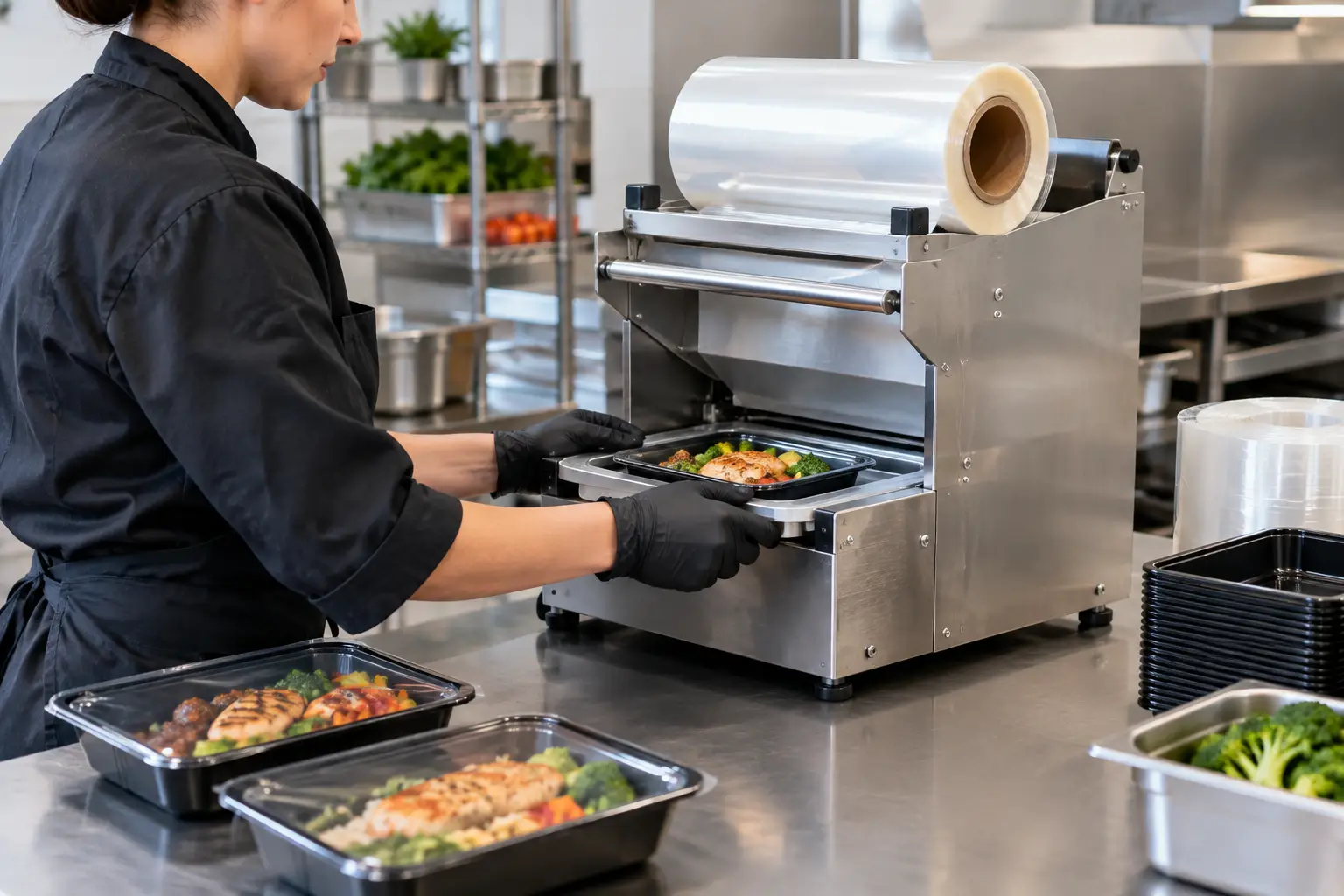
Manual lidding can work at very low volume, but it can become inconsistent as orders increase. A tray sealing machine applies controlled heat and pressure to create repeatable closures across a production run. That consistency can improve packing speed, reduce mess during transportation, and give finished meals a more polished appearance.
The appropriate machine depends on your tray dimensions, production target, operator workflow, available workspace, and preferred packaging materials. Selected SmartPackingUSA tray sealing machine models can achieve up to approximately 600 trays per hour with one operator, depending on tray size, production conditions, and how efficiently the operator is supplied and loading trays.
Capacity numbers should guide the conversation, not replace it. A high-output machine cannot compensate for a cluttered packing table, delayed food portioning, or frequent changeovers. The best setup balances machine capability with the pace of the kitchen around it.
How to Choose the Right Production Setup
Before purchasing equipment, map the path from finished food to the outgoing order. Watch where trays are filled, where they wait, where they are sealed, labeled, bagged, and staged for pickup. Small layout problems often become expensive when volume rises.
A practical setup keeps containers and film within easy reach of the operator, while allowing room for filled trays to enter and sealed trays to exit without crossing traffic. Assign clear responsibilities during peak periods. One person may portion food while another seals and checks finished packages. In smaller operations, one employee may do both, which makes machine simplicity and easy controls especially valuable.
Ask these questions during evaluation:
- Which tray sizes will be used most often, and will the system need to handle multiple formats?
- What is the realistic number of trays that must be sealed during the busiest hour?
- Are meals hot, chilled, frozen, saucy, heavy, or likely to be stacked in delivery bags?
- How much counter space, electrical access, and storage space are available?
- Will the business need custom tray dimensions, branded film, private-label packaging, or bulk supply support?
The goal is not to buy the largest machine available. It is to build a system that keeps pace with your operation while leaving room for planned growth.
Avoid the Common Compatibility Problems
Many packaging frustrations come from treating trays, lids, film, and machinery as separate purchases. A container may look suitable but have a rim that does not seal properly with the selected film. A film roll may be economical but create avoidable waste if its width or sealing characteristics do not match the tray. A machine may be capable of higher output but slow down the line if frequent tray changes are required.
Samples are useful before making a bulk commitment. Run your actual food through the proposed container and seal it under normal conditions. Stack the packages, refrigerate them if applicable, place them in your delivery bags, and review the result from the customer’s perspective. Look for clean seal lines, stable tray shape, manageable condensation, and a presentation that reflects the quality of the meal.
Training also matters. Operators need to understand loading, sealing settings, routine cleaning, and basic troubleshooting. Consistent handling protects production speed and helps extend the useful life of equipment. Warranty coverage and after-sales support add practical value because packaging downtime can quickly disrupt meal production.
When Customization Is Worth It
Custom packaging is not necessary for every restaurant. Standard containers are often the most efficient choice when menus and portions fit established formats. But customization can be a smart move when packaging is part of the product strategy.
A custom-size machine may be appropriate when a business uses unique container dimensions that support portion control, merchandising, or a specific customer experience. Custom containers can help a meal-prep brand create a recognizable retail look. Branded sealing films can reinforce identity at the moment customers open their meals. For pet food producers and specialty pet retailers, a matched system can help create clean, dependable packages for prepared pet food or treats.
SmartPackingUSA develops complete solutions around the application, matching machines with compatible containers, films, and lids instead of leaving buyers to solve compatibility after delivery. That approach is particularly useful for growing operators who want one accountable packaging partner from samples and equipment selection through training and ongoing support.
Build for the Next Busy Friday
A restaurant packaging system should make peak production more predictable, not introduce another source of stress. Start with the food, choose containers that protect its quality and presentation, pair them with compatible sealing materials, and select equipment that matches real operating volume. Then test the complete setup under the same conditions your team faces on a busy service day.
If your current packages leak, look inconsistent, or take too long to close, it is time to evaluate the whole system rather than replacing one component at a time. SmartPackingUSA can help your team review tray formats, sealing materials, machine requirements, and custom options so your packaging line is ready for the next order surge.
