
Blog
How to Choose Sealing Films for Food Trays

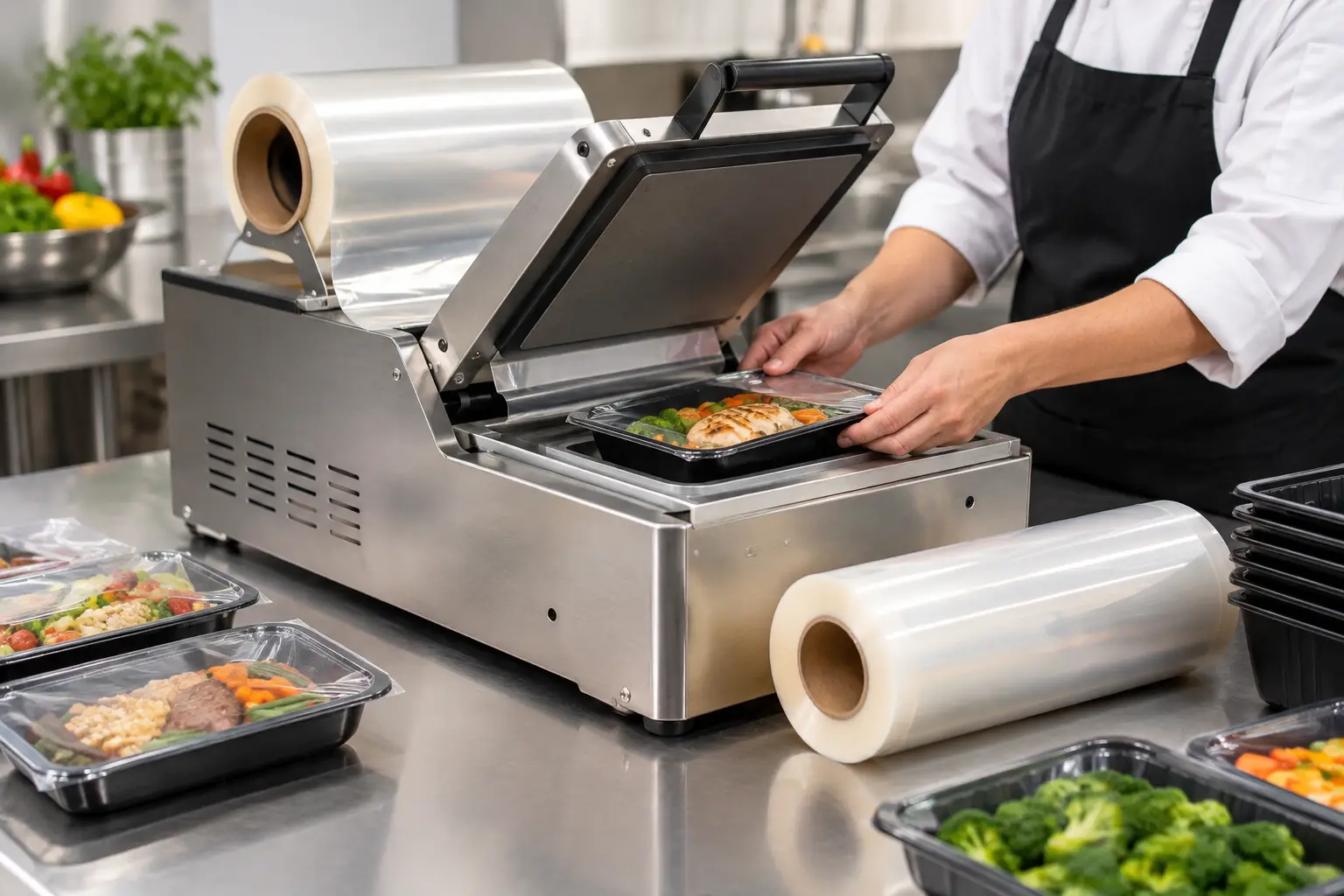
A sealing film can look like a small purchasing decision until the first delivery arrives with lifted corners, leaking sauces, or trays that do not open cleanly for customers. For prepared-food operations, the film affects packing speed, transport performance, product presentation, and the consistency of every tray leaving the kitchen. SmartPackingUSA helps businesses evaluate the complete system – tray, film, machine, and workflow – so the seal is built for the actual application rather than selected by guesswork.
How to choose sealing films starts with the tray
The first rule is simple: choose the film for the container material and sealing surface, not just for the food inside. A film that seals well to one tray may perform poorly on another, even when the trays look similar. The rim material, rim width, tray shape, and surface condition all influence the seal.
Common tray materials include plastic, CPET, cardboard, sugarcane fiber, and aluminum. Each may require a compatible sealing layer and the proper heat, pressure, and dwell time from the tray sealing machine. A film intended for plastic trays should not be assumed compatible with coated paperboard or aluminum containers without confirming the match.
The tray rim also deserves close attention. It needs to be clean, flat, and within the dimensions supported by the machine tooling. Food residue, oil, moisture, or an uneven rim can prevent a consistent bond, regardless of film quality. If you are changing tray suppliers, tray sizes, or materials, test the new combination before committing to a large film order.
Match the film to the container’s use case
A meal-prep company packing chilled entrees has different needs than a caterer producing same-day delivery trays. A pet food producer may need a different tray format and opening experience than a grocery operation packaging ready-to-heat meals. The right film depends on how long the product will be stored, how far it will travel, how it will be handled, and how the customer is expected to open it.
For example, a high-sauce meal may need stronger resistance to leakage around the rim. A premium retail meal may prioritize a clean, professional peel and a clear view of the product. A hot-fill application may require a material combination that can be validated under actual production conditions. The best choice is rarely the lowest-cost roll on paper. It is the film that protects the product while keeping labor, rework, and customer complaints under control.
Define the performance you need before ordering
Sealing films are available in different structures, thicknesses, finishes, and functions. Rather than selecting from a catalog based on appearance alone, write down what the package must do from packing through final use.
Start with the product temperature at the point of sealing. Hot foods can create steam and condensation, while cold foods may introduce moisture on the rim. Both conditions can affect seal consistency. Next, consider the food itself. Oily proteins, acidic sauces, dry snacks, and liquid-rich meals behave differently during filling, transport, and storage.
Then consider the desired opening style. Peelable films can support a more convenient customer experience, but the peel performance needs to be appropriate for the tray and application. A seal that is too light can lift during delivery. A seal that is too aggressive can frustrate customers or distort the tray during opening. Testing matters because the correct balance depends on the full packaging combination.
Visibility is another practical decision. Clear film can help showcase colorful meals, fresh ingredients, and portion quality. Printed or branded sealing films can create a more polished presentation and reinforce your identity across delivery, retail, and pickup orders. For many growing brands, packaging is one of the few physical touchpoints customers see repeatedly.
Evaluate machine compatibility and operating conditions
Film selection cannot be separated from the tray sealing machine. A machine needs the correct tooling, temperature settings, pressure, and sealing time to produce dependable results. Even compatible materials can underperform when the equipment settings are not aligned with the film and tray.
Ask whether the roll width, core size, and roll direction work with your equipment. Confirm that the film can be positioned and cut correctly for the tray format. For operations running multiple meal sizes, it is also useful to plan how film changes and tooling changes will affect the production schedule.
Production volume should guide the decision as well. A small catering operation may value flexibility for varied tray formats, while a busy commissary kitchen may prioritize consistent output during long packing runs. SmartPackingUSA can match sealing films with tray sealing machines and container dimensions, including custom packaging projects where standard options do not fit the workflow.
Machine settings should be established through real product trials, not assumed from a generic specification. Run trays that reflect normal production: filled to the usual level, packed at the expected temperature, and handled as they would be during delivery or storage. Check for complete seals around all edges, clean cutting, film tension, and repeatability across several cycles.
Consider the full path from kitchen to customer
A seal may look excellent immediately after packaging but fail after stacking, refrigeration, transport, or customer handling. That is why operational testing should extend beyond the sealing station.
Review how trays are packed into bags, delivery boxes, or retail cases. If containers are stacked, the film must hold up to contact and movement without catching or lifting. If meals are transported over longer routes, test the packaging after realistic travel conditions. If the product is refrigerated or reheated according to your process, confirm the packaging system is suitable for those intended conditions.
Presentation also matters. Wrinkled film, off-center cuts, or inconsistent tension can make a carefully prepared meal look less professional. The film should support a clean, uniform finish that employees can reproduce shift after shift. Consistency is particularly valuable for brands that use meal photos, retail displays, or branded delivery experiences to win repeat business.
Do not treat sustainability as a separate decision
Many food businesses are adding cardboard or sugarcane-based containers to meet customer expectations and brand goals. These trays can be a strong fit for certain menus, but the sealing film still has to be selected for the container’s specific sealing surface.
The practical question is not whether one material is universally better. It is whether the tray and film combination supports your product, operating conditions, presentation standards, and disposal goals. A package that looks environmentally thoughtful but leaks during delivery creates a different kind of waste through remakes, refunds, and damaged food.
Discuss the full package specification before changing materials. That includes the tray, film, machine tooling, application settings, product temperature, and expected distribution process. A coordinated decision protects your investment and avoids ordering components that do not work together.
Request samples and run a controlled test
Before placing a bulk order, request samples of the proposed tray and film combination. A focused test can reveal issues that product sheets cannot: rim contamination during filling, film curl, inconsistent cuts, weak corners, or an opening experience that does not meet expectations.
Test with the employees who will run the line, not only with management. Operators can identify whether the roll loads easily, whether the film tracks properly, and whether the process slows down during busy periods. Record the machine settings that produce the best result and use them as the starting point for training and standard operating procedures.
A useful test should check more than whether the lid stays attached. Review seal appearance, leakage, ease of opening, tray deformation, stacking performance, and consistency across multiple trays. If your business uses more than one menu format, test representative products rather than assuming one successful trial covers every item.
Build supply continuity into the buying decision
Film shortages or last-minute substitutions can disrupt a packaging line quickly. Select a supplier that can support recurring orders and help maintain compatibility as your operation grows. Standardizing a reliable tray-film-machine combination can simplify purchasing, operator training, and quality control.
For businesses introducing branded films, custom containers, or new tray dimensions, planning lead times is especially important. Custom packaging can improve presentation and differentiation, but it should be coordinated with forecasted volume and production schedules. SmartPackingUSA supports complete packaging systems, from sealing films and containers to compatible tray sealing equipment, training, warranty coverage, and after-sales guidance.
The right sealing film should make your packaging line easier to run, not create another variable for your team to manage. Bring your tray sample, menu details, production goals, and packaging concerns into the conversation. SmartPackingUSA can help you test a matched system that delivers secure seals, a professional finish, and a more dependable path from kitchen to customer.
