
Blog
How to Package Prepared Foods Safely at Scale

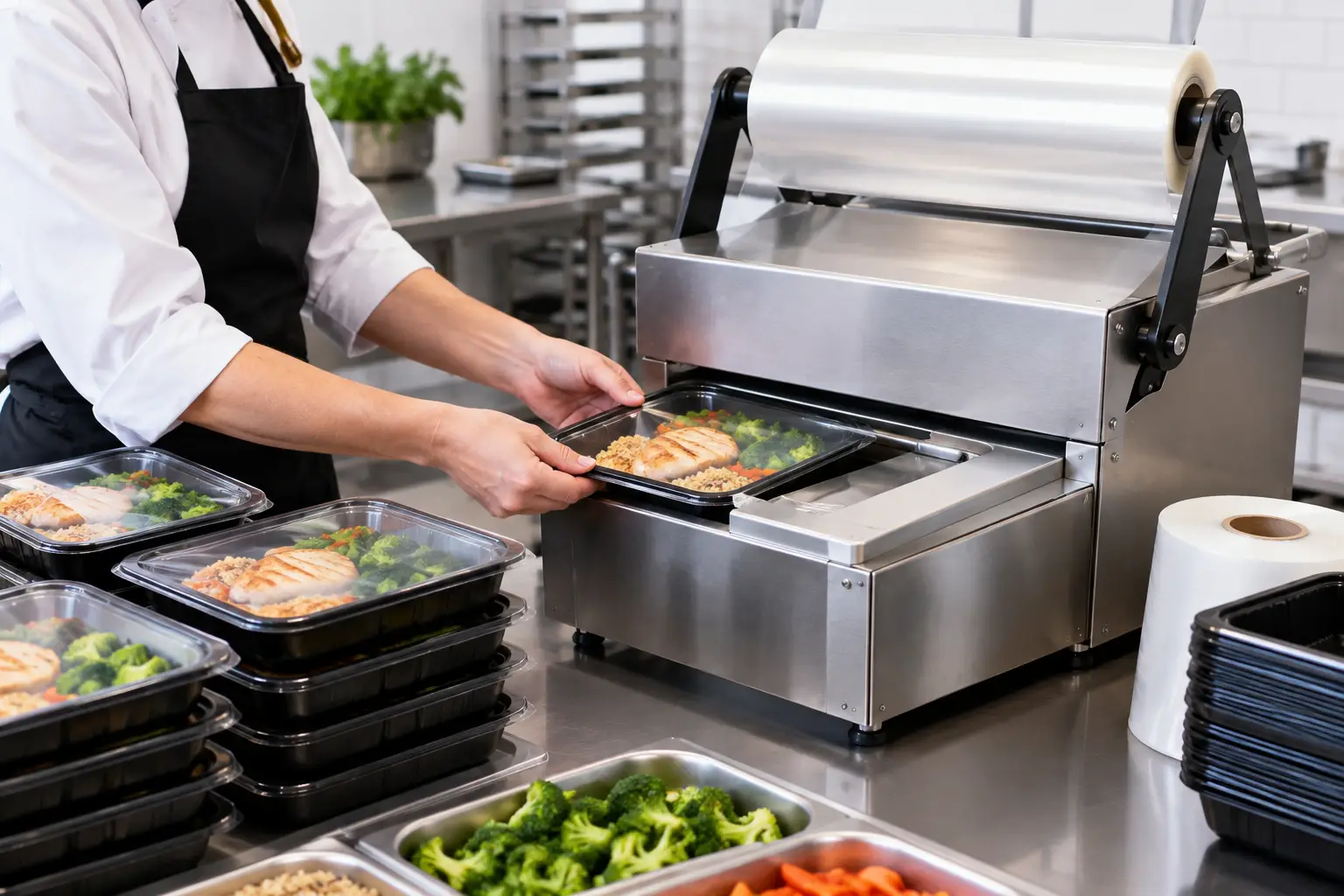
A prepared meal can leave the kitchen looking excellent and still fail during delivery because of a loose seal, incorrect holding temperature, cross-contact during packing, or a container that was not designed for the product. To package prepared foods safely, food businesses need more than a stack of containers. They need a controlled workflow that keeps food protected from the final cook step through pickup, delivery, or retail display.
For restaurant groups, meal-prep operators, caterers, commissary kitchens, and food manufacturers, packaging is part of production. SmartPackingUSA helps businesses build complete systems by matching tray sealing equipment, containers, films, and lids to the foods they pack and the output they need.
Start With a Packaging Workflow, Not a Container Choice
The best packaging material cannot correct a disorganized packing line. Before selecting trays or sealing equipment, map the route each product takes from cooking to the customer. Identify where food is portioned, where allergens are handled, when labels are applied, how finished packs are held, and who verifies each step.
This matters because the highest-risk moments often happen after cooking. Open food may sit too long while orders are assembled. Staff may move between raw and ready-to-eat tasks. A cold meal may be sealed promptly but held outside its required temperature range. These are workflow issues, and they require operating procedures, training, cleaning schedules, and temperature controls that fit the business.
Your food safety plan and local regulatory requirements should define the time and temperature controls for each menu item. Packaging should support that plan by providing a clean, reliable closure and a repeatable process, not by replacing proper cooking, cooling, sanitation, or cold-chain practices.
Match the Tray to the Food and Service Method
A tray should fit the product, not merely hold it. The depth, compartment layout, material, rim profile, and lid or film compatibility all affect portion presentation and how consistently the package can be closed.
A saucy entrée may need a deeper tray with adequate headspace to reduce spills during sealing and transport. A meal-prep brand selling protein, vegetables, and grains may benefit from compartment trays that keep components separated. A caterer producing hot pans for off-site service may require a different container format than a grocery program packing chilled grab-and-go meals.
Material selection also depends on how the customer will use the package. Plastic, sugarcane, cardboard, CPET, and aluminum containers each have different practical strengths. Consider the product temperature at packing, whether reheating is part of the customer experience, anticipated delivery conditions, shelf presentation, and the sealing material required.
Avoid treating containers and films as separate purchases. The tray rim, sealing film, machine settings, and product fill level must work together. A good-looking tray with an incompatible film can create wrinkles, incomplete seals, or inconsistent results that slow down the line.
Leave Enough Headspace for a Clean Seal
Overfilling is one of the most common causes of package failure. Food residue on the rim can interfere with a clean seal, while excessive product height can place pressure on the film during stacking and transportation.
Set portioning standards that leave a clean, consistent sealing surface. If the menu varies, test each variation instead of assuming one setting or one tray will work for every product. Ingredients with oils, sauces, crumbs, or uneven textures may require closer attention at the fill station.
Control Time, Temperature, and Handling at Every Step
Whether you pack hot meals, chilled prepared foods, or frozen products, establish a documented process for moving food into packaging and then into the correct storage or delivery condition. Monitor the points where food waits: after cooking, during portioning, after sealing, and before handoff to drivers or retail staff.
For chilled meal programs, cooling capacity and staging space deserve as much attention as the sealing station. If staff must wait for an open table, labels, or containers, the packing area can become a bottleneck. For hot prepared foods, the challenge may be maintaining quality and appropriate holding conditions while orders are packed at peak periods.
Separate raw-food work from ready-to-eat packing whenever possible. Keep utensils, gloves, work surfaces, and carts assigned to their intended tasks. Train staff to change gloves when switching activities, but do not rely on gloves alone. Clean hands, sanitized contact surfaces, controlled traffic flow, and routine verification are all part of hygienic handling.
Use Tray Sealing for Consistent, Secure Closures
Manual lids can work for limited-volume applications, but they may introduce variation when order volume climbs. Tray sealing creates a more repeatable closure process when the machine, container, and film are correctly matched and operated.
For operations packing hundreds of meals per shift, consistency affects far more than appearance. A dependable seal can help reduce leaks in transit, protect product presentation, and make finished meals easier to stack and organize. It also gives the production team a clear, repeatable packaging step rather than a different closure method for every employee.
SmartPackingUSA provides tray sealing machines and complete packaging systems for commercial food operations. Selected machine models can reach approximately 600 trays per hour with one operator, depending on tray size, operator workflow, and production conditions. That capacity is meaningful only when the surrounding process can keep pace with it. Portioning, tray loading, labeling, quality checks, and finished-product staging all need to be planned around the machine.
Validate Settings Before Full Production
Do not move directly from a sample seal to a full production run. Test the actual tray, film, food product, portion size, and anticipated handling conditions. Check the seal around the entire rim, inspect for wrinkles or product contamination, and evaluate how packages perform when stacked and transported.
Document the settings and inspection steps that produce acceptable results. If you change tray suppliers, film specifications, menu items, or portion sizes, test again. Small material changes can affect how a package seals.
Build Quality Checks Into the Line
A packaging line needs simple controls that staff can complete without stopping production unnecessarily. The goal is to catch preventable problems early, before meals enter delivery bags, refrigeration, or retail inventory.
A practical quality check can include verifying the correct tray and label, confirming that the rim is clean before sealing, visually inspecting the finished seal, and confirming that the product is routed to the proper holding area. Managers should also establish what happens when a package fails inspection. Rework procedures should be clear, hygienic, and consistent with the operation’s food safety plan.
Labels deserve equal attention. Depending on the product and sales channel, labels may need to communicate product identity, ingredients, allergens, date information, storage instructions, reheating guidance, or other required details. Confirm your labeling obligations with the appropriate local, state, and federal authorities. A secure package is still incomplete if the customer cannot identify or safely handle its contents.
Design the Packing Area for Speed and Sanitation
A packing line becomes inefficient when employees reach across one another for trays, films, labels, or finished orders. Arrange the station in the same order as the work: clean trays first, portioned food next, sealing, labeling, inspection, then finished-product storage.
Keep packaging materials protected from splashes, dust, and unnecessary handling. Maintain enough trays and film at the station to support the shift without creating clutter that makes cleaning harder. Stainless-steel equipment surfaces and accessible work areas can simplify daily sanitation, but the real benefit comes from a routine that employees can follow under pressure.
If your menu includes several tray sizes or multiple brands, use clear visual identification and dedicated storage locations. Mixing up a film roll or container size can create downtime and wasted product just when demand is highest.
Choose a Complete System That Can Grow With Demand
Food businesses often outgrow fragmented packaging purchasing. A machine sourced from one company, trays from another, and films from a third can make troubleshooting difficult when seal quality changes. A complete-system approach gives operators clearer compatibility, fewer variables to manage, and more practical support during setup.
SmartPackingUSA can help evaluate container dimensions, packaging materials, menu requirements, and throughput goals to recommend a coordinated solution. Options include tray sealing machines, custom-size machine development, plastic and eco-conscious container choices, sealing films, foil lids, custom molds, and branded packaging projects. Training, warranty coverage, samples, and after-sales support help businesses move from evaluation to day-to-day production with greater confidence.
Safe packaging is not a single purchase or one final inspection. It is a disciplined process built around the food, the people packing it, and equipment that delivers consistent results shift after shift. When your current process is causing leaks, slowdowns, or inconsistent presentation, SmartPackingUSA can help you build a packaging system that supports cleaner operations and stronger service.
