
Blog
Food Container Material Selection Guide for Scale

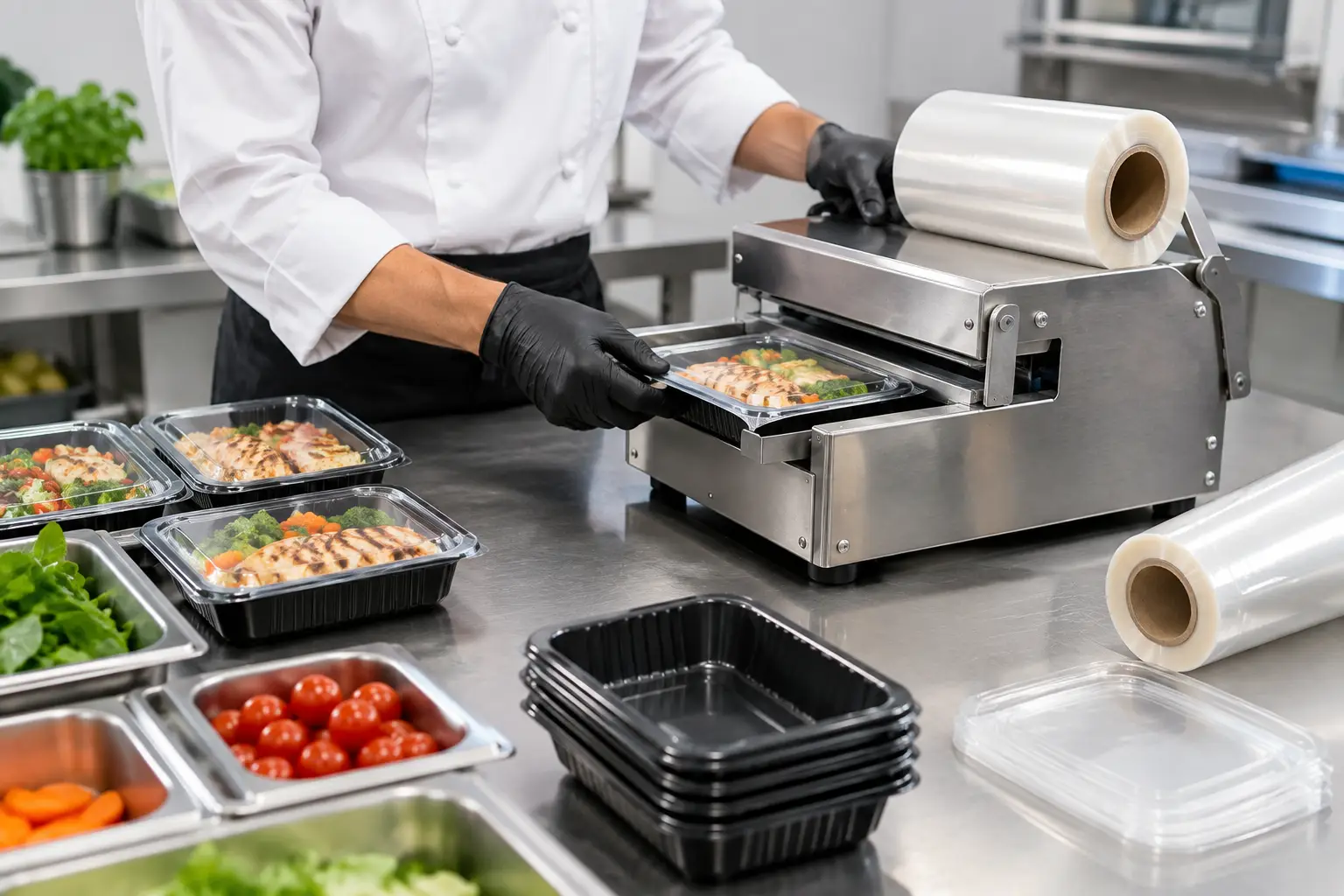
A lunch bowl that looks excellent at the sealing station can become a costly problem after reheating, stacking, delivery, or display. This food container material selection guide helps growing food businesses choose trays and containers based on how products actually move through production. SmartPackingUSA works with operators that need the container, sealing material, and tray sealing machine to perform as one dependable system.
The right material is not simply the least expensive option per unit. It affects filling speed, seal consistency, presentation, storage, transportation, and whether your packaging program can keep pace as order volume grows. A meal-prep company packing chilled weekly menus has different needs than a caterer sealing hot entrees or a pet food producer packing refrigerated portions.
Start With the Product, Not the Container
Container selection should begin with the food product and its handling path. Ask what temperature the food reaches during filling, whether it will be refrigerated, frozen, reheated, or held under heat, and how far it will travel before the customer opens it. The answers narrow the field quickly.
Saucy meals, oily proteins, acidic dishes, dry snacks, and frozen products can place very different demands on a package. A shallow tray may present a protein and sides well, but a deeper tray can better manage a meal with sauce or layered ingredients. The material must also hold its shape during normal handling. A container that flexes under a filled product can make consistent sealing more difficult.
Consider the full operating sequence: portioning, tray loading, sealing, cooling or storage, stacking, transport, and consumer use. When one stage is overlooked, the issue often appears later as leaks, crushed corners, poor visual presentation, or slower packing-line work.
Food Container Material Selection Guide: The Main Options
Most commercial food operations compare materials based on temperature needs, appearance, rigidity, sustainability goals, and compatibility with their sealing process. Each option has a practical role.
Plastic containers
Plastic food containers are widely used for prepared meals because they can offer clarity, durable structure, and a broad range of shapes and portion sizes. They are often a practical choice for cold meals, refrigerated items, sauces, salads, and many ready-to-eat applications.
The key is selecting the correct plastic type for the intended temperature and use. Do not assume that every plastic tray is suitable for hot filling, freezing, or reheating. Confirm the container specifications alongside the sealing film or lid. For operators focused on presentation, clear plastic can help display colorful ingredients and make product identification easier in retail coolers.
CPET containers
CPET containers are a strong option when a prepared meal may move through higher-temperature handling or reheating requirements. Their firm construction can support organized meal presentation for entrees, sides, and portion-controlled programs.
For commissaries and meal-prep brands, CPET can make sense when the menu calls for a more substantial tray and reliable performance through a defined heating process. The trade-off is that material selection, tray design, and sealing film must be evaluated together. A tray that suits the menu is only useful if it also runs consistently on the selected equipment.
Aluminum containers
Aluminum containers are a familiar choice for hot foods, catering pans, baked dishes, and products where a traditional foil presentation fits the brand. They offer a clean, professional appearance and can work well for operations serving hot entrees or oven-oriented meal formats.
However, aluminum trays require the correct lid or film pairing and a tray sealer configured for that container profile. The rim geometry matters. A secure seal depends on the tray flange, the sealing material, and properly adjusted machine settings. For catering businesses, matching these components can reduce last-minute packing issues when large orders are moving out the door.
Sugarcane and cardboard containers
Sugarcane and cardboard containers can support brands seeking a fiber-based presentation or eco-conscious packaging direction. They are often considered for takeout, prepared foods, bakery items, and meals where the container appearance reinforces the brand’s positioning.
These materials are not interchangeable. Their stiffness, surface texture, moisture resistance, and sealing characteristics can vary by design and application. A sauce-heavy meal may need a different solution than a dry grain bowl or sandwich box. Before committing to a bulk order, test filled samples under real conditions, including storage time, stacking, and delivery handling.
Match the Seal to the Tray Rim
A container does not create a secure package by itself. The tray, film or foil lid, machine tooling, and operator process all contribute to the final seal. This is where fragmented purchasing can create unnecessary risk. Buying trays from one source, films from another, and equipment from a third can leave the operator responsible for solving compatibility problems.
SmartPackingUSA provides complete packaging systems by matching container dimensions, tray material, sealing film or foil lid, and machine configuration to the application. This approach is especially valuable when a business is changing tray sizes, adding a new menu line, or moving from hand-packed takeout containers to tray-sealed meals.
Pay close attention to the tray flange. It must sit flat and clean in the sealing area. Overfilled trays, food residue on the rim, warped containers, and poorly aligned film can affect results regardless of material choice. A reliable packaging program includes clear filling practices and operator training, not just a better tray.
Choose Materials Around Production Output
The best package for a small test batch may not be the best package for 500 meals in a shift. At higher volume, containers need to load quickly, nest consistently, and work with a repeatable sealing process. Small variations in tray shape or film behavior become more noticeable as output increases.
Evaluate how the container supports your production-floor workflow. Can team members separate trays quickly without damaging them? Does the tray sit securely in the machine? Is the fill level easy to control? Can sealed meals be stacked and labeled efficiently? These questions are as important as the material itself.
Selected SmartPackingUSA tray sealing machine models can achieve production capacities of up to approximately 600 trays per hour with a single operator, depending on tray size, operator workflow, and production conditions. That level of output requires packaging components that are selected for consistency, not just visual appeal.
For growing operators, standardizing around a manageable number of tray sizes can simplify inventory, training, and daily setup. It can also make it easier to introduce branded sealing films or custom containers later without rebuilding the entire packaging process.
Test the Real Use Case Before Scaling
Samples are one of the most practical tools in container selection. Fill the tray with the actual product, seal it with the intended film or lid, then put it through the same conditions it will face after packing. Refrigerate it, stack it, transport it, and, where applicable, reheat it according to your planned customer instructions.
Look for practical outcomes: seal appearance, container stability, moisture response, label adhesion, stackability, and how the meal presents when opened. Include your kitchen and delivery teams in the review. They often identify workflow issues that are invisible during a quick tabletop evaluation.
This process also helps clarify when customization is worth considering. A custom-size tray or mold can support a signature portion, improve product presentation, or better fit a high-volume sealing workflow. It is most valuable when the gains in consistency and brand differentiation justify the additional planning.
Build a Packaging System That Can Grow
Material selection becomes easier when it is treated as part of a complete operating system. A restaurant group expanding meal prep may need a compact, repeatable tray format. A food manufacturer may need a durable container and a machine setup designed around its dimensions. A pet food business may need packaging that keeps portions organized and professionally presented for retail or direct delivery.
SmartPackingUSA helps businesses evaluate plastic, sugarcane, cardboard, CPET, and aluminum container options alongside tray sealing machines, films, foil lids, custom molds, and branded packaging. The goal is practical compatibility from the first sample through ongoing production, supported by training, warranty coverage, and after-sales assistance.
Choose the material that supports the way your food is prepared, packed, stored, and delivered – then verify it with real samples before scaling. The right container should make every packed meal easier to produce, easier to present, and easier for your operation to repeat tomorrow.
