Blog
Semi Automatic Versus Automatic Sealers: Which Fits?

A meal-prep kitchen may need to seal 150 trays before a delivery cutoff. A growing food manufacturer may need to keep several packing stations moving through an entire shift. That difference is where the choice between semi automatic versus automatic sealers becomes practical, not theoretical.
The right tray sealer should match the way your team actually packs food: the number of trays required, the number of menu changes, available labor, container dimensions, and the space around the packing line. Smart Packing USA helps food businesses build complete tray-sealing systems by matching the machine with compatible trays, films, foil lids, and workflow requirements. The goal is not simply to buy more equipment. It is to create a packing process your team can run consistently.
Semi Automatic Versus Automatic Sealers: The Core Difference
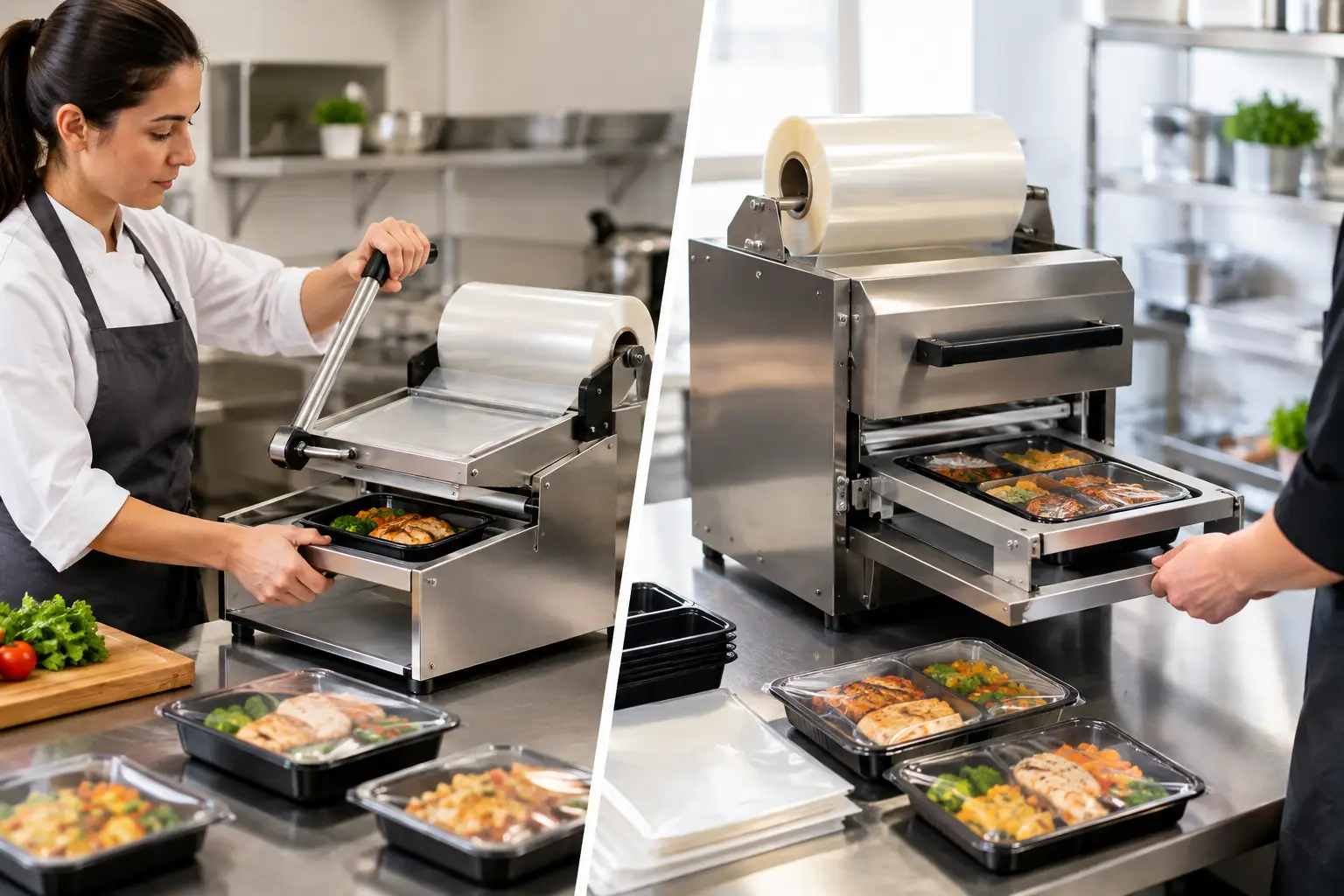
A semi-automatic tray sealer requires an operator to place the filled tray into the machine and start the sealing cycle. The machine then applies the programmed time, temperature, and pressure needed to seal the selected container and film combination. Once the cycle is complete, the operator removes the sealed tray and loads the next one.
An automatic sealer reduces more of the repeated handling steps through a more automated tray-feeding and sealing process. These systems are designed for operations with sustained, predictable production demand, where reducing manual loading and keeping a continuous packaging flow can justify a larger equipment investment and footprint.
Neither format is automatically better. A semi-automatic machine can be the stronger business decision for a high-mix kitchen that changes tray sizes and menu formats throughout the day. An automatic system can make more sense when the same tray format moves through a high-volume production schedule with fewer interruptions.
When a Semi-Automatic Sealer Is the Better Fit
Semi-automatic tray sealing is a practical choice for many restaurants, caterers, commissary kitchens, ghost kitchens, and growing meal-prep companies. It gives the operator direct control over loading and unloading while delivering a repeatable seal cycle that looks more professional than hand-applied lids or inconsistent film wrapping.
This format is especially useful when your operation packs different foods in different containers. A caterer may seal entrée trays in the morning, family-style containers before lunch, and individual dessert or side-dish trays in the afternoon. The ability to work in shorter runs and adjust the setup around the day’s orders can be more valuable than maximum automation.
Semi-automatic machines also support a straightforward workstation layout. One trained employee can portion food, inspect tray rims, load the sealer, and stage finished trays for refrigeration or delivery. Selected Smart Packing USA tray sealer models can achieve production capacities of up to approximately 600 trays per hour with a single operator, depending on tray size, operator workflow, and production conditions. That level of output can be enough to remove a packaging bottleneck without redesigning the entire kitchen.
For businesses moving from manual packaging to tray sealing, semi-automatic equipment is often the sensible next step. It improves consistency while allowing teams to build disciplined habits around fill levels, clean tray rims, proper film placement, and finished-package inspection.
When an Automatic Sealer Makes Sense
Automatic sealing equipment is built for a different production rhythm. It is best considered when packaging demand is consistently high, tray formats are standardized, and the operation needs to reduce repetitive handling over extended production runs.
For example, a food manufacturer producing the same refrigerated prepared meal every day may benefit from a more automated process. If trays are portioned at a steady rate upstream and need to be sealed in continuous volume downstream, automation can help keep the line balanced. The machine is no longer a standalone station. It becomes part of a coordinated packaging system.
The decision should account for more than trays per hour. Automatic equipment requires enough product volume, floor space, workflow discipline, and support processes to stay productive. If employees must frequently stop to change menus, trays, film types, or portion sizes, the theoretical speed advantage can shrink quickly.
Automatic systems are often most valuable when labor is repeatedly tied up in the same loading and sealing tasks. They can help an established operation grow capacity, but only when upstream cooking, filling, labeling, cooling, and case packing can keep pace. A faster sealer cannot solve a bottleneck created somewhere else on the line.
Compare the Workflow Before You Compare the Machine
The most useful question is not, “Which sealer is faster?” It is, “What happens during our busiest two hours?” Review the actual packaging workflow from the moment food reaches the packing table until sealed trays are placed in storage or prepared for delivery.
Start with daily and hourly tray counts. A business that seals 100 trays on some days and 500 on others has different needs from a producer that seals the same number every shift. Then look at SKU complexity. One tray size with one film type is easier to automate than a kitchen using several container sizes, meal configurations, and packaging materials.
Labor also needs an honest review. Semi-automatic sealing requires an engaged operator, but that person can often perform related quality checks and packing tasks at the same station. Automatic sealing can reduce repetitive loading work, yet it still requires trained staff to monitor film, verify seal quality, manage changeovers, and address production interruptions.
Floor space matters as well. A compact semi-automatic station may fit naturally into an existing prep or packing area. A more automated line can require a more deliberate layout, including space for tray staging, infeed, finished-product handling, and maintenance access.
Packaging Compatibility Is Part of the Decision
A tray sealer is only one part of the finished package. Reliable results depend on using compatible containers and sealing materials designed for the application. The tray flange, film or foil lid, product temperature, fill level, and sealing settings all affect the final result.
Smart Packing USA supplies complete packaging solutions that can include plastic, sugarcane, cardboard, CPET, and aluminum food containers along with sealing films, foil lids, custom containers, and branded sealing films. This matters because fragmented sourcing can create avoidable problems. A machine may be capable, but an incompatible film or uneven container rim can lead to poor presentation, weak seals, wasted material, or delays during a busy production window.
For operations using multiple package styles, ask whether the machine can be configured around the trays you need now and the formats you may add later. Custom machine development and custom molds can be valuable when standard container dimensions do not suit your product, portion size, or brand presentation.
What to Ask Before You Buy
Before selecting a semi-automatic or automatic tray sealer, bring real operating information to the conversation. The more specific the details, the better the equipment recommendation will be.
Share your expected trays per hour, tray dimensions, container material, sealing material, product types, number of daily changeovers, and available workspace. If your food is delivered, carried by customers, stacked in refrigerated storage, or sold through retail channels, describe that too. Packaging must support the full journey, not only look good when it leaves the sealing station.
Ask about adjustable controls, cleaning access, stainless-steel construction where applicable, operator training, warranty coverage, replacement parts, and after-sales support. These details affect whether a machine stays useful during daily service and seasonal growth. Requesting product samples can also help verify the container and seal presentation before committing to a larger packaging order.
Choose for the Business You Are Building
A semi-automatic sealer is often the right answer when flexibility, manageable investment, and hands-on workflow control matter most. An automatic system becomes more compelling when standardized, sustained volume makes continuous production the priority. Both can improve package consistency, help reduce leaks during transportation, and give prepared foods a cleaner, more dependable presentation when paired with the right containers and sealing materials.
Smart Packing USA can help evaluate your tray dimensions, materials, output targets, and production conditions to identify a complete system that fits your operation. The best choice is the one your staff can run confidently on a busy day, while leaving room for the growth you expect next.
