Blog
Food Packaging Equipment Checklist for Growth

A packaging line rarely fails because of one dramatic problem. More often, output slows because trays do not fit the machine correctly, film does not seal consistently, staff spend too long adjusting settings, or supplies arrive from different sources with no clear compatibility plan. This food packaging equipment checklist helps food operators make practical decisions before investing in a tray sealing system. SmartPackingUSA works with businesses that need the machine, containers, and sealing materials to perform as one complete operation.
Start the Food Packaging Equipment Checklist With Your Product
The right equipment starts with what goes into the tray. A chilled meal, hot prepared entrée, deli item, sauce-heavy dish, pet food portion, or dry treat can create very different packaging demands. Consider product temperature at the point of sealing, portion weight, moisture level, grease content, and whether the item will be reheated by the customer.
Container depth matters as much as the footprint. An overfilled tray can interfere with the sealing surface. A shallow tray may improve presentation for one product but be impractical for another. If your menu includes multiple portion sizes, decide whether you need one tray format or a system that can accommodate more than one container configuration.
Also map the product journey after packing. Will meals be stacked in a refrigerated display, loaded into delivery bags, transported by caterers, or shipped to retail locations? The package must support the handling conditions your team actually faces, not just look good on the packing table.
Define the Output You Need, Not Just the Machine Speed
A published machine capacity is useful, but it is not the same as real production output. Your team still needs to fill trays, place them correctly, load film, remove sealed packs, label products, and stage finished orders. The best fit depends on the workflow around the machine.
Start by measuring your busiest production window. Record how many trays you pack per hour, how many people are assigned to the station, and where backups occur. A growing meal-prep company may need a compact system that reduces manual sealing work. A commissary kitchen may need equipment selected around a repeatable high-volume workflow.
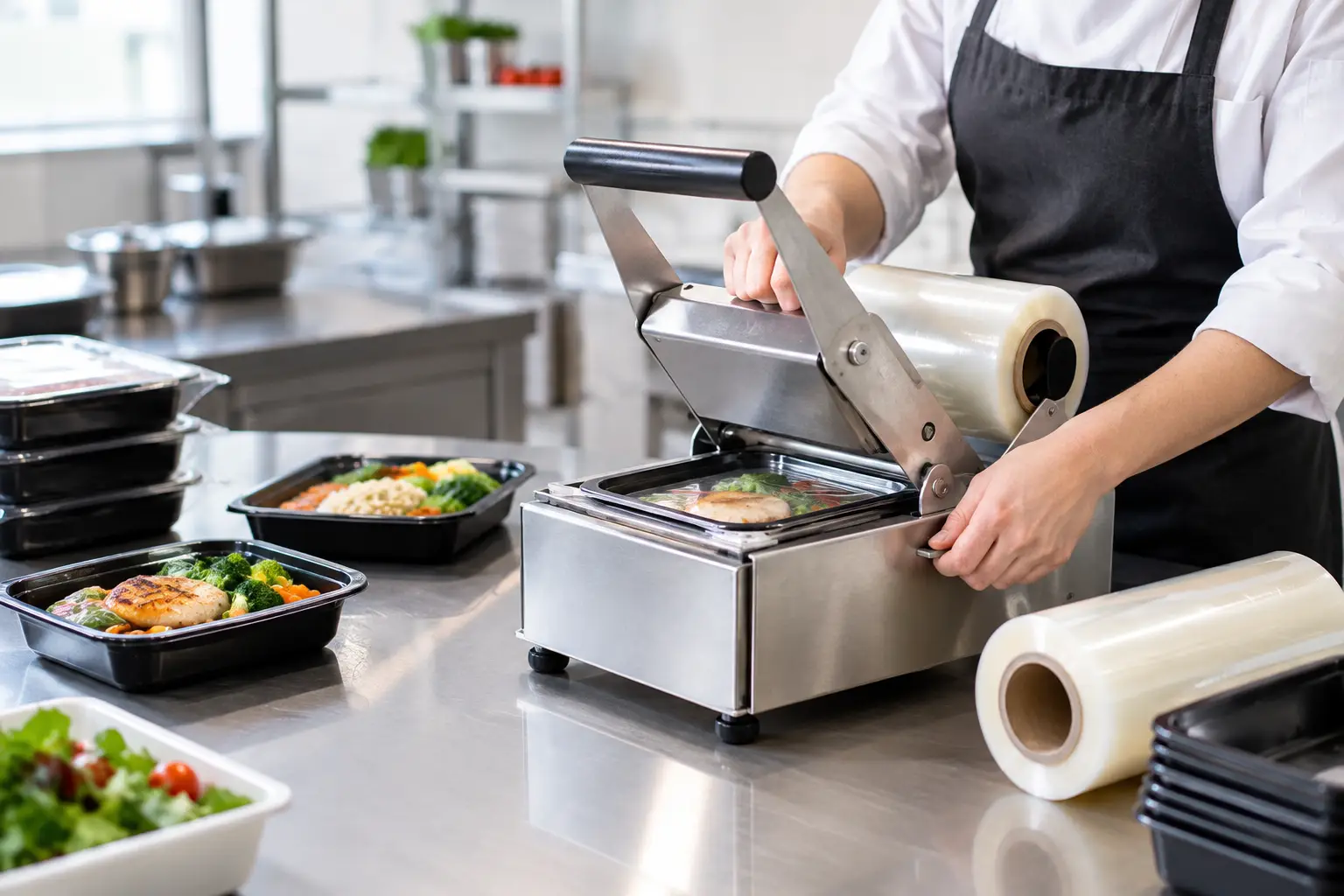
Selected tray sealing machine models can achieve up to approximately 600 trays per hour with a single operator, depending on tray size, operator workflow, and production conditions. That figure is most valuable when it is compared to your own operating process, rather than treated as a standalone promise.
Ask these questions before choosing capacity:
- How many trays must be completed during the peak shift?
- How many container sizes will run on the line?
- Who fills, seals, labels, and packs finished orders?
- How much room is available for product staging and finished inventory?
- What output will the business need after the next menu expansion or account win?
Choosing too little capacity can create a daily bottleneck. Choosing far more machine than the surrounding workflow can support may tie up capital without solving the actual problem. The goal is steady, manageable throughput.
Match the Machine to the Tray, Lid, and Film
Compatibility is the center of a reliable tray sealing operation. A tray sealer, container, and sealing material should be selected as a system. Mixing components without confirming fit can lead to incomplete seals, wasted film, inconsistent presentation, and unnecessary troubleshooting on the production floor.
First, confirm the exact container dimensions, including the rim profile that contacts the sealing film. Then identify the packaging material appropriate for the application. Many food businesses use plastic containers, while others choose sugarcane, cardboard, CPET, or aluminum containers based on menu needs, presentation, and packaging goals.
Film selection should match both the container and the use case. You may need a clean professional finish for refrigerated meals, a foil lid solution for a specific container format, or branded sealing film that carries your identity into the customer’s kitchen. A packaging partner should verify the equipment and materials work together before a large order is placed.
Consider Custom Sizes Before Forcing a Standard Format
Standard trays work well for many operations. However, a signature meal format, specialty product, or retail-ready presentation may call for custom containers, custom molds, or a custom-size machine built around your dimensions. This can be the better long-term decision when the package itself is part of the product experience.
Customization has trade-offs. It requires careful planning, lead-time coordination, and a clear understanding of forecasted volume. But it can reduce compromises in portion presentation and help create a more recognizable package for a growing brand.
Review Controls That Protect Seal Quality
Your packaging equipment should give operators practical control without making every shift dependent on guesswork. Look for adjustable settings that allow the team to work with the specific container and sealing material being used. Staff should be trained to recognize a proper seal and to respond when a change in product, tray, or film affects results.
Build a simple quality check into production. At the start of each run, inspect a small number of sealed trays for even adhesion around the rim, clean appearance, and secure closure. Repeat checks after film changes, tray changes, or extended pauses. This takes little time and helps prevent an entire batch from being packed with a recurring issue.
Avoid treating sealing as the final step that can be ignored once the machine is running. It is where portioning, tray placement, material selection, and operator consistency all meet.
Plan for Cleaning, Durability, and Daily Access
Commercial food operations need equipment that is practical to maintain between busy shifts. Stainless-steel construction is a useful consideration because it supports the demands of a professional food production environment and is designed for regular cleaning. Beyond material choice, look at how easily operators can access areas that need routine attention.
A machine that fits on paper but is difficult to clean or awkward to load can cost time every day. During evaluation, consider where the machine will sit, how film rolls will be changed, where trays will be staged, and whether the team can work around it safely and comfortably.
Create a written routine for cleaning, visual inspection, and basic operating checks. Assign ownership by shift rather than assuming someone will handle it. Consistent care helps protect equipment performance and gives managers a clearer picture of when service or replacement parts may be needed.
Confirm Training, Warranty, and Supply Continuity
Equipment is only one part of the purchase. Your operator needs training that fits the realities of a busy kitchen or production room. Clear setup guidance, usable operating instructions, and post-purchase support can shorten the time between delivery and dependable daily output.
Warranty coverage should be reviewed before purchase, along with the process for requesting technical help. Ask who will support the machine after installation, what information is needed when an issue occurs, and how your team can minimize downtime. These details matter most when orders are already scheduled.
Supply continuity deserves the same attention. A tray sealer is most useful when you can reliably obtain compatible trays, lids, and film as volume grows. Consolidating these components through a complete packaging system can simplify ordering, reduce mismatches, and give procurement teams fewer variables to manage.
Build a Packaging Station Around the Operator
Even a well-matched tray sealing machine cannot compensate for a poorly organized station. Position filled trays close to the operator, keep film and replacement materials accessible, and create a clear path for sealed packages to move to labeling, refrigeration, or shipping. Separate incoming product from completed orders to avoid mix-ups.
For operations packing multiple menu items, use visible tray and film identification. This is especially useful when similar containers have different depths or when separate sealing materials are used across product lines. Small organizational decisions can reduce rework and help new staff follow the correct process faster.
Before placing an order, request product samples when appropriate and test the packaging with your actual food, handling routine, and storage conditions. SmartPackingUSA can help match tray sealing machines, containers, sealing films, foil lids, and custom packaging options to the needs of a specific operation.
The strongest packaging decision is the one that makes tomorrow’s production shift easier: trays that present the food well, seals the team can repeat confidently, and a supply plan that supports the next stage of growth. Request guidance or samples early, then build the system around the way your operation really works.
