
Blog
Sealing Film Compatibility for Reliable Tray Seals

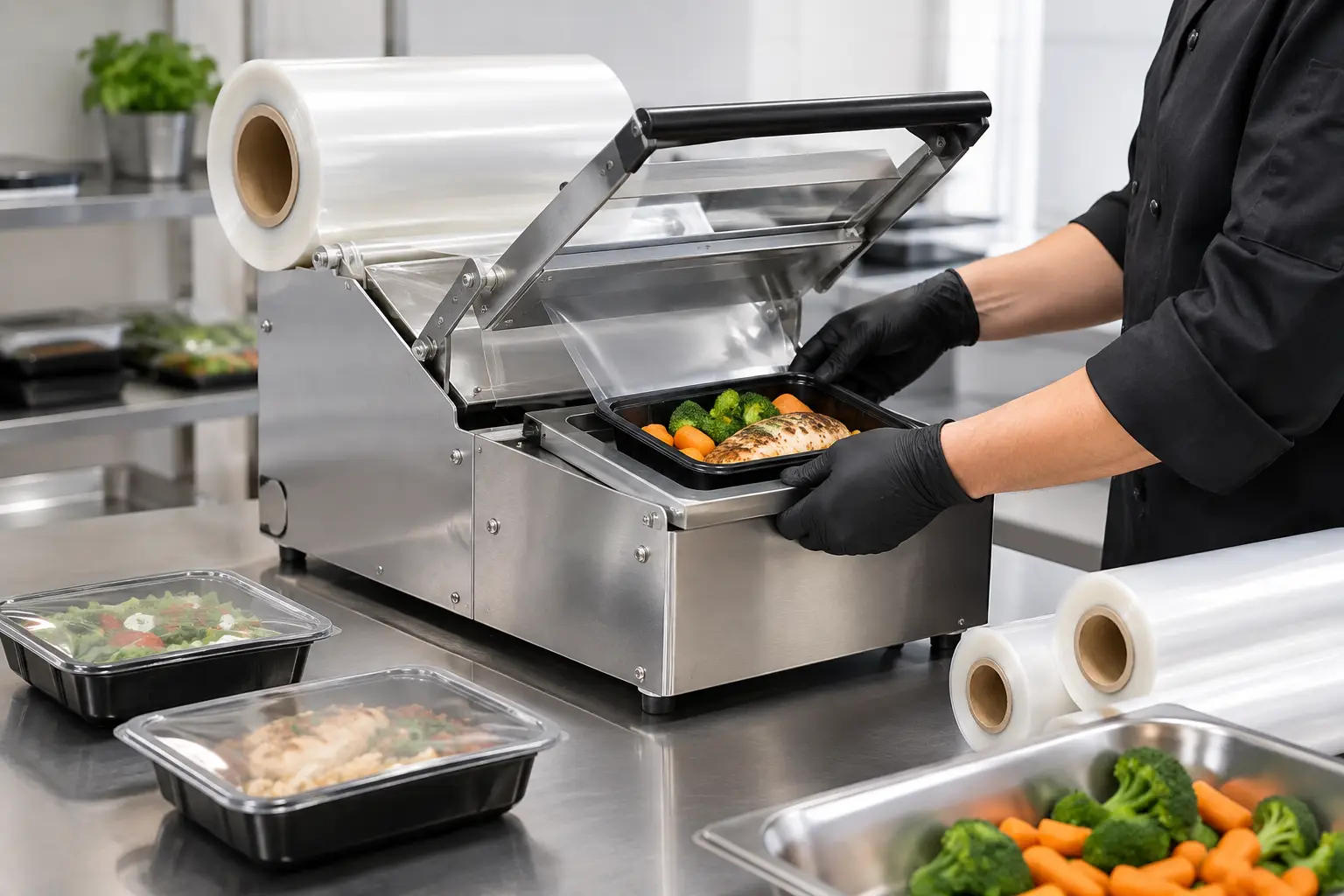
A tray can look perfect at the start of a packing shift and still fail when it reaches the customer. Lifted corners, incomplete seals, film tearing, and leaking sauces usually point to one issue: sealing film compatibility. SmartPackingUSA helps food businesses match the tray, film, lid format, and sealing equipment so every packed meal is built for dependable production, not guesswork.
For meal-prep kitchens, caterers, restaurants, grocery programs, and food manufacturers, the right match affects much more than appearance. It influences packing speed, transport performance, product presentation, material waste, and the consistency your team can maintain during a busy service window.
What Sealing Film Compatibility Actually Means
Sealing film compatibility is the ability of a lidding film to form a dependable bond with a specific container’s sealing surface under the correct machine settings. The film must match the tray material, but material alone is not the whole story. Tray flange shape, sealing area, food residue, film width, machine tooling, heat, pressure, and dwell time all affect the final result.
A film designed to seal to one plastic tray may not seal properly to another plastic tray with a different composition or coating. The same applies to paperboard, sugarcane fiber, CPET, and aluminum containers. A tray’s top rim may appear similar to another container, yet its surface can react differently under heat and pressure.
That is why a tray sealer should be treated as part of a complete system. Buying containers from one source, film from another, and equipment from a third can create unnecessary testing, inconsistent output, and delays when a supply change is made. A coordinated system gives operators a clearer path from packaging selection to dependable day-to-day use.
Why Poor Film-to-Tray Matching Costs More Than Film
The immediate sign of a mismatch is often a weak or incomplete seal. But the operating impact can spread quickly. A leaking meal can create cleanup work, damage delivery bags, affect customer confidence, and generate refunds or replacements. A seal that is too aggressive can also be a problem if customers struggle to open the tray or if the film tears unevenly.
In production, incompatible materials often lead to constant adjustments. Staff may raise or lower settings between batches, slow down to inspect seals, or repackage trays that do not meet presentation standards. Those interruptions reduce the practical output of the packing line even when the machine itself is capable of much more.
Material waste is another hidden expense. When operators must discard film rolls, trays, or finished meals because a seal fails, the cost is not limited to the packaging. It includes food, labor, downtime, and lost production capacity.
Match the Film to the Container Material
The first purchasing question should be simple: what is the tray made from? The answer determines the type of sealing layer needed on the film.
Plastic food containers are widely used for prepared meals, cold foods, and takeout applications. However, plastic is a broad category. The proper film should be selected for the specific tray resin and its sealing flange. Do not assume that a film suitable for one plastic container will perform the same way on every plastic tray.
CPET containers are commonly chosen for applications that may involve reheating. Their packaging requirements should be reviewed as a full application, including the food product, filling process, intended use, and tray specification. The goal is a secure seal that supports the way the packaged item will be handled after it leaves your facility.
Aluminum containers require films or foil lid solutions made for aluminum sealing surfaces. These packages are popular for catering pans, prepared foods, and specialty formats where a firm, clean-looking closure matters. Because aluminum rims can vary in shape and finish, samples and production testing are especially valuable.
Paperboard and sugarcane containers can support a more eco-conscious packaging presentation, but they need the correct coated or treated sealing surface for heat sealing. A fiber-based tray is not automatically compatible with any film simply because the tray has a flat rim. Confirm the tray’s sealing specification before selecting a roll film.
The Tray Flange Matters as Much as the Material
A compatible film still needs a clean, consistent surface to seal. The flange is the flat rim around the container where the film contacts the tray. If that rim is warped, too narrow, uneven, wet, or contaminated with food, sealing performance can suffer.
Sauces, oils, crumbs, and overfilled portions are common causes of seal problems in commercial kitchens. This does not always mean the film or machine is wrong. It may mean the filling process needs a small adjustment. Leaving adequate headspace and keeping the tray rim clear gives the sealing system the contact area it needs.
Container quality also matters. Inconsistent tray dimensions can create uneven pressure across the sealing area. For operations packing hundreds of meals, small variations can become recurring production issues. Selecting containers designed for the machine’s tooling helps maintain consistent alignment and presentation.
Machine Settings Are Part of Sealing Film Compatibility
The film, tray, and machine must work together. Heat, pressure, and dwell time influence how the film’s sealing layer bonds to the container. If one setting changes, the result can change as well.
Too little heat or dwell time may leave weak areas around the rim. Too much heat can distort some containers, damage the film, or create seals that are difficult to peel. Excess pressure can also affect lighter containers, while insufficient pressure can leave incomplete contact points.
The correct settings depend on the actual materials and operating conditions, not a generic number. Ambient temperature, tray storage conditions, food moisture, and line speed can all affect performance. For this reason, a controlled sample test is more useful than relying on assumptions from a previous packaging setup.
SmartPackingUSA can help customers evaluate compatible trays, sealing films, and machine configurations for their intended application. This is particularly useful when a business is changing container materials, adding branded film, moving into retail-ready meals, or introducing a new tray size.
A Practical Testing Process Before You Buy in Volume
Before committing to bulk packaging materials, test the complete package under conditions close to normal production. Use the actual food item, target fill level, tray, film, and sealing machine. A dry empty tray may seal well while a sauced entrée exposes issues at the flange.
Inspect the seal immediately after packing, then check trays after cooling and after typical handling. Stack them, move them as they would be moved to a cooler or delivery area, and examine corners and edges for lifting. If meals travel through delivery or catering channels, test the package through that handling process as well.
A useful production check includes four areas:
- Seal continuity around the entire tray rim
- Film appearance, including wrinkles, burn marks, or uneven tension
- Resistance to normal handling and stacking
- Customer-friendly opening performance when a peelable format is required
Document the machine settings that produce the best result. This gives your team a repeatable starting point for future shifts and makes troubleshooting easier if a new employee, tray lot, or film roll is introduced.
When Custom Packaging Is the Better Choice
Standard trays and film sizes are often the fastest route to market, especially for growing meal-prep operations. But custom packaging can be worthwhile when the existing options do not fit the food portion, brand presentation, or production process.
A custom tray or mold can be developed around specific container dimensions and product needs. Branded sealing film can also improve shelf presence and create a more finished customer experience. The key is to develop these components together, so the custom look does not create avoidable sealing problems on the production floor.
For businesses that package multiple menu sizes, it may be more efficient to use separate tooling and tested film specifications for each tray format than to force one film approach across every container. The best setup depends on volume, menu complexity, storage needs, and how the product is distributed.
Build a Packaging System, Not a Collection of Parts
Reliable seals come from coordinated choices. The right machine needs properly fitted tooling. The tray needs a consistent sealing flange. The film needs a sealing layer designed for that tray. Operators need clear settings and a repeatable process. When one component changes, compatibility should be checked again.
SmartPackingUSA provides tray sealing machines, compatible food containers, sealing films, foil lids, custom packaging options, samples, training, warranty coverage, and after-sales support for commercial food operations nationwide. Selected machine models can achieve up to approximately 600 trays per hour with one operator, depending on tray size, workflow, and production conditions.
If you are seeing leaks, inconsistent seals, or wasted packaging materials, start by reviewing the complete tray-and-film combination rather than replacing one component at a time. A tested packaging system gives your team a practical foundation for faster packing, cleaner presentation, and more dependable meals from the kitchen to the customer.
