Blog
Food Packaging Machine for Ghost Kitchens

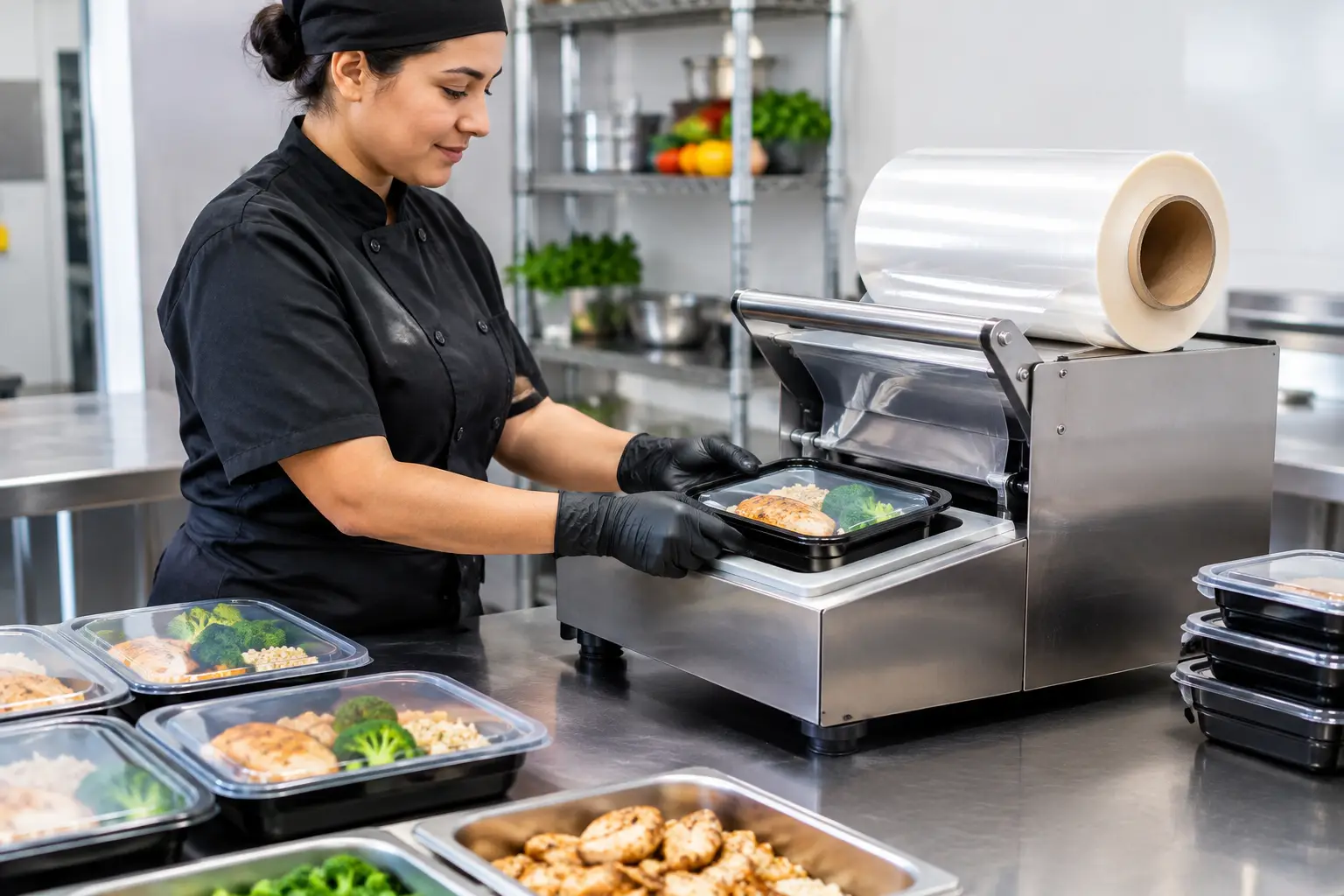
A delivery order has only one chance to arrive looking right. When sauce leaks into a bag, a lid shifts in transit, or meals leave the kitchen with inconsistent presentation, the customer sees the result before they taste the food. For operators evaluating a food packaging machine for ghost kitchens, the priority is not simply buying equipment. It is building a repeatable packing process that keeps up with orders and protects the product from the pass to the customer’s door.
SmartPackingUSA helps commercial kitchens bring the machine, trays, sealing film or foil lids, and production requirements into one practical system. That matters in a ghost kitchen, where packaging is the final production step for every order and a weak point can slow the entire line.
Why Ghost Kitchens Need a Better Packing Process
Ghost kitchens are designed for speed, but delivery-heavy service puts unusual pressure on packaging. Multiple brands may run from one kitchen. Menus can include bowls, meal-prep trays, entrées, sides, sauces, and family meals, often moving through the same packing station during a rush. Hand-applied lids may be acceptable for low-volume items, but they can become inconsistent when output rises or when staff are moving quickly between orders.
Tray sealing creates a more controlled closure for prepared food. A properly matched tray and sealing material can help reduce leaks, support a clean finished appearance, and give each meal a more uniform presentation. It can also reduce the time staff spend checking lids, replacing poorly closed containers, or cleaning spills before bags leave the kitchen.
The right solution depends on the menu and the operating model. A kitchen producing chilled weekly meal-prep orders has different needs than a virtual restaurant sending hot rice bowls and sauced entrées all evening. The machine should be selected around the actual tray sizes, food temperature, daily volume, and workflow rather than around a generic capacity figure.
Choosing a Food Packaging Machine for Ghost Kitchens
Start with the containers already working for your menu, or select the container and machine together. A tray sealing machine is only one part of the result. Tray dimensions, rim design, material, sealing film or foil lid, and heat settings all affect how the final package performs.
SmartPackingUSA develops complete packaging systems rather than treating the machine as a stand-alone purchase. That means matching equipment with compatible plastic, sugarcane, cardboard, CPET, or aluminum containers and the appropriate sealing material for the application. For a kitchen introducing a new menu format, this approach avoids the costly trial-and-error of sourcing trays, lids, and equipment separately.
Match output to the real production window
Do not size equipment only by the number of meals sold in a day. Consider when those meals must be packed. A ghost kitchen may handle most of its volume in a narrow lunch or dinner window, while a meal-prep operation may package hundreds of orders over several scheduled production shifts.
Selected SmartPackingUSA tray sealing machine models can achieve up to approximately 600 trays per hour with a single operator. Actual throughput depends on tray size, operator workflow, product handling, and production conditions. The useful question is whether the packing station can maintain your required pace without forcing staff to rush portioning, labeling, order checks, or bagging.
For smaller operations, a compact manual or semi-automatic workflow may be the practical starting point. For growing kitchens with steady high-volume production, the return comes from reducing repetitive handling and creating a predictable sealing step. The best fit is the one that supports current order volume while leaving room for planned growth.
Choose materials that fit the menu and customer expectation
Container material is both an operational and brand decision. Plastic trays may suit many prepared-food applications. CPET and aluminum can be appropriate where heat tolerance or a particular presentation is needed. Sugarcane and cardboard options can support businesses pursuing paper-based or bagasse-style packaging formats.
There is no single best material for every ghost kitchen. Saucy foods, oily foods, refrigerated meals, reheating instructions, portion size, and delivery distance all influence the selection. A packaging partner should review samples with the actual food product whenever possible, because a tray that looks suitable when empty may behave differently once it is filled, sealed, stacked, and transported.
Plan for menu variety without creating line confusion
Many ghost kitchens operate multiple concepts from the same production floor. That can make packaging standardization difficult, especially when every brand uses a different container footprint. Too many tray sizes increase storage requirements, complicate staff training, and raise the risk of using the wrong film or lid at the station.
Where possible, consolidate menu items into a manageable range of tray sizes. Use packaging that separates portions clearly and presents food consistently across concepts. If a signature tray dimension is essential to the brand, SmartPackingUSA can support custom-size machine development based on container dimensions, materials, production needs, and specific requirements.
Custom containers, molds, and branded sealing films can also help delivery-only brands create a more recognizable finished package. The value is not decoration alone. A consistent, professional package makes the meal feel intentional when it arrives at a customer’s home rather than at a restaurant table.
Build the Packing Station Around the Operator
Equipment performs best when the station around it is organized for the person using it. The operator should be able to receive filled trays, position them for sealing, inspect the finished package, label it, and move it to bagging with minimal crossing and backtracking. If toppings, sauces, or utensils are added after sealing, that sequence should be planned before the machine is installed.
Keep compatible trays and sealing materials within easy reach, but protect supplies from spills and clutter. Establish clear settings and operating procedures for each approved tray format. This makes training easier and helps maintain consistency when staff rotate between brands or shifts.
Sanitation and daily upkeep also belong in the decision. Commercial kitchens need equipment that can be incorporated into normal cleaning routines and supported over time. Ask about operator training, warranty coverage, available support, and the practical steps required to maintain reliable performance. A lower upfront equipment cost can be less attractive if the system is difficult to operate, service, or supply with matching materials.
Avoid the Fragmented Sourcing Problem
Buying a machine from one source, containers from another, and film from a third can create a compatibility gap. When a seal is inconsistent, the kitchen may not know whether the cause is the tray rim, film specification, machine setting, or operator process. That uncertainty costs time during busy service periods.
A complete system simplifies accountability. SmartPackingUSA can provide product samples, bulk orders, private-label packaging, custom packaging projects, equipment guidance, training, warranty coverage, and after-sales support. For operators, the practical advantage is having one packaging partner that understands how the components work together on the production floor.
Before committing, run representative samples of the foods you sell most often. Test a full tray, not just an empty container. Include sauces, proteins, hot items, chilled items, and the heaviest portions in your menu mix. Then observe the package after stacking and a realistic delivery-style handling process. This is where a packaging decision becomes an operational decision.
When Is It Time to Add Tray Sealing?
The signal is usually not just higher order volume. It is recurring packaging friction: lids that come loose, messy delivery complaints, too much labor spent closing containers, inconsistent brand presentation, or staff losing time sorting through mismatched packaging supplies. A tray sealing system can bring order to those issues when the kitchen has enough repeatable tray volume to justify a dedicated packing step.
It may not make sense to introduce every container format at once. Start with the highest-volume meals or the items most likely to leak in delivery. Once the team has a stable workflow, expand the system to additional menu categories. This phased approach can reduce disruption while giving operators a clearer view of labor savings, packaging consistency, and customer response.
A food packaging machine for ghost kitchens should make the last step of production more dependable, not more complicated. SmartPackingUSA can help you evaluate tray formats, sealing materials, output needs, and customization options so your packaging station supports the way your kitchen actually works. Bring a sample of your menu, identify the pressure points in your current line, and build the system around the meals your customers count on receiving in good condition.
